Decades of unscientifically proven facts on genetically modified organisms (GMOs) issued by green pressure groups and global anti-GMO organisations – have generally created a negative world view of one of science’s most advanced technology.
How such campaigns and bad press affect the adoption of GMOs in countries like Pakistan and India is a classic example.
Despite development of the National Bio-safety guidelines, Pakistan has been very slow in adopting the transgenic varieties of Bt cotton and Bt corn – largely due to the negative malicious campaigns pointed against GMOs and the biased false public opinion that has been churned.
Furthermore, little interaction between researchers, media and civil society has not helped to counter the continuous onslaught of bad press directed against GMO technology.
It has been very common that the research institutions rarely reach out to the media even when they have some remarkable achievement in research and development.
At times, when anti-GMO groups spin out stories about the so-called hazardous effects of the GMOs, no biotechnologist or any R&D organisation comes forward for rebuttal or clarification.
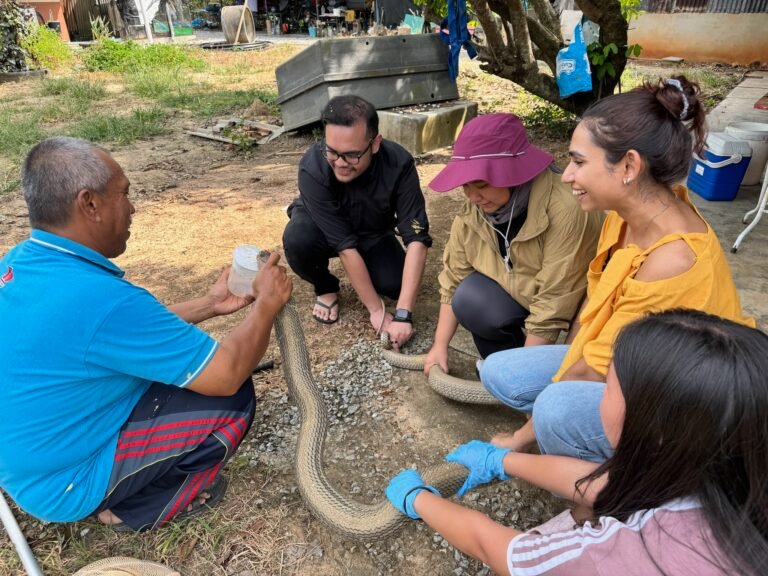
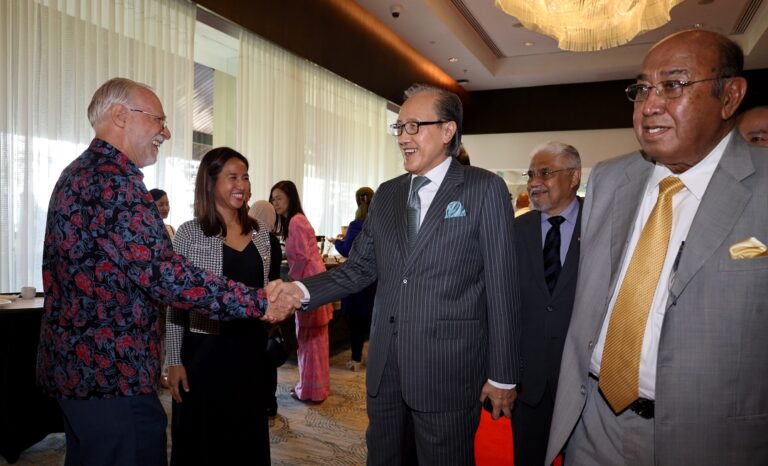
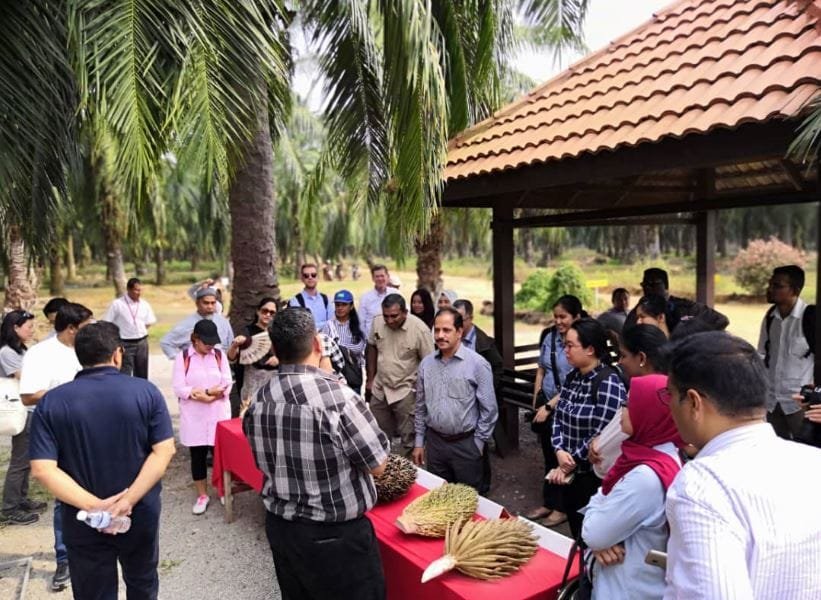
Recently, I along with and two fellow journalists from Pakistan’s eastern city of Lahore got an opportunity to attend a short course in Bandar Sunway, Malaysia. [ihc-hide-content ihc_mb_type=”show” ihc_mb_who=”2,3″ ihc_mb_template=”1″ ]The Asian Short Course on Agribiotechnology, Biosafety Regulations and Communication had attracted 28 participants from all over Asia. In addition, leading biotechnologists and communication experts from America, Australia, Europe and Latin America were there to educate the researchers and the media.
Salient facts from the short course
Everything is not doom and gloom: In the present-day world characterised by baby boom and poor harvests, we have to think far out of the box on ways to keep the wolf of hunger away from our doors.
Development of transgenic varieties of farm crops is the most suitable option. For example, in the mid-west states of America, the per hectare yield of the Bt corn is manifold as compared to the traditional varieties. Similarly, the production of cotton in countries like China and India has peaked to new heights. So, the positive and ethical use of genetic engineering can ensure food security.
Chemical Vs genetic solutions: In Asia and Africa, mosquitos have been a vector of various diseases like dengue and malaria.
Usually, chemical modes of mosquito eradication is adopted. The use of insecticides not only proves hazardous to human health and environment but also leads to development of resistant strains of mosquitos.
Here, the recently developed gene-drive technology can be a good solution. This technology leads to such genetic changes in the mosquito population that hinder them from Dr Samantha O’Loughlin of Target Malaria (Burkina Faso) has successfully
Communication is not that simple. As Dr Craig Cormic, a scientist-turned-communication expert from Australia says that communication techniques are mostly regional or area specific.
You have to keep in mind beliefs, feelings and faith of the particular community while communicating any idea for or against a specific situation.
In case of GMOs, it becomes more pertinent to ensure that they should not be taken as something that infringes religious beliefs of a particular community. For example, there may be a misperception or rumour that a gene of swine has been inoculated into a species like cow to get more milk or meat.
Such a feeling can be detrimental in Muslim society. So, you have to make people believe that genetic engineering is ethical and moral phenomenon.
Regulating biotechnology, genetic engineering: With the advent of genetic engineering and biotechnology, it had become necessary for every country to ensure that there is only ethical and moral use of this emerging science.
So, every nation must develop such a set of guidelines and rules that could govern the research and development and use of genetic engineering. With only with a few exceptions, most of the developed and developing nations have their specific bio-safety policies and laws.
Fine Tuning the international laws and protocols: The world community has formulated a number of laws and protocols to ensure the safe handling, transport and use of the living modified organisms (LMOs) and GMOs. The Cartagena Protocol on Biosafety and the Convention on Biological Diversity are the major agreements.There have been on and off meetings to further fine tune the regulations. An important meeting is going to take place in the Egyptian resort city of Sharm Al-Sheikh in November this year. To prepare for the meeting also named Conference of Parties (COP) and Meeting of Parties (MOP), a meeting was recently held in Bandar Sunway, Malaysia.
Better informed
After attending the Asian Short Course on Biotechnology, Bio-Safety Regulations and Communication, I feel more informed and educated on the issues of biotechnology and genetic engineering. I wish I could have more opportunities in the days to come to learn more and more. It would be in good order to express my gratitude to Prof Piet van der Meer, Prof Kazuo Watanabe, Prof Selim Cetiner, Dr Lucia de Souza, Dr Ranjani Warrier, Dr Samantha O’Loughlin, Dr Craig Cormic and last but not the least Dr Mahaletchumy Arujanan for making us more enlightened especially to us, journalists.
NOTE: This article is based on the author’s recent visit to Malaysia. He participated in the Asian Short Course on Agri-biotechnology, biosafety regulations and communications hosted by the Malaysian Biotechnology Information Centre (MABIC) and Monash University Malaysia. He can be reached at luqman64@gmail.com and @luqmansheikh on twitter
[/ihc-hide-content]