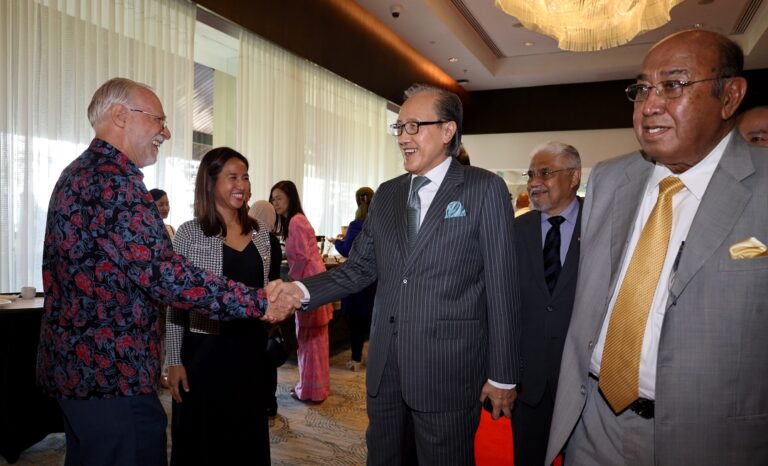
IT was an extremely busy month for us at Mabic and The Petri Dish. I attended the APEC High Level Policy Dialogue on Agribiotechnology (APEC HLPDAB) in Brisbane and then the Southeast Asia-US Agricultural Cooperators Conference in Kota Kinabalu.
Look out for the article on the latter event in the September issue of The Petri Dish.
SEA US Agricultural Cooperators Conference was a new network for me but I could see how regulatory decisions on GM technology and genome editing will affect traders involved in grain commodities.
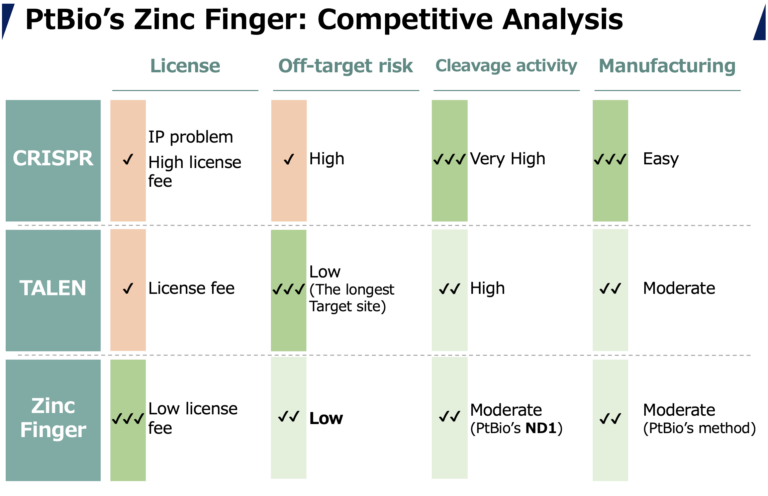
APEC economies are grappling with the need to make a conclusive decision on genome editing. Will products of this technology be defined as GMOs? How will that affect R&D, small companies and public sector research?
I hope regulators will make a sane decision on this very important tool that promises solutions in various sectors, not only in agriculture. The medical and healthcare sector are among sectors that will have enormous benefits from genome editing.
In this article of August issue, we break the tragic news on EU’s ruling on genome editing.
[ihc-hide-content ihc_mb_type=”show” ihc_mb_who=”2,3″ ihc_mb_template=”1″ ]This unfavourable ruling will be perceived to be disastrous to European scientists and small companies that have huge potentials to break the monopoly of MNCs who have been accused of having the lion share in our food production.
It is indeed irony how leftist politicians and environmentalists play up the monopoly sentiment, yet create a barricade for others to enter the food and seed industry.
Canada certainly takes the trophy for being so rational and science-based in their regulatory approach. They have been so steadfast with a future-proof approach which is beneficially a product-based approach.
It does not matter what process is used but the product will be treated equally and tested for food and environmental safety.
With this approach, what come may in the next 50 years, their law will be relevant.
If I may use a Malay proverb to describe their biosafety law – “tak lapuk dek hujan, tak lekang dek panas”. It is just simply timeless. Canada is a posterchild for biosafety regulations.
While I was away from office and busy with these conferences, my office was overloaded and swamped up with preparations for our pilot “Asian short course on agribiotechnology, biosafety regulations and communication” as well as the “Asian regional preparatory COPMOP2018 workshop”.
The Asian short course is the first in this region, emulating the short courses conducted at the Michigan State University and the Missouri University.
In collaboration with Monash University, Mabic hopes to create a platform for capacity building in biosafety regulations and develop the institutional memory for such heavyweight subjects.
We hope this course will provide alternatives to those with limited funding and who cannot afford the cost of trans-Pacific or Atlantic travels.
We are bringing in highly qualified faculty members from several universities in Asia and Europe for this course. The response was overwhelming in spite of the announcement made just two months ago. More on this in the next issue.
While this has been very encouraging, Mabic and The Petri Dish and our parent institute, ISAAA have been devastated by the loss of our mentor and leader, Dr Randy A. Hautea, the global coordinator of ISAAA.
Randy was an exceptional leader who believed in making technology accessible to resource-poor farmers. He dedicated most of his career as a strong advocate to alleviate farmers from poverty and making them equal to their counterparts in developed nations.
Personally, Randy was the best boss I ever had. He truly believed in empowering his subordinates and gave the freedom to operate but constantly provided the reassuring sense that made us feel that he will back us up no matter what the outcome of our initiatives will be.
For Malaysia, Randy was the one who initiated the Papaya Biotechnology Network of Southeast Asia involving Malaysia, Thailand, Philippines, Indonesia and Vietnam in 1998.
This was to fight the Papaya Ringspot Virus and to develop a variety with the delayed ripening trait with MARDI as the partner. This network provided a lot of experience to our scientists on developing a GM crop and in complying to biosafety regulations.
Randy was also instrumental in establishing Mabic in Malaysia and successfully made Monash University to host it.
We at Mabic and The Petri Dish as well as ISAAA will continue Randy’s legacy in ensuring agribiotechnology plays a key role in alleviating poverty and ensuring all round food security that feeds, heals and fuels the world.
Mabic paid a small tribute to Randy by awarding a scientist from Turkey with a fellowship to participate in the Asian short course on agribiotechnology, biosafety regulations and communication.
This award is named the “Dr Randy A. Hautea Agribiotechnology Fellowship”. We hope to make this an annual award to reflect Randy’s passion for giving, sharing and mentoring.
[/ihc-hide-content]