RESEARCH carried out by local universities must have meaningful impact on communities and industries.
Universiti Malaysia Sabah (UMS) said this, calling for the intensification of translational and transdisciplinary researches so that that local communities and industries will benefit from such researches.
Its Deputy Vice-Chancellor (Research and Innovation), Prof Dr Shahril Yusof (pix) recently said research carried out by local universities must have a meaningful impact on communities, industries and other stakeholders. [ihc-hide-content ihc_mb_type=”show” ihc_mb_who=”2,3″ ihc_mb_template=”1″ ]
He said: “Translational and transdisciplinary researches are two keys in USM’s research strategic plan and it was established last year to fulfil the interests of stakeholders at the state, national and international levels.
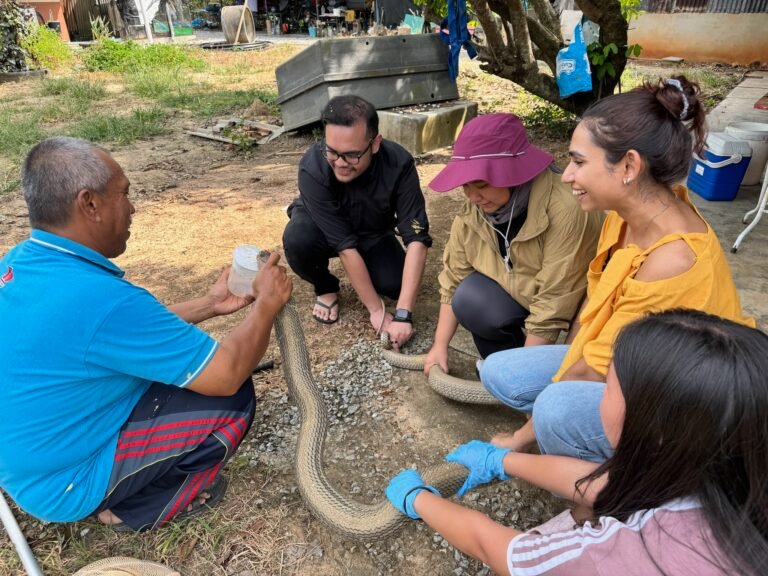
“Translational research is a knowledge-based study that can be translated into community’s and industry’s interests.
“For example, the water supply problem in the interior of Sabah can be placed on the research workbench for the purpose of resolving the problem that is affecting the rural communities,” he added.
According to him, transdisciplinary research is a study undertaken not just by a group of researchers in one field, but also involves researchers from other different but relevant fields.
Sharil cited the study on aquaculture in Sabah which could involve experts from the Borneo Marine Research Institute (BMRI) as well in order to gain knowledge of the species of fish and their feed.
He said at the same time, a study of social science is also needed to see the impact of aquaculture on the community. Besides that, he said, it can also involve experts from the Business, Economic and Accounting (FPEP) Faculty to study on the market, while those from the engineering programme can look at solving problems in the physical aspects for aquaculture.
Sharil said: “UMS has set 70 per cent of its internal research data to be in the form of translational and transdisciplinary research, apart from providing research grants that not only focus on a certain field, but more to translational and transdisciplinary research.”
He said when the university is focused on translational research, it will have slight impact on the education field because the study conducted on resolving a locality and country’s problem may make it hard for the researcher to publish a journal.
“It is true that academicians mostly prefer to choose to do research that enable them to publish a journal at the international-level, which will also contribute to increasing the rank of the university.
“But the reality is that, the study is merely knowledge study and has less impact on the community and industry,” he said.
[/ihc-hide-content]