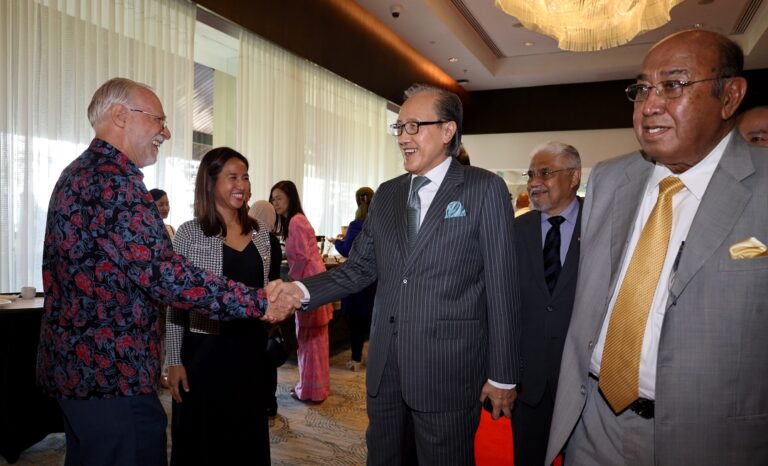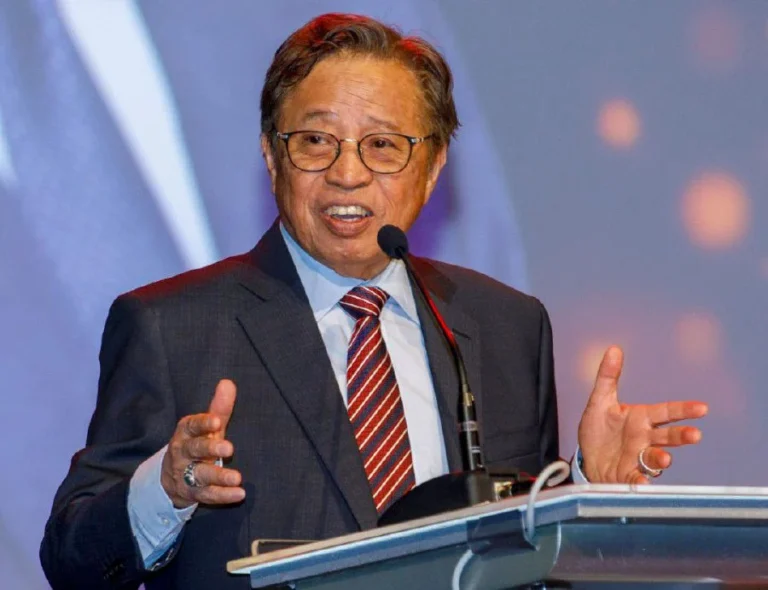
BANDAR SUNWAY: A workshop on journalism, to a group of science graduates, aspiring to be science communicators, came as an eye-opener to the participants of the event.
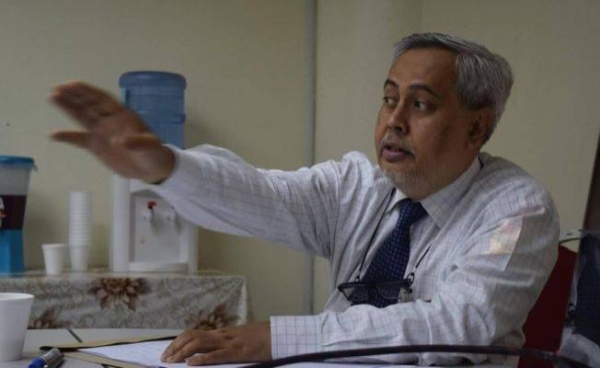
The workshop hosted by the Malaysian Biotechnology Information Centre (Mabic) at the Monash University Malaysia, here, was con-ducted by veteran journalist and editor of The Petri Dish, Joseph Masilamany.
[ihc-hide-content ihc_mb_type=”show” ihc_mb_who=”2,3,5″ ihc_mb_template=”1″ ]Participants listened attentively as Masilamany not only lent an “academic lecture” but shared personal experiences that were interestingly anecdotal ranging from getting news leads from various sources such as mortuary attendants, taxi drivers and also touching on the in’s and out’s of sitting through a police press conference among others.
To give an idea of crime reporting, he cited high-profile crime cases such as the Canny Ong murder which had the nation’s rapt attention from the time when the police were investigating a missing person’s report, till the time when police found the partly burnt body of the sexually assaulted IT consultant.
Masilamany also spoke on how the media gave importance to the case and how news reporters covered the story. He gave rare insights from the newsroom as the story of Ong’s murder broke and developed into a gripping headline story every day.
On the topic of “where does news come from” the award-winning journalist spoke on the formal sources of news such as press releases and the wire service but also surprised his audience when he said, he earned a front page story once, after finding a carelessly “littered” internal circular in a teaching hospital.
He said the circular from the pharmacology department was addressed to all surgical staff, cautioning them to find out if patients slated for surgery had consumed noni juice (mengkudu, or Morinda citrifolia) in the days preceding the surgery as the juice could interfere with the body’s clotting mechanism, and cause massive bleeding during the surgery and the post-surgical period.
The findings were based on an actual case which happened in the hospital, according to the circular.
“I pursued the story as I could immediately smell big news from the information in that circular, and noni juice was touted as an iconic tonic among the MLM industry at that time,” said Masilamany.
Masilamany also took participants on a fascinating “armchair tour” of the newsroom, describing the dramatic atmosphere in the newsroom, all the goings-on there, the people who work there and the process a story goes through before it is finally published in print.
He also touched on other aspects, such as the various types of stories, the different sections such as the crime desk, the features desk, sports desk, opinion and comment writers as well as the speciality of “leader writers” who are experts at creating public opinion on various issues.
A special slot on science journalism was also included in his talk.
The participants who attended the workshop included science officers from the National Science Centre and also a research assistant from the centre, science graduates, undergraduates as well as diploma students from private and public universities.
One participant was a student of mass communication from a private college. “The workshop has given me an exposure to journalism in detail.
I am enlightened to know the real working culture in journalism,” said Elena Mazlan, a science officer from the National Science Centre.
Syahmi Iekhsan, a Diploma student in journalism from SEGI College said that he had gained vast knowledge from the workshop. “We generally learnt about the ‘Nut Graph’ in college, but never in full detail as what Joseph has taught me today. Truth be told, it’s a wake-up call for students like me as learning it in the classroom com-pared to getting it from the horses’ mouth is a big difference. I wish I knew all these earlier,” he said.
“Truth be told, it’s a wake up call for students like me as learning it in the classroom compared to getting it from the horses’ mouth is a big difference. I wish I knew all these earlier.”- Syahmi Iekhsan, Mass communication student
“Although I have a science-based background, I am delighted to learn about news writing and journalism from the workshop. Joseph is such an inspiring speaker that he had intrigued me to further explore this field,” said Kavimalar Devaraj, a research assistant at the University of Malaya.
As it was only a two-hour workshop, Mabic is looking forward to having a follow-up journalism workshop which will focus on how to write an interesting press release and a news report in detail as well as how to develop a personal writing style and other finer details on becoming a professional media person.
NOTE: Joseph Masilamany has been a journalist for the last 40 years. He got his first byline in the New Straits Times at the age of 16, as a Form Four student. The versatile veteran has interest on just about everything around him and has written on many a wide-ranging subject and has covered general news, politics, science and medicine, personality profiles, travel features, eulogies of famous people, crime, Parliament reporting, business news, courtroom reporting as well as human interest stories among others.
In 2006 and 2007, he was presented the “Top Medical Journalist” award by the Health Ministry and in 2007, he received the Laureate Award from the Geneva-based UCIP for a story he wrote on inter-faith dialogue titled “Hail the Peacemakers” and a sidebar titled “Children Of The Same God”.
[/ihc-hide-content]