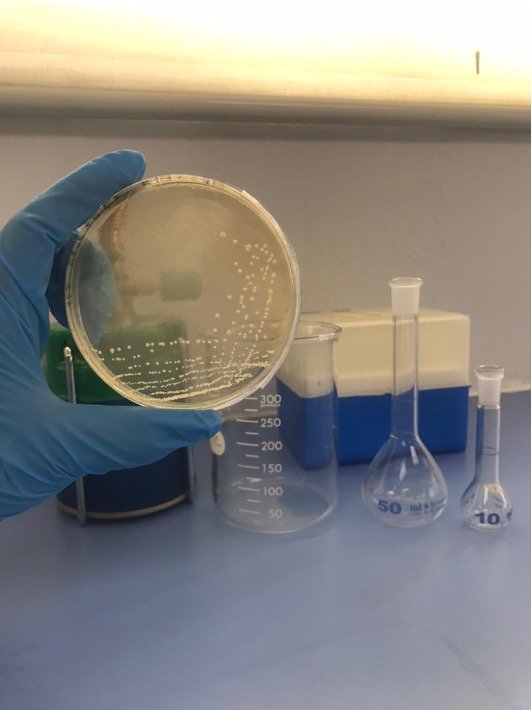
Bacteria are the simplest form of life. They are single-cell creatures found in our food, inside our bodies, on our cell phones and just about everywhere. They come in different shapes and sizes, whether spherical, rod-shaped or spiral. We can’t see them, but they are just undefeatable! They are true survivors, and that is why we are slapped with the challenges of dealing with multi-resistant organisms! There are a lot that human can learn from their adaptation strategies that counter the uncertainty of ever-changing environmental conditions.
[ihc-hide-content ihc_mb_type=”show” ihc_mb_who=”2,3″ ihc_mb_template=”1″ ]From arctic snow to heat vents – bacteria are quite literally EVERYWHERE! These intriguing creatures display regulatory networks, autoaggregation, coordinated behaviour transport systems, communication & decisionmaking abilities – despite their extremely tiny size! their population stands at a staggering 5,000,000,000,000,000,000,000,000,000,000!
Bacteria found in Subzero Arctic frost at –15ºC, the coldest temperature bacteria have ever grown in, could indicate bacteria survive under similar conditions on Mars. Scientists examined its genome and cellular structure. They found out it had an abnormal amount of cold resistant proteins and especially well adapted membranes.
Scientists discovered the existence of ultra-small microbes inside salt deposits on a yellow “chimney” stack at Dallol Volcano in Ethiopia at 89ºC. Scientists think the microbes slowly convert energy by chemical reactions that extract energy and carbon from wisps of gases such as carbon monoxide and dimethyl sulfide that blow into the desolate mountain area.
Scientists unearthed ancient bacteria from the sediment of Dead Sea which has extreme salinity. The bacteria produce and store wax esters — energy-rich molecules — when food becomes scarce.
When starved of nutrients, some bacteria can survive by going into ‘zombie’ mode. In that dormant state, the bacteria no longer need nutrients and become resistant to damaging influences, for example, antibiotics. A good thing for the bacteria, but less beneficial for us: thanks to this trick, bacterial infections can suddenly flare up again after they were seemingly successfully treated with antibiotics!
Cyanobacteria (bacteria that produce energy through photosynthesis like plants) change the way they grow and divide in response to different levels of light. With typical light conditions, the cells remain relatively short and divide symmetrically. But as light dims, the cells grow longer and divide unevenly, resulting in two daughter cells of different lengths. Elongating themselves could give the cell more surface area to absorb light in dim conditions.
[/ihc-hide-content]