Which mammals lay leathery eggs?
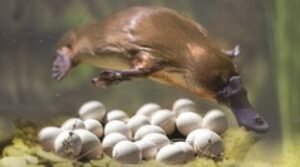
TWO MAMMALS, the duck-billed platypus and the echidna (spiny anteater), do not give birth to live young. Instead, they are very primitive for mammals because, like reptiles and birds, they lay eggs rather than having live birth. They lay eggs that are protected by leathery shells. After laying eggs in the nest, the mother platypus warms the egg with her body for about ten days until they hatch. The females don’t have [ihc-hide-content ihc_mb_type=”show” ihc_mb_who=”2,3″ ihc_mb_template=”1″ ] nipples, but ‘sweat’ milk instead from a patch on their belly. In fact, it may be that milk evolved from sweat.
The mammals that lay eggs are known as monotremes. Monotremes means one hole. Even though it is a single hole but it is a multipurpose hole in which they defecate, urinate and reproduce just like birds and snakes. The monotremes are rather derived, having highly modified snouts or beaks and modern adult monotremes have no teeth. Like other mammals, monotremes have a single bone in their lower jaw, three middle ear bones, high metabolic rates, hair, and they produce milk to nourish the young.
What is an albino plant?
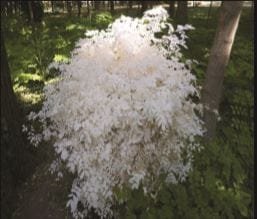
ALBINISM is the lack of pigmentation which is often observed in human and animal. They appear mostly pale or white due to the absence of melanin in hair, skin or eyes. Despite their rare condition, most albino animals can still live in the wild as their unique appearance does not affect their survivals. But what about albinism in plant? Albinism in plant is slightly different compared to in animal. Albino plants lack the pigment chlorophyll in
their leaves.
Chlorophyll is needed in plant to convert sunlight into energy through the process of photosynthesis. Therefore, the absence of chlorophyll in plants pose a threat as the plant is unable to make their own food. Most albino plants cannot survive for long in the absence of food and will die at the seedlings stage once they have used up the energy stored in the seed. However, there are some plant species that have adapted their albinism and able to survive and blossomed as a beautiful plant.
Albino redwood, famously knows as the forest ghost is one of the biggest plants in the world. They are native to California with 25 of the plants has been identified in that state. They are considered as parasitic which means they depend on the parent plants to survive. They are usually attached to the root of the parent plants at where they gain their nutrient from. They are mostly seen with their snow-white needles growing offshoot from the parent plant.
These plants can grow up to 20 meters tall and 100 years despite being a slow growth plant. There are still many researches to be done on albino plants such as redwoods. Understanding the genetics of such plants may help us to find a new way to help other albino plants beside redwoods to survive in any condition.
When does the clock appears to stop?

SACCADIC CHRONOSTASIS refers to the subjective temporal lengthening of the first visual stimulus perceived after an eye movement and is most commonly experienced as the “stopped clock” illusion. Sometimes when you look at a clock time seems to stand still. Maybe you’ve noticed this to your bemusement or horror as well. You’ll be in the middle of something and flick your eyes up to an analogue clock on the wall to see what the time is. The second hand of the clock seems to hang in space as if you’ve just caught the clock in a moment of laziness. After this pause, time seems to restart and the clock ticks on as normal. This happens because your brain replaces the gap in your vision caused by your eyes movement with an image of the clock!
What is new in Moon exploration?

THE EARTH’S moon has been a neverending source of attraction for humanity for thousands of years. Apollo 11 being the first spaceflight that landed human on the moon’s surface in 1969, since then scientists around the globe has been rapidly exploring the moon. To date, only the Soviet Union/Russia, the United States and China have successfully sent landers on the moon. Recently, India’s attempt to become the first country to land a robotic mission at the Moon’s South Pole has failed, after engineers lost contact with the Vikram lander which is part of the Chandrayaan-2 probe.
Meanwhile, NASA is leading the charge with its Artemis program, which aims to land two astronauts near the moon’s South Pole by 2024 and to build up a long-term, sustainable presence on and around Earth’s nearest neighbour in the ensuing years with help of the Lunar Reconnaissance Orbiter (LRO) of NASA which aimed to enable new discoveries and bring the moon back into the public eye.
China has already embarked on an ambitious robotic lunar-exploration campaign, whereby the recent lunar mission, Chang’e 4, has touched down on the moon’s mysterious far side — the South Pole, something that had never been done before. On the other side, Russia is working on Luna-25, a resource-prospecting mission to the lunar South Pole that could launch in the 2022 to 2024 time frame.
Why do many of them focusing near the lunar South Pole? This is because scientists found some huge amounts of water ice on the floors that permanently shadowed craters. NASA views this ice as a potentially game-changing resource, which will not only keep astronauts alive but also help fuel their spacecraft and any others that may swing by. There could even be a new generation of permanent Moon residents, perhaps known as “Selenians”. In other words, we are going back to the Moon. And this time, we intend to stay!
How do insects see?
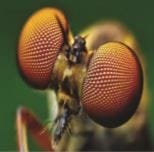
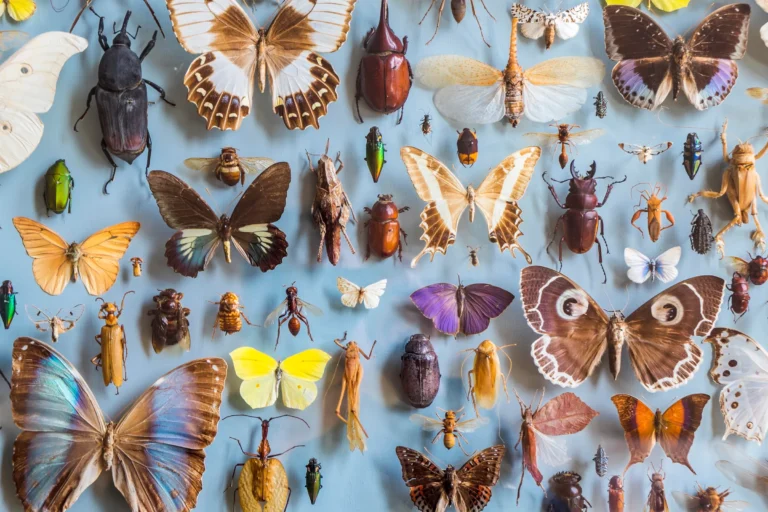
INSECTS have much better vision and can see in far greater detail. Because of segmented eye structure, many insects see objects very differently from what humans perceive. Insects are famous for their dot-like eyes, known as ommatidia. Their compound eyes typically consist of thousands of tiny lenscapped ‘eye-units’, which together should capture a low-resolution pixelated image of the surrounding world. Researchers found that photoreceptor cells underneath the lenses, instead, move rapidly and automatically in and out of focus, they sample an image of the world around them. This microscopic light-sensor “twitching” is so fast that we cannot see it with our naked eye. This kind of eye does not see objects clearly, but it does allow the insects to spot even the slightest movement from almost any direction. [/ihc-hide-content]