Compiled by NARVIINYA MURUGAPPAN
What is a Portuguese Man o’ War?
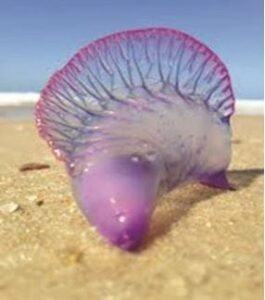
IT MAY look like a plastic bag drifting in the ocean, but it’s in fact a carnivorous sea creature that can paralyse and kill small fishes and inflict searing pain on humans upon contact. The Portuguese man o’ war ( Physalia physalis ) is often
: [ihc-hide-content ihc_mb_type=”show” ihc_mb_who=”2,3,5″ ihc_mb_template=”1″ ]
mistaken for a jellyfish, but it’s actually a siphonophore, a colony of individual organisms that works together to operate as a single animal. The individual organisms cannot survive on their own, hence they form symbiotic relationships that allow the Portuguese man o’ war to hunt prey, float, digest, and reproduce. They are named after an 18th century Portuguese warship due to its “sail” a gas-filled bladder that keeps it afloat. With this buoyant bladder, this siphonophore relies on the currents and winds to move across the ocean.
Many slender tentacles are attached to the bottom, just under the water’s surface, and can vary between 30 to 160 feet! Its tentacles are studded with capsules called nematocysts, that contain venomous, thread-like structures that can easily paralyse and devour its prey. Similar to jellyfishes, they deliver a powerful sting to humans, leaving excruciating red welts on contact points. In some cases, their stings may result in elevated heart rates, muscle cramps, and nausea. The Portuguese man o’ war can be found travelling in groups of 1000 or more in tropical regions, and has been washed up ashore on many beaches worldwide. Its tentacles are still potent and venomous even after the animal’s death, so it’s best to keep a distance from them, both in shallow waters and on the sand.
Why does our hair curl when it’s wet?
HAVE YOU ever wondered why your hair sometimes forms chunky, wavy or curly clumps after a shower, even though you might have naturally straight hair when it’s dry? This phenomenon can be attributed to chemical bonding between hair strands. Hair is made up of long, fibrous proteins known as keratin. Keratin is also found in fingernails and skin, and exhibits structural and protective properties. The chemical sulphur is found in these keratin proteins, and is able to bond to other sulphur molecules as well, creating disulphide bonds.
These disulphide bonds are strong and permanent, responsible for the coiling of a hair strand which creates naturally curly and wavy hair. A second type of bond is formed when hair is wet: hydrogen bonds. Water molecules on one hair strand would form bonds with neighbouring water molecules on another hair strand, thus shaping the hair into a more wavy or curly structure. However, hydrogen bonds are weaker than disulphide bonds, which is why curliness from wet hair is only temporary. The same bonding occurs in humid climates as well on a smaller scale. Humid air has more water molecules, thus initiating more hydrogen bonds between hair strands and causing frizzy, curly hair.
Where do honey bees go during winter?
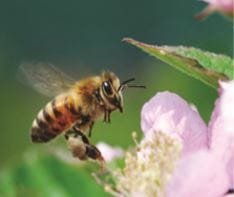
DIFFERENT species of bees display different winter habits, with some dying towards the end of autumn, and some others going into hibernation throughout the colder months. For the western honey bee ( Apis mellifera ), the most common honey bee in the world, they remain awake and active all-year round. Honey bees prepare for the colder months by building up their honey reserves in their hives, which will sustain them throughout winter when the conditions are harsh and there is a lack of flowers. A honey reserve that is insufficient will result in the death of many bees before the next spring.
To keep warm in winters that can drop to 10 °C, the worker bees form a cluster in their hive, with their queen bee and her brood at its core. With their heads pointing inwards, the worker bees attach themselves to each other, and shiver to vibrate their flight muscles, thereby generating heat. Thousands of shivering, vibrating honey bees can warm up the core of the cluster up to 32 to 37 °C . The bees on the outer layer of the cluster would do most of the insulation, while the bees on the inner layer feed on the stored honey to sustain themselves and gain energy to vibrate. Both layers would routinely trade places with each other, rotating their roles so the entire colony would be able to survive the winter.
Who was the first woman in space?

VALENTINA TERESHKOVA, a textile factory worker and avid parachutist in her youth, is the first woman to have flown in space. In 1963 at 26 years old, she holds the record for being the youngest woman in space, and to date, remains the only woman to have undertaken a solo space mission.
She had spent nearly three days in space and successfully orbited Earth 48 times. Born on 6 March 1937, Tereshkova is the daughter of a tractor driver and a textile worker. After her father passed away, her family relocated and she began work at the local textile factory and joined the air sports club when she was a teen. It was there that she developed a passion for parachuting, and she soon amassed over 100 parachute jumps under her belt, giving her a great advantage during the selection process to be the first female cosmonaut. After many months of intense and grueling training in the Soviet space program, on 16 June 1963, she boarded the space capsule Vostok 6 and was launched into space, becoming the 12th person in space and sealing her status as the first female to have done so.
She returned three days later, parachuting out of Vostok 6 safely when she re-entered Earth’s atmosphere with just a bruised nose. Tereshkova very quickly garnered massive international praise, especially for championing women in science fields. She has not returned to space since her first space mission. She later became a colonel in the national air force and a cosmonaut instructor, and currently serves in the Russian parliament.
How does helium affect our voice?

HELIUM is a gas that is six to seven times less dense than air, which is composed of mainly nitrogen and oxygen. When we speak or sing, air would travel from our lungs to our larynx, which contains the vocal cords. Our vocal cords vibrate and create sound waves that resonate throughout our vocal tract, and in a medium like air, this would translate into what we hear as our voices. As helium is less dense than air, sound waves would travel much faster through it, thus resulting in a funny-sounding voice. This happens through a change in the quality of our voice, known as the timbre –which arises from the tone of the sound waves and defines the distinction of our voice compared to other people. The pitch, however, does not actually change, as our vocal cords would still vibrate at the same frequency no matter which gas is the medium. The timbre changes as the faster-travelling sound waves affect the resonance in our vocal tracts, amplifying high-frequency sounds over low-frequency ones. This would explain why our voices may seem higher after inhaling helium. While this party trick may have been done countless times, caution still needs to be taken to avoid any health issues. A common effect from inhaling helium too many times would be light-headedness, a dizzy, nauseating feeling indicating that the brain is not receiving enough oxygen to function. It is advised to inhale only a few small breaths of helium, and to follow each one of them with a full exhale and a deep breath of regular air. Another crucial advice is to never inhale helium directly from a gas tank, as it may rupture the lungs and can also cause a stroke or a seizure.
When was the microscope invented?
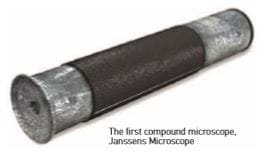
IN 1590, the first ever compound microscope was invented, and comprised two lenses one objective lens which was placed closer to the specimen, and one eyepiece lens which magnified and presented the image of the specimen under study. The earliest microscopes were just simple magnifying glasses, used to view minuscule things like insects around the 13th century. The invention of the compound microscope was groundbreaking, as it could enlarge an image so much better than an average magnifying glass at the time.
Its creation is widely credited to the father-son duo of Hans and Zacharias Janssen, and had the capability to magnify an object three to nine times its actual size. However, the early compound microscope was not capable of increasing resolution yet, so the images that were magnified were often vague or blurry.Over the years, many scientists had improved upon the original microscope design by the Janssens, including Galileo Galilei and Antonie van Leeuwenhoek. It was van Leeuwenhoek who revolutionised the microscope lens design in the late 17th century and discovered an amazing new world, one that could not be seen by the naked eye.
He saw bacteria, blood cells, and other microorganism for the first time, and established the field of microbiology. This breakthrough finally shed light on pathogens the actual causes of diseases and illnesses afflicting the population at the time when it was generally believed that things like bad air, imbalanced body fluids, or religious reasons that many people were suffering from ailments.
: [/ihc-hide-content]