THE Malaysian Biotechnology Information Center (MABIC) in collaboration with The Petri Dish and Science Media Centre (SMC) Malaysia organised a virtual workshop on science journalism entitled: “From research articles to popular science”.
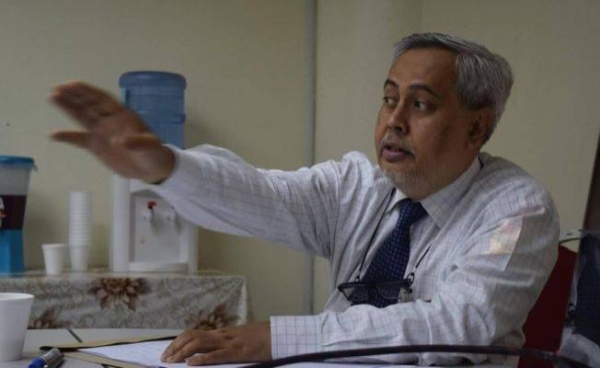
The workshop which provided an introduction to science journalism and communication was conducted by veteran journalist and editor of The Petri Dish, Joseph Masilamany. [ihc-hide-content ihc_mb_type=”show” ihc_mb_who=”2,3,5″ ihc_mb_template=”1″ ]
Participants listened attentively as the workshop content developed by Masilamany covered several interesting topics, one of which is how science influences most aspects of our everyday life and science improves human life at every level, from individual comfort to global issues.
Masilamany also highlighted some important topics like what is science communication and why should science be communicated, the importance of identifying “your” audience, the tools needed for effective science communication, speaking to the masses, the need for simplifying jargons and many more.
On the topic of “tell a story, don’t write an article” the award winning journalist emphasised that the term “story” and “article” have different tones.
“People like to listen to a story, not read a hardcore boring technical report or scientific article. A “story” has a softer element and “human face” but an article is always full of hard facts and is often less entertaining, he explained.
Masilamany also spoke on the importance of the headline and first paragraph in every “story” to the participants who consisted of researchers, lecturers, public relation officers and journalists.
He said it is the headline that will flag down your readers. If it is exciting, dramatic, unusual and also funny, your readers will want to continue reading. It is very important to pay attention to your headline and the first paragraph at least.
The workshop was hosted by Dr Mahaletchumy Arujanan, the Executive Director of MABIC and Editor-in-chief of The Petri Dish. The co-founder of Science Media Centre Malaysia, Tan Su Lin who is also an award-winning journalist with 10 years of experience in the media industry also joined the workshop to provide some insights to the participants from the media’s perception.
Besides Masilamany, both Mahaletchumy and Su Lin took questions from the participants at the end of the workshop.
One thought provoking question by a participant from the Philippines, Clement Dionglay was on how to avoid over simplifying jargons in a “story” to which Masilamany responded as it being a very prolific question.
“In all our enthusiasm to simplify science for the masses, we never thought of the danger of oversimplifying science to the extent where the ‘science’ itself contained in a story is lost to arty words by the journalist.
“It is a case of throwing the baby with the bathwater science,” Masilamany said.
Su Lin addressed this question by sharing her experience with researchers who had to simplify their years of research into a three minutes story. She said as much as researchers would want to maintain the “pureness” of their scientific research, it does not serve any purpose if nobody is able to understand all the jargons used in the name of keeping the science content as pure as possible.
“I believe it is important to strike a balance between maintaining jargons and simplifying them. There is no such thing as “over translating” your research, instead it boils down to how well you are able to communicate the research with or without the jargons,” Su Lin said.
Su Lin echoed the thoughts of Joseph who during his talk said simplifying a technical content into a simple, non-technical story is an art by itself. It is not an easy task, she added.
The two hours virtual workshop received positive feedback and applaud from the participants.
Sarah Effendi, a researcher from the Tropical Infectious Diseases and Education Centre at Universiti Malaya said the session was very useful. She enjoyed the brilliant discussion during the question and answer session.
Another participant, Nirmell Satthiyasilan, a postgraduate thanked the team for organising a well-planned and informative workshop.
“It is my very first time attending a workshop on science journalism. The workshop served as an excellent introduction to science communication. I am looking forward to more practical steps in future workshops,” said Assistant Professor Eugenie Tan from University College Sedaya International (UCSI).
A training manager from Medhini Group Sdn Bhd, Drona Dewi said the organising committee of the workshop did a great job to create awareness on the importance of science communication by instilling the need for self-learning attitude to enhance writing skills among scientists.
“Joseph made it very clear by emphasizing how to write a ‘story’ instead of a boring article. He went into details of how to start the story from the headline, first paragraph and body text with a dramatic take-off. Most importantly he insisted that the dignity of science must be kept intact!” Drona added.
Another such session via Zoom is being planned as there were others who were keen to attend but were not able to make it.
Mabic is also planning another Level 1 workshop on how to create a journalistic outline.
MABIC is planning to have more physical workshops on science journalism and communication once the conditional movement controlled order is lifted.
[/ihc-hide-content]