BY JOSEPH MASILAMANY
According to a mycologist (mushroom expert) 16 species of Magic Mushroom have been identified in Malaysia.
These mushrooms were discovered from 2012 till 2016 on different types of “substrates” such as soil, grassland, deadwood and animal dung.
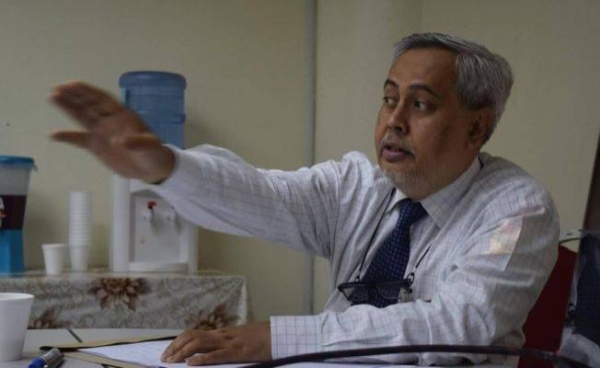
According to Dr Jaya Seelan Sathiya Seelan, from the Institute for Tropical Biology and Conservation, Universiti Malaysia Sabah, and MRC’s national collaborator, earlier studies conducted by British mycologist Prof Corner E.J.H (British Mycologist) had reported that Malaysia harbours at least six species of which two – Boletus flammeus and Copelandia cyanescens were found in the Borneo Island between 1972-1998.[ihc-hide-content ihc_mb_type=”show” ihc_mb_who=”2,3″ ihc_mb_template=”1″ ]
Jaya Seelan told The Petri Dish there has been no proper taxonomic or DNA identification of these mushrooms so far.
He said his findings suggested that there were many variations among the Psilocybe, Copelandia and Paneolus species based on colour, habitat, spore ornamentation and substrates.
“It is impossible to identify them just based on taxonomic details,” he added.
Currently, he is looking at their distribution based on DNA evidence.
Jaya Seelan said it is time to compile new information to disseminate to the public on their importance and to create awareness to the potential harm of consuming this mushroom species.
He said: “The most common Psilocybe, Copelandia and Paneolus species were found in Sabah.”
He said the Sabahans, especially the indigenous community considered this group of mushrooms as “natural laughing gas”.
“But they are better known as Sumasara by the local community. However, the natives never used this for any spiritual or ritual activities.
“Most of the cases recorded were accidental consumption. Unfortunately, not much data has been published,” he added.
According to him, recently, there has been a growing concern of the mushrooms’ so-called “magic” effects and this has alerted all mycologist to pay attention to this group of fungi worldwide.
He said the local people here are very curious to get to know how they look like and the frequent question encountered is, “Can I try them”?
He said with an increasing number of tourists from foreign countries, the purchasing of these dried magic mushrooms is growing.
“Scientists should work together with the narcotic department to curb the purchasing and consumption of these mushrooms illegally,” he added.
[/ihc-hide-content]