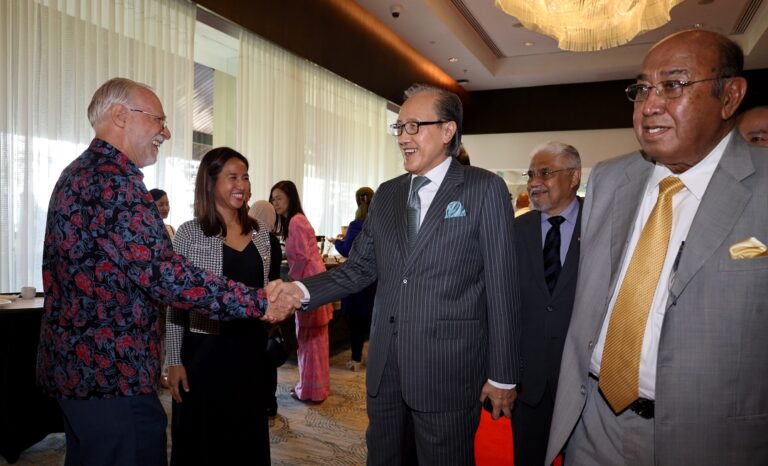
Organised by the Malaysian Invention and Design Society (MINDS), the event was held at the Kuala Lumpur Convention Centre from May 11 till May 13 – where the industry’s keenest got to discuss and debate their research work, as well as seek out potential investors to fund their inventions. The competition was [ihc-hide-content ihc_mb_type=”show” ihc_mb_who=”2,3,5″ ihc_mb_template=”1″ ]open to both local and international inventors.
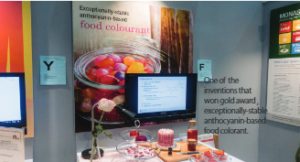
GOLD AWARD 1 for developing exceptionally-stable anthocyanin-based food colorant
Anthocyanins, a popular choice for natural food colorants, are unstable at low acidity or neutral pH. Thus, anthocyanins that are less affected by pH, such as those with multiple acylated groups, are highly desirable. One such source is from the leaves of Rhoeo spathacea (Swartz) Stearn, a herbal plant traditionally decocted and consumed orally and commonly called by various names: Moses-in-the-cradle, Moses-in-the-basket and Oyster plant.
The research was undertaken by Dr Joash Tan Ban Lee and Associate Professor Lim Yau Yan from the School of Science.
GOLD AWARD 2 for developing mDengue Mobile Application
Dengue is a viral infection carried by female Aedes mosquitoes. The number of dengue cases and dengue deaths are increasing not only at the national level, but also at the district level.
In Segamat, the number of dengue cases were: 74 (2013), 192 (2014), 283 (2015), 265 (Until Sept 2016). In order to control dengue, it is thus important to control mosquito population growth. In collaboration with the Segamat District Public Health Office and The South East Asia Community Observatory (SEACO), the mobile application and website have been developed to capture possible mosquito breeding sites.
This research project was conducted by Professor Pascale Allotey, Professor Daniel Reidpath, Norliza Mat, Kridaraan Komahan and Ameerul Afif Ahmad from SEACO and Jeffrey Cheah School of Medicine and Health Science.
SILVER AWARD 1 for developing Haruan Fish Extract
Wound healing is a complex series of reactions and interactions among cells and mediators, which starts once the wound is inflicted, and continues for weeks. Healing is still a major problem to any kind of surgery, particularly in cardiothoracic surgery where delayed sternal wound healing and sternal or leg wound infections are a major cause of morbidity and mortality in patients after cardiac surgery.
The main objective of this study is to assess the effect of Haruan fish (Channa striatus) extract on chest and leg wound post-coronary artery bypass grafting (CABG) surgery with the optimum and standard patient care in two groups of randomised patients. Assessments were made on wound pain, mobilisation and on the health-related quality of life (HRQOL) of patients using the Nottingham Health Profile (NHP).
This is the first randomised, double blind clinical trial being conducted on this matter although there has been anecdotal evidence on the efficacy of Haruan fish.
The study has proved the superior effect of using Channa striatus, which is easily processed into capsules in promoting wound healing, reducing pain via its anti-nociceptive effect and improving quality of life of patients after coronary artery bypass grafting surgery.
It is inferred that a faster recovery from surgery confers an advantage in terms of resources to overall economic benefits. Reduction in the percentage of wound infection also resulted in reduced hospital cost.
And all these will lead to the successful commercialisation ofHaruan as a nutraceutical product.
The research was undertaken by Dato’ Dr Ahmand Farouk Musa and Professor Rusli Nordin Jeffrey Cheah School of Medicine and Health Sciences, Dato’ Sri Dr Jeswant Dillon, Dato’ Dr Mohamed Ezani Md Taib and Dr Alwi Mohamed Yunus of the Institut Jantung Negara (IJN).
SILVER AWARD 2 for developing GeneBlocks

Gamification is a new approach used in teaching and learning in higher education. Researchers are proposing an innovative way of teaching Molecular Biology for undergraduate students through boardgames and card game.
These inventions serve to educate students on gene expression and regulation in cells and at the same time provide opportunity for peer discussion and interaction. The board game and card game can be played by up to six players and will take approximately 60 min to complete.
This project was undertaken by Dr Hue Seow Mun Jasmine, Dr Shaun Lee Wen Huey and Fadhliyanshah Saipul of the Monash School of Science.
SILVER AWARD 3 for developing Automated Micro Device Manufacturing System
The present invention overcomes major challenges faced in the IC manufacturing industry which is the variation in critical dimension uniformity during prolonged process of etching and developing in microdevice fabrication. Uniformity of dimensions plays a critical role in semiconductor fabrication.
“The MONASH – automated wet bench” presents a novel inventive end point measurement technology that ensures high-quality device manufacturing at a low cost. The integrated version of the mask aligner and automated wet bench will favor small-scale industry and education institutions to cater to the needs of microdevice fabrication.
The project was presented by Dr Narayanan Ramakrishnan, Kukaraj Tharmasegaram and Lee Neam Heng from the School of Engineering.
SILVER AWARD 4 for developing Multiple Antigens Surface Displayed-Lactococcus Oral Vaccine for Influenza
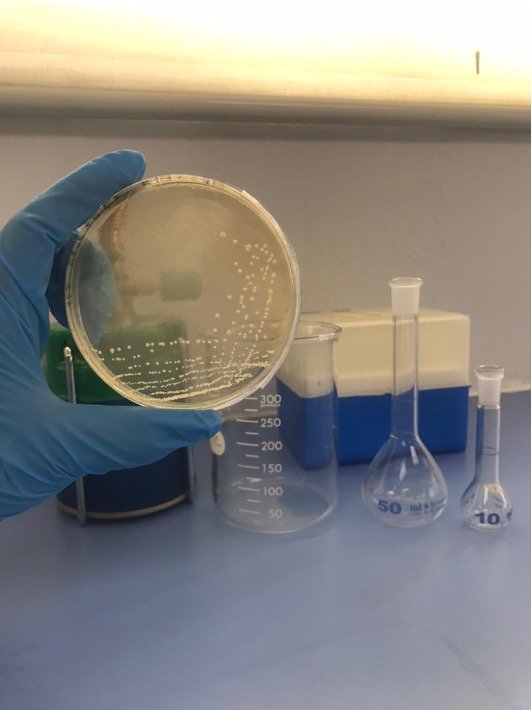
The first prototype of an oral vaccine against Avian Influenza using Lactococcus sp that displays AIV multiple antigens on the surface of the bacteria.
Lactococcus is a probiotic and has been used widely to help boost animal and human health. This oral vaccine is safe as it contains only protein antigens and no live or attenuated viruses.
With this innovation, a vector template is created and is ever-ready for use, where new or current pandemic viral genes can be inserted into the vector template and the vaccine be produced at a much shorter time to be distributed to the hosts (animals and human) to protect them against endemic pathogenic and current pandemic strain/s.
Since this Lactococcus vaccine can be administered orally, it is most useful for vaccinating animals such as birds, poultry and, swine and is particularly practical also for wildlife and zoo animals, as the vaccine can be incorporated in feed and no handling of animals is required.
This vaccine has potential to be made into a yogurt-based drink for immediate immunisation of humans, thereby, can be bought over the counter, without any requirement of visiting health care centres.
This vector-template can also be used for the development of vaccines against many other bacterial, viral and parasitic diseases. The patenting process of this template and vaccines is in progress.
This research was undertaken by Associate Professor Sharifah Syed Hassan, Dr Pong Lian Yih, Professor Dr Raha Abdul Rahim & Professor Dr Abdul Rahman Omar Jeffrey Cheah School of Medicine and Health Sciences
[/ihc-hide-content]