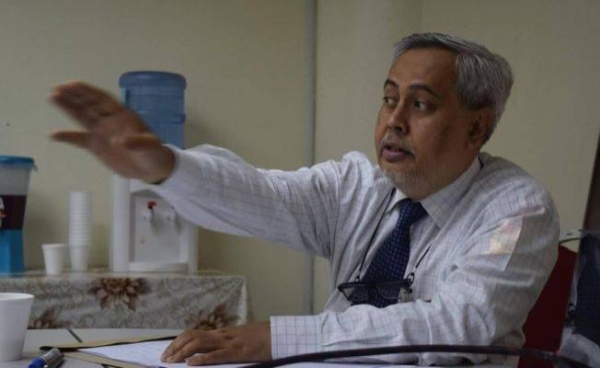
The Petri Dish (PD) recently interviewed Dr Tan Swee Lian, a former plant breeder with the Malaysian Agricultural Research and Development Institute (MARDI) for 37 years. During this time, she worked mainly on cassava and the sweet potato crops. Through her research initiative MARDI came up with some fascinating cassava and sweet potato varieties.
PD: Why is sweet potato an important crop in the country?
It is a short-term crop requiring only 3½ to 4 months to mature from planting to harvest. This means it can fit well into an annual cropping system, as a rotational crop (good as a cultural means of managing pests and diseases), or as an intercrop (grown in between annual crops with a longer cropping cycle, or between perennial crops during their juvenile non-yielding stage).
[ihc-hide-content ihc_mb_type=”show” ihc_mb_who=”2,3″ ihc_mb_template=”1″ ]The sweet potato also has many uses: The roots (tubers) can be eaten fresh after boiling, steaming or micro-waving, but fresh consumption has a somewhat limited market.
More importantly, they can be processed into animal feed (as an energy or carbohydrate source), or into flour or puree, which are then used as starting materials for many food and drink products.
Examples: bakery products (buns, cakes, muffins), fried products (crisps, crackers, nuggets, doughnuts), fries, pasta and beverages, not to mention traditional cakes and snacks (keria, cucur keledek, cakar ayam). These can be substitutes for grain corn, wheat flour and white potato or Irish potato, which are imported in substantial amounts annually.
Sweet potato roots are also highly nutritious, especially the varieties with strong coloured flesh (orange or purple) as this is due to the presence of powerful anti-oxidants (β-carotene and anthocyanin, respectively) including vitamins C and E.
Sweet potato shoots can also be eaten as a green (leafy) vegetable and have also nutritious properties.
PD: What was the focus of your research in MARDI?
MARDI has carried out a whole range of research projects on sweet potato – from farm to fork, so to speak. New varieties for table use and for processing have been released.
Technologies have been developed for sound agronomic and cultural practices on different soil types (sandy as in ex-tin mining land and bris, normal mineral soils, acid sulphate soils and drained peat), as well as for pest and disease management.
A range of food and beverage products have been developed and sensory-tested.
I believe UPM has also done a fair bit of collecting sweet potato varieties grown locally to set up a germplasm collection. MARDI also followed up on this. However, not much of the collections remain because of issues (lack of funding, personnel and interest) in maintaining the living field collections.
PD: What are the challenges in developing good varieties?
One of the main challenges in sweet potato breeding is that many of the germplasm accessions do not flower freely. This may be due to our climatic conditions which favour vegetative growth, or to the limited range of genetic resources at our disposal. Without flowering, there can be no hybridisation (crossing). While flowering can be induced by grafting and other means, there is also the problem that the sweet potato genome is beset by incompatibility groups (self- or cross-incompatible). This means it is not always possible to cross two parental varieties with the aim of combining their respective favourable traits.
PD: What are the common diseases pests affecting local varieties?
Common diseases include scab (fungus: Elsinoe batatas), little leaf disease (phytoplama) and sweet potato virus complex (a polyvirus: sweet potato feathery mottle virus (SPFMV), and a crinivirus: sweetpotato chlorotic stunt virus (SPCSV). Common pests include the sweetpotato weevil (Cylas formicarius), white grubs (various beetles) and a number of leaf-eating caterpillars.
PD: Is there ongoing vibrant research on this crop?
Yes, MARDI has recently revamped the sweetpotato research programme.
PD: What is the future of sweet potato for industrial uses in this country?
If there is enough government and research commitment, sweetpotato can: i) be a partial substitute for wheat flour in bakery and other products (Nestle showed interest in using it in this way for their instant noodles; replace Irish potatoes in fries and as potato chips; be a partial substitute for grain corn in non-ruminant feed (but this will mean getting a lower farmgate price – which won’t be attractive to farmers); be a renewable biofuel (bio-ethanol to replace petrol) – but again, it will fetch a lower farmgate price like for animal feed.
[/ihc-hide-content]