WHAT would you do if you are invited to Iran for a scientific conference?
Succumb to the bad press and negative media propaganda that the country has been plastered with and reject the invitation? Not to mention the rumours that your USA visa will become null and void after visiting Iran?
I am not one to fear this.
I have visited many countries in the “hotspot” list – all in the name of science communication, biotechnology and biosafety.
I first visited Iran in 2011 for the International Conference on Biosafety, then declined the second invitation in 2016 due to conflicting travel plans and this year made my second trip to this Muslim republic.
I just knew with my Iranian colleague Dr Behzad Ghareyazie, a prominent scientist who was the first to introduce GM rice to the world, I will be in safe hands.
Prior to the trip, I carefully chose my clothes for a week long-sleeves, long tops, pants and not to forget headscarves. Women in Iran, including visitors, must adhere to Islamic dress code. It gave me an opportunity to use my scarves stylishly to cover my head, so I am not complaining.[ihc-hide-content ihc_mb_type=”show” ihc_mb_who=”2,3,5″ ihc_mb_template=”1″ ]
This year I was there as a keynote speaker for Iran’s second International and 10th National Biotechnology Congress. I spoke on the global status of GM crops.
What was more appealing was Dr Behzad promised the international speakers visits to their research institutes and private biotech companies.
Iran was ranked 17th in terms of science production in the world in 2012, according to the statistics released by the Scopus database.
In the Muslim world, Iran is ranked second for its scientific publications, after Turkey.
Understanding the global status of development in biotechnology is important for my job as a science communicator, so I did not hesitate when I received the invitation.
My first visit to Iran gave me a glimpse of the country’s advanced scientific work and this trip was a stronger testament.
On the first day, the other international speakers from Germany, Iraq and Pakistan and I were brought to the Iranian Research Organisation for Science and Technology (IROST) located in a lush green compound in Tehran.
I still remember when Behzad took me on a cable car ride on Mt Tochal on my first visit to Iran. It was a barren mountain and as we walked on the terrain, Behzad explained to me the Iranian biodiversity and their medicinal and industrial values.
I laughed at him when he said Iran has rich biodiversity. My arrogance coming from one of the 12 mega biodiverse countries shadowing my intelligence.
In this visit, I saw the lichen (a complex life form comprised of cyanobacteria or algae and fungi) collection for the first time in my life at IROST.
Scientists here have identified over hundreds of lichen, screened them and even have commercialised anti-fungal creams. Deep in me, I felt a sense of embarrassment for making fun of Behzad years ago.
There were a few pilot scale bioreactors at IROST all in operation producing various industrial compounds.
We then visited Royan Institute, the birth place of the first cloned and transgenic animal in the Middle East and the Muslim world.

The institute had cloned two goats, one able to produce coagulation factor IX in their milk which is an important drug used in treatment of hemophilia patients and the other produces TPA or tissue plasminogen activator, commonly used to treat heart attacks.
The goats were born in January 2010 and are healthy till today. Both of them were jumping on the glass panels of their contained pen when we visited them.
Royan Institute has very well established research activities in endocrinology and female infertility, andrology, embryology, reproductive genetics, epidemiology and reproductive health.
It also offers clinical services and has excellent facilities for viral transduction, gene targeting, histology, cytometry and imaging, and electrophysiology.
I left the institute with admiration for the grit these scientists have in spite of all the limitations posed by the USA trade embargo.
The next stop was at the Iranian Biological Research Centre, another institute with breath-taking research activities. The notable achievements of this centre is negotiating and reclaiming about 7200 Iranian seed samples from foreign banks which were brought out of
Iran and some of these valuable samples no longer exist in the country and are only available at this centre.
The centre has a bank for its essential oils and extracts and has detected 30 taxa of indigenous microorganisms of Iran, and stores nearly 30,000 biological samples.
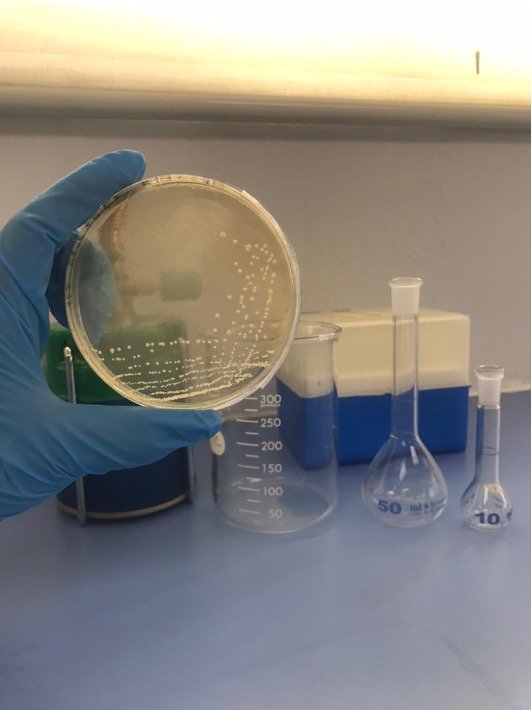
As a trained microbiologist, it was a feast to my eyes and I was mesmerised by the thousands of well characterised microbial collections in vials in little drawers kept under lock in freezers.
My immediate thought was “do we have such collections in Malaysia for all the rhetoric we make about being mega-biodiverse?”
And I felt ashamed again for mocking Behzad at Mt Tochal six years ago.
In between the biotechnology congress, kebabs and other great Iranian foods, we continued our sojourn visiting research institutes where the work published in international high impact journals come from.
The last public sector visit was to the Agribiotechnology Research Institute of Iran (ABRII) in Karaj.
In fact, this was where we were staying, at their guesthouses.
We passed by the entrance of ABRII every day and what looked like a humble building from the outside was actually filled with bustling researchers and their untiring work towards scientific excellence.
Every laboratory had nothing less than ten researchers, everyone busy at their bench. It reminded me of the cave in the famous Alibaba story.
There were indeed so much of treasure inside waiting to create impact to Iranian agriculture and industrial biotechnology.
ABRII has the accolade of developing and commercialising the first transgenic rice in the world.
Behzad had developed rice resistant to stem borers in collaboration with the Philippines-based International Rice Research Institute (IRRI) using a local variety of aromatic rice, Tarom molaii in 2005.
Unfortunately, the cultivation came to an abrupt halt due to lack of political will. This has not stopped transgenic research at ABRII.
Today there are several crops in the pipeline – drought resistant rice, pest resistant cotton and potato, herbicide tolerant sugar beet, pea and soybean.
The current Vice President and Director of the Department of Environment made a call to all scientists in Iran to work on efficient use of water, the scarcest natural resource in Iran.
Under his leadership, agribiotechnology is expected to thrive.
The other areas of research at ABRII are tissue culture, biomass, enzymes as feed additives, biocontrol, plant secondary metabolites, algae, probiotics, systems biology and nanotechnology among others. These are not just a list on their website, but active research is going on in each laboratory.
The last part of the visit took us to the private sector and I had a feeling of being in the Bay Area in San Francisco.
We also visited two companies – Aryogen and Persis Gen. Aryogen was established in 2009 and has very modern cGMP facilities that meet EU requirements to develop and produce biosimilars and other pharmaceuticals.
It has an amazing range of products for the treatment of some blood disorders, several types of cancer, and autoimmune diseases.
Recombinant DNA technology is commonly employed here to produce cell lines and these cells are grown in commercial scale bioreactors.
Persis Gen is a bio-accelerator that provides services and laboratory space for cutting-edge research and commercial activities cloning, gene expression, developing protein using single-cell, fermentation and purification.
Both companies did not look anything like biotechnology companies in the developing world. They have surpassed those standards.
Iran is indeed the jewel in the Muslim world’s crown jewel for their scientific output. Scientific advancement is flourishing in this land. Want to do sabbatical, think Iran!
[/ihc-hide-content]