The birth of the nitrogen fertiliser via the Haber-Bosch process is one of the world’s greatest contributions to modern agriculture.
It has tremendously changed the face of agriculture since the days of the synthetic nitrogen fertiliser – known as an essential crop nutrient – made vastly available and affordable to grow more crops, which eventually led to the practice of modern agriculture as seen today.
In the 1770’s scientists thought nitrogen to be a lifeless compound or ‘azote’ which represents its inability to support life on its own.
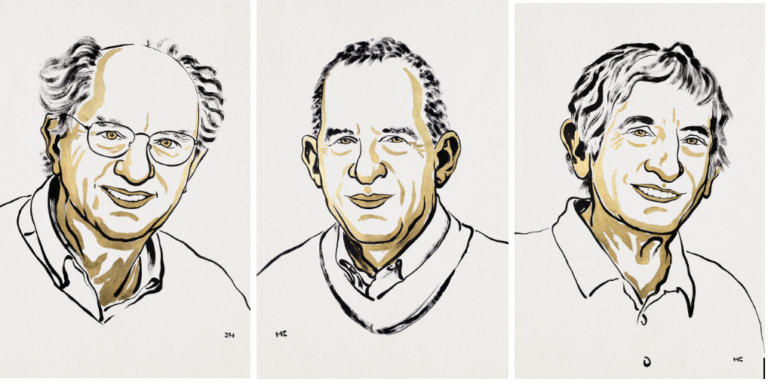
However, the scenario changed back in the 20th century, ever since Fritz Haber the scientist from Germany discovered a way of producing synthetic ammonia through a chemical reaction between nitrogen sourced directly from air and hydrogen by using a simple iron catalyst under intense pressure and temperature.
Fritz Haber received a Nobel Prize in Chemistry in 1919 for this invention. Haber’s method was further improved by Carl Bosch by scaling up the process using catalyst and high-pressure [ihc-hide-content ihc_mb_type=”show” ihc_mb_who=”2,3,5″ ihc_mb_template=”1″ ] methods. He received a Nobel Prize in 1931 for high-pressure studies.
On the other hand, the dark side of Haber-Bosch history unintentionally caused population booms and serious environmental blueprints. This consequently triggered preoccupation on sustainability issues and has been in global attention recently.
In the current time frame, many researchers, academicians, governments, policy makers and NGO’s have embarked on the need to provide a possible solution for the global nitrogen challenges.
Dr Jan Willem Erisman from the Energy Research Centre of the Netherlands and Dr Mark Sutton from the Centre for Ecology & Hydrology (CEH) have recently authored a review paper on the impact of the Haber-Bosch process in the leading scientific journal Nature GeoScience stated that ‘Haber-Bosch is perhaps the most significant invention of the 20th Century, yet it has many side effects.
So what we need now is an invention that changes the world just as such, but without causing any negative impact to the environment.
Prof Noorhana Yahya at University Teknologi Petronas has come closer than ever to achieve this goal by implementing a novel technology to produce nitrogen fertiliser, named “Green Urea” powered by sustainable energy for a clean future.
In 2012, Noorhana and her research team began a project entitled “Next Generation Green and Economical Urea” aiming to design a new method to synthesise green nitrogen fertiliser.
This RM12 million worth project funded by Long Term Research Grant Scheme (LRGS) secured from Malaysian Ministry of Higher Education (MOHE initiated collaborations with different public universities in Malaysia) such as Universiti Putra Malaysia (UPM), Universiti Sains Malaysia (USM) and Universiti Teknikal Malaysia (UeTM).
The extraordinary enthusiasms from Noorhana along with continuous support and hard work from the entire team resulted in a major resulted in a breakthrough within the five years of the project.
Urea has the most nitrogen content of all nitrogenous granular based fertilisers, hence it is mostly consumed and produced. The novelty of Green Urea lies in its technology which integrates electromagnetic and nanotechnology in synthesising ammonia and urea.
Ammonia gas was synthesised using a novel in-house designed micro-reactor in a magnetic induction zone, which reduced the conventional reaction temperature (400-500 °C) and pressure (150-300 bar) to about 50 per cent which is regarded as a great achievement. Iron oxide nano-catalyst were placed in nano-dimension and the testing in high flux density environment gives the excellent outcome.
The green fertiliser is further enhanced with control release properties which have technology of nano-based special coating and binding technology.
Lately, the research on “Green Urea” grabbed national and international interest. Early this year, Prof Noorhana grabbed the “Best Inventor Award” by the International Federation Inventor Association (IFIA) through International Technology Exhibition (ITEX) which was held in Kuala Lumpur.
This award is a recognition for her remarkable creativeness and innovation in fertiliser research and is considered as the most prestigious award throughout her career as an academician and researcher.
Moreover, the Green Urea project also bagged gold medals from Nuremberg, Germany as the “Best Green Invention” under iENA the International Trade Fair Ideas-Inventions-New products and three more from national level research competitions.
In order to carry forward “Green Urea” project to the next level, strategic commercialisation and integration with Internet of Things (IoT) elements are actively being conducted with the collaboration from Perbadanan Ekonomi Islam Negeri Perak (PKEIP).
Successful implementation of IoT technology would enable to revolutionise Malaysian agriculture industry to be in line with our National 2050 Transformation Programme.
NOTE: Professor Dr Noorhana Yahya will be giving her Professorial Talk entitled “Green Urea” For Future Sustainability at UTP on Nov 8. This would be a great opportunity to meet the researcher in person.
[/ihc-hide-content]