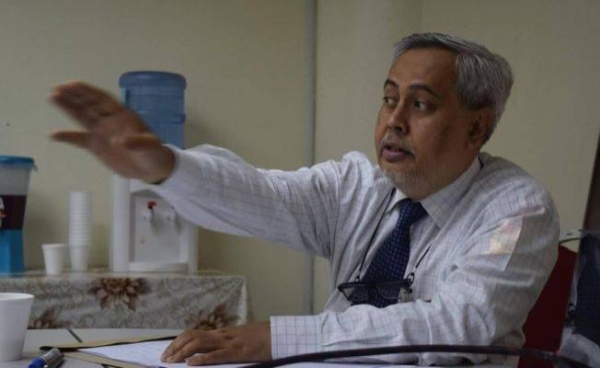
The Petri Dish Editor-in-Chief MAHALETCHUMY ARUJANAN who attended the recently concluded UN Biodiversity Conference in Sharm el-Sheikh, Egypt, says such meetings set the direction and basis for national laws, bilateral mechanisms and international trade in relation to modern biotechnology – but unwittingly cast science in the backseat.
THE Convention on Biological Diversity (CBD), Cartagena Protocol on Biosafety (CPB), the Nagoya-KL Supplementary Protocol on Liability & Redress (N-KL Supplementary Protocol) and the Nagoya Protocol on Access and Benefit Sharing (ABS) are all overarching international legal instruments that have significant impact in the way R&D and commercialisation are carried out in the field of biotechnology. They are under the purview of United Nation Environment Programme (UNEP).
The recent UN Biodiversity Conference saw delegates from more than 190 countries converging to deliberate on biodiversity topics related to the convention and the other protocols, in the beach resort of Sharm el-Sheikh, Egypt from 17-29 Nov.
To many scientists these matters are beyond their job scope and are perceived to be in the realm of policymakers, lawyers and regulators. Meetings, conferences and dialogues on regulatory matters are seen to be waste of their time as their time is better spent on research and publication.
International legal instruments could even be intimidating. But little do they know that these legal instruments dictate the way they do research and what they are allowed to and forbidden from doing. They set the direction and basis for national laws, bilateral mechanisms and international trade in relation to modern biotechnology. In fact, with ABS, the scope is not limited to just biotechnology as it covers all uses of genetic resources.
What is worrying is the direction of all these convention and [ihc-hide-content ihc_mb_type=”show” ihc_mb_who=”2,3″ ihc_mb_template=”1″ ] protocols, which, over the years have let science slip and take the backseat, hurting research. It feels like the initial aims are forgotten and are now hijacked by organisations, individuals and countries with vested interests.
The Convention on Biological Diversity (CBD) has been in force since 1993 and has three objectives: the conservation of biological diversity, the sustainable use of its components and the fair and equitable sharing of benefits arising out of the utilisation of genetic resources.
Article 16 of the Convention clearly recognises biotechnology’s great potential for the promotion of human well-being, particularly in meeting critical needs for food, agriculture and health care. The same is also mentioned in the preamble of CPB.
CPB came into force in 2003. CPB aims to ensure safe transfer, handling and use of living modified organisms resulting from modern biotechnology that may have adverse effects on the conservation and sustainable use of biological diversity, taking also into account risks to human health, and specifically focusing on transboundary movements.
The N-KL Protocol entered into force in March 2018. It is a supplementary protocol to CPB. While Malaysia was fighting tooth and nail to establish this protocol, it is yet to sign it. The protocol’s aim is to have in place international rules to address any damage resulting from LMOs.
The ABS protocol is probably the most overarching, with its long arms reaching out to all areas where genetic resources are utilised. And this does not just apply to modern biotechnology. It provides a legal framework to ensure benefits arising from the utilisation of genetic resources are shared in a fair and equitable way.
Many new tools in modern biotechnology trigger these international protocols and they are heavily scrutinised and legal experts seek to regulate all of them under the pretext of precautionary approach.
Malaysia’s position
The trend is obvious. Countries that are pragmatic about sustainable development and that are progressive in the areas of modern biotechnology, based their deliberations on science, whereas countries that are laid back with a leftist agenda had romantic notion about biodiversity and opposition to embracing new technologies like gene editing, gene drive and synthetic biology.
Unfortunately, Malaysia was the latter. This is not new as Malaysia’s position has always amused global players. At one hand we invite investors to bring in FDI in bioeconomy, and on the other hand, we want to stay away from emerging technologies.
Our position is also in contradiction with our call to students to embrace STEM. Our scientists have stopped work on GM technologies due to stringent and tedious biosafety procedures that is time consuming and unnecessary.
Malaysia used to join African countries in previous COPMOP meetings and speak on behalf of them, opposing technologies. But there was a twist this time. The African Union realised that they have missed all previous technology revolution and that it hurts their people and farmers. This time, the 55 countries spoke in unison wanting to adopt technologies while conserving their biodiversity.
A delegate from Ghana underlined the importance of technology to get out of poverty and vehemently disagreed with Parties that wanted to lump gene editing under synthetic biology that implied all technologies had the same risks.
“Africa has decided to harness new technologies for the development of the continent”, said the Ghanaian delegate.
Digital Sequence Information (DSI)
While it is still not defined precisely, DSI courted much controversy in this year’s conference. Many Parties, including Malaysia fails to understand, that access to digital sequences are important for conservation of biodiversity. Their fear is overwhelmed by the notion of biopiracy and loss of IPR.
The question remains – does digital sequencing obtained from genetic resource fall under the definition of genetic resources in the Nagoya Protocol?
Article 2 of the CBD which is referred to in Article 2 of the Nagoya Protocol defines genetic resource as “genetic material of actual or potential value”, with “genetic material” being defined as material of biological origin containing functional units of heredity. This refers to tangible genetic material which must physically contain genes. With this reference, does intangible digital sequence fall within this definition?
Including digital sequence information in the definition of genetic resources under the Nagoya Protocol would increase legal uncertainty and unworkable ABS obligations, making monitoring and compliance almost impossible to achieve. This is how we ended by with a labelling law for GM products but it is still not implemented.
Furthermore, DSI is not just DNA, but could also be defined as RNA.
Synthetic biology
This is the latest toolkit for molecular biologists. Its application is so wide that is not limited to any one field or sector.
Number of companies and investment is increasing rapidly due to its potential. US is clearly the leader in this field with around 300 companies in 2017. Europe is catching up with UK being ahead of the pack with 81 startups in 2017, while France has 20, Switzerland 12, and Germany 11.
The good news is that activists failed to place a moratorium on this technology.
Gene drive
There were calls to ban gene drive by radical anti-science activists, but countries with better scientific vision opposed the ban.
A gene drive is a technology that can rapidly propagate a particular set of genes throughout a population, so that offspring within a population have a >50% chance of inheritance of a given trait.
Target Malaria, a not-for-profit research consortium works on reducing number of female malaria mosquitoes with a focus in African countries. Island Conservation another non-profit organisation with the mission to prevent extinctions by removing invasive species from islands also employs gene drive technology.
Another good news is that gene editing has been omitted from the usual risk assessment and management meant for GMOs. This would mean that gene editing will be evaluated case by case as not all products of gene editing are GMOs.
The next meeting will be in China in 2020 and hope more Parties come better educated in science, with strong scientific inputs.
[/ihc-hide-content]