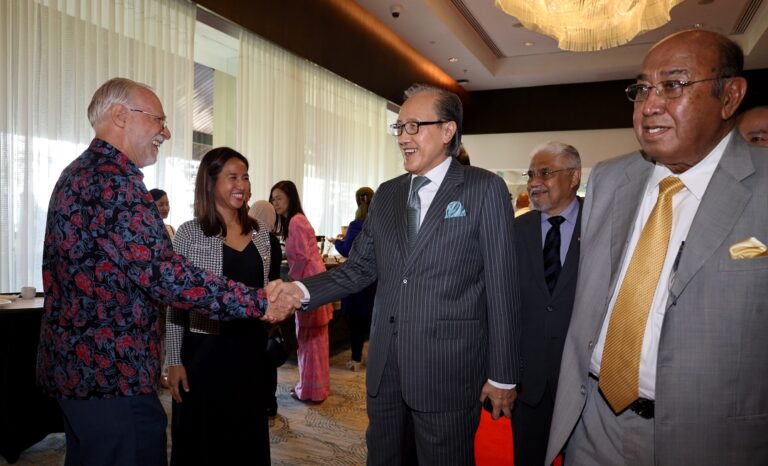
BRISBANE: Eighteen APEC-member economies and five non-member economies met in Brisbane, Australia at the APEC High Level Policy Dialogue on Agricultural Biotechnology (APEC HLPDAB).
The focus of the annual meet shifted this year to genome editing with the precision breeding technology set to revolutionise industries beyond agriculture, while regulatory cooperation was another key focus.
Participants from all economies unanimously agreed that initiatives on regulatory cooperation and harmonisation should be strengthened through resource sharing not only between economies but also with industry players.
Prof Dr Nikolas Kalaitzandonakes, Director of Economics and Management of [ihc-hide-content ihc_mb_type=”show” ihc_mb_who=”2,3″ ihc_mb_template=”1″ ]Agrobiotechnology Centre in University of Missouri-Columbia outlined key benefits of regulatory cooperation, ranging from reduced time and cost to approval of new products; faster access to innovation for farmers and consumers; efficient use of regulatory resources; reduce in trade barriers; to minimised asynchronous approvals.
Asynchronous approvals are when new traits are not approved at the same time range in different economies.
This results in trade barrier, especially when what is approved in exporting economies takes a very long time to be approved in importing economies. This also gives rise to issues of Low Level Presence (LLP), where non-approved grains contaminate approved grain consignments.
Instances of LLP have been reported around the world where consignments are rejected by importing economies causing huge loss to traders and related industries, both in exporting and importing economies.
The cooperation between Health Canada and Food Standard Australia New Zealand (FSANZ) was a clear example how GM food safety assessment could be shared. Janet Gorst from FSANZ said this process can better leverage the safety assessment capacities of each organisation.
“Sharing of regulatory resources should not require changes to existing legislative framework under which each agency operates and should be flexible to accommodate the different operating procedures of both agencies, and each agency will continue to make its own independent regulatory and risk management decisions according to its own timeframes”, said Gorst.
There was clear enthusiasm among scientists, regulators and industry players on genome editing, a tool that will be inevitable in developing future foods. Waxy corn, powdery mildew resistant wheat, brown streak resistant cassava, non-browning white button mushroom, hornless Holstein cow, and pigs resistant to African swine fever and porcine reproductive and respiratory syndrome are some of the new crops and livestock in the innovation funnel of genome editing.
Scientists from member economies presented a wide range of research activities currently being carried out on using genome editing tool in this region.
While genome editing is a potent tool in breeders’ toolkit, delegates acknowledged that the road to commercialisation will face more challenges than GM technologies with critics of the technology ready with their ammunition to stifle approvals.
There was a strong call for harmonisation in regulatory framework, political will to allow innovation to flourish for public good, and strengthening of communication efforts to effectively engage the public.
Malaysia was represented by Dr Indubala Jaganath, Director for Strategic Planning at the Malaysian Agricultural Research & Development Institute and Zulkifli Asat from the Department of Biosafety.
Assistant Secretary of the Department of Agriculture and Water Resources, Australia, Anna Willock graced the meeting and diligently listened to all the deliberations on day one of the workshop.
[/ihc-hide-content]