SUBANG JAYA: With the ever-growing threat of cardiovascular disease, the fact remains that western methods and approach at quelling the threat and preventing the disease are not working as effectively as it should, due to the difference of climate, environment and eating patterns.
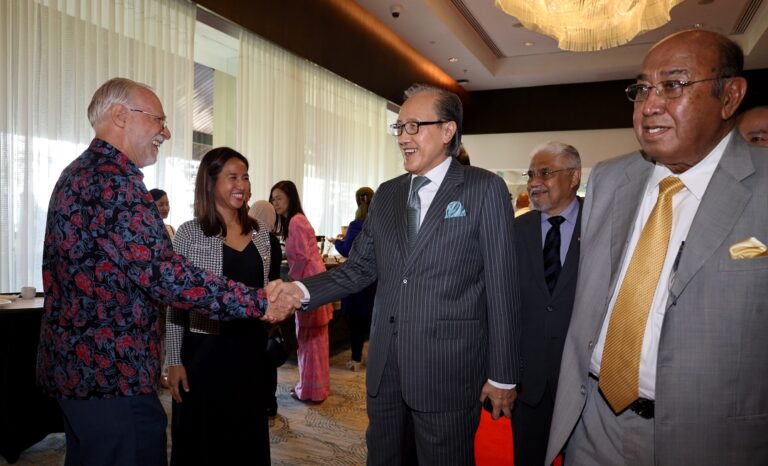
For the first time, Tan Sri Dr Jeffrey Cheah the Founder and Chairman of Sunway Group, the Chancellor of Sunway University himself and the International Society for Cardiovascular Epidemiology (ISCEP) has turned the spotlight on Malaysia, bringing their knowledge and expertise to better train their researchers in prevention and awareness of Malaysia’s different conditions in cardiology. [ihc-hide-content ihc_mb_type=”show” ihc_mb_who=”2,3,5″ ihc_mb_template=”1″ ]
Though it is ISCEP’s 49th seminar, it is a historic moment for both ISCEP and Malaysia as it is being hosted for the first time in Malaysia.
In his speech, Cheah said: “It is an honour for us at Sunway to host this annual training seminar of the International Society for Cardiovascular Epidemiology and Prevention (ISCEP).
“The event is particularly relevant at a time when Non-Communicable Diseases or NCD’s, pose a major threat to public health globally. Among NCD’s, cardiovascular dis-ease ranks as the leading cause of death and disability in most countries.”
Cheah said the World Health Organisation (WHO) estimates that NCDs kill 40 million people each year, mainly in low and middle-income countries where cardiovascular diseases account for 17.7 million mortalities annually.
“Detection, screening and treatment of NCDs are key components of the response to NCDs. In this context, ISCEP plays a crucial role through its primary function of conducting teaching seminars on various aspects of cardiovascular disease including prevention,” added Cheah.
The seminar was launched by Datuk Dr Shahnaz Murad, Deputy Director-General (Research and Technical Support), Ministry of Health, Malaysia.
Prof Darwin Labarthe, dean of Preventive Medicine, Feinberg School of Medicine, Northwestern University, Chicago, said in recent time, the important steps to elevate the importance of NCDs, broadly cardiovascular diseases in particular, are on the world health agenda.
“This was no longer simply a matter of health and disease, it is a matter of social and economic development, and sustainability.
“With a strong mission to address these issues, WHO undertook a global initiative to reduce, by the year 2025, premature deaths from cardiovascular diseases and other NCDs by 25%.”
Seminar organizer Prof Kay-Tee Khaw, said: “We never had a seminar in Malaysia before. When the seminar first started, the aim was to provide the capacity and to train individuals, doctors and researchers and to address the epidemic of cardiovascular diseases.”
She also added: “We learn lessons, we take what works, the common ground and structured approach, and this seminar will help enable people to find their own solution.
“The ethos (ethics) of this seminar is giving people the tools and they seek the solution themselves.
“We can’t tell a person from another country how to find a cure or a solution when it only works from the country you originate from.”
This year’s seminar hosted 45 fellows representing the United States, Belgium, Bangladesh, China, India, Japan, Fiji, South Korea, South Africa, Tanzania, Sudan, Sweden, Uganda, Nigeria, Nepal, Poland, Kyrgz Republic, Mozambique, Den-mark, Portugal, Kenya, Republic of Palau, Zimbabwe, Turkey, Ghana and Malaysia.
Among the participants from Malaysia were staff and researchers from the Jeffrey Cheah School of Medicine and Health Sciences, Sunway Medical Centre, Sunway University, other Malaysian universities and hospitals as well as the Ministry of Health.
[/ihc-hide-content]