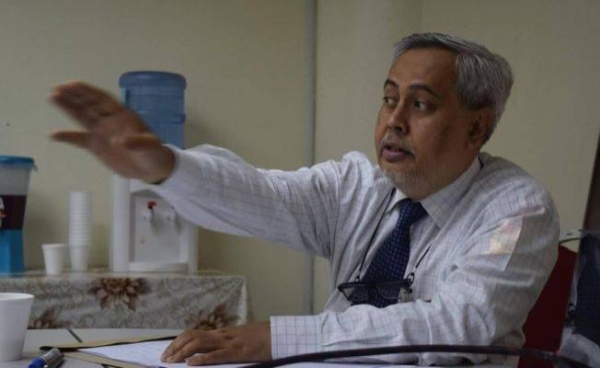
Guest writer with The Petri Dish (PD), Shawn Keng, interviewed Universiti Sains Malaysia’s Dr Khayriyyah Hanafiah or more popularly known as Dr Kye recently.
Kye had impressed an international audience by contesting against participants from 27 countries and emerged the FameLab International 3-minute science talk World Champion.
Kye shares her thoughts on her participation in the competition and about her work on tackling tuberculosis (TB) at diagnosis as well as at the prevention level.
PD: What made you enter the competition in spite of your full time academia and research obligations?
As a full-time academician, teaching is one of my favourite aspects of the job because I am able to get instant connection and response from my students. The competition seemed like a good platform in trying to “teach” people about my field of research in an engaging way and all within the three-minute time limit.
PD: Do you think our scientists are doing enough to bring science and research to the public domain? What are the challenges?
Scientists are humans and we have our individual strengths and limitations but at the risk of stereotyping, many of us are also introverts! As scientists, our core responsibility is to conduct research, publish our data, and communicate with other scientists (at conferences or meetings).
This is already a huge time-consuming task, and so we forget our responsibility to also engage with the community. [ihc-hide-content ihc_mb_type=”show” ihc_mb_who=”2,3″ ihc_mb_template=”1″ ] One of the challenges is our mindset, but another challenge is the lack of training/exposure to science communication. I do not think that we are sufficiently trained in the art of communicating (besides for academic writing). My communication skills were developed mostly because of my debate training during school and university.
Nowadays there are platforms like 3MT competitions and FameLab to encourage scientists to speak about their work to a public audience, but the uptake is still quite low because many scientists (and people in general) regard speaking to a public audience as difficult and scary. It would help if our scientists are also exposed to techniques for effective communication as part of their formal training.
PD: Will you stop here or allocate some time and effort towards communicating science and public engagement?
Winning FameLab is too good an opportunity to waste. I would love to get more scientists to become comfortable with science communication, not just for competitions like FameLab but for their daily interactions. It would be great to also be part of existing efforts to encourage STEM among students and the community.
PD: How would you explain your research to your friends and relatives who had never heard about your research?
Our research group looks at new ways to diagnose TB and to treat it, specifically looking at how patient antibodies made by our immune system recognise antigens or different parts of the TB-causing bacteria, the Mycobacterium tuberculosis. Our group is also pursuing new alternative materials that can be used to stop bacterial growth. Apart from TB, our group also investigates new strategies for treating methicillin resistant Staphylococcus aureus (MRSA), another fearsome bacteria that commonly causes skin infection in hospitals, which is hard to treat with common antibiotics.
PD: What are the common myths you hear about TB?
Some suspected patients get quarantined by doctors as a precaution to avoid infection to others. Some also regarded TB as an incurable fatal disease common among people of lower socio-economic class. In reaction to fear of infection, TB patients are treated as though they are carriers of a zombie virus, and can spread “their disease” through sneezing, spitting or sharing cutlery.
All these are not true. Sadly, this unhealthy social stigma creates a barrier between “us” healthy individuals and “them”. This stigma is common in developing countries such as India. It isolates them mentally and emotionally, making them more likely not to seek early treatment to avoid being “found out” and“locked up in the stigma prison”.
Here’s the truth: TB may be deadly, but it is fully curable. It is not hereditary and can potentially affect anyone irrespective of their socio-financial background. It won’t cause instant death just by a simple sneeze from TB patients. In fact, the common flu is more infectious than TB. Whenever in doubt, seek medical attention as soon as possible. Whenever your loved ones have TB, don’t shun them away, support them. Although TB can be spread through the air, we can also reduce the risk of spreading this disease by ensuring living and working spaces have good ventilation and sunlight.
PD: What solutions are top researchers in TB are looking for?
Among the two most burning questions that remain unanswered in TB are: Firstly, why do some people develop active TB, while others can stop TB from making their body sick? It is interesting to know that although it is one of the deadliest infections in the world, not everyone gets sick from TB. Some will get sick (active TB); most will have undetectable latent TB; or fall somewhere in between. Researchers are only beginning to appreciate the complex interaction between the human host and the bacterium that causes TB.
Secondly, what are the signature markers that tell us who has or will develop active TB? One thing that is frustrating yet fascinating, is how diverse the human immune response can be towards TB. As a researcher, different elements of the immune response are measured. This includes antibodies produced during active TB, different markers of cellular immunity, and even the state of granulomas that wall off the bacteria when the body is unable to eliminate TB-causing bacteria in latent TB. Researchers are beginning to understand the tip of the iceberg of this dynamic and diverse immune responses to TB.
PD: What inspired you to do research in TB?
It basically started during a chance encounter with Professor Arthur Dannenberg Jr in 2010 when I was doing my Master’s. He was involved with some of the seminal studies of tuberculosis pathogenesis using rabbits, and he described the process of liquefaction and cavitation in granulomas — the hallmark of active TB. I sat next to him in a TB seminar and we chatted after the seminar. When I met him, he was already 86, but still so active and passionate about TB. Unfortunately, he passed away in June at 94 years.
Eight years ago, he really “infected” me with the TB bug and got me really excited about this mysterious disease.
PD: What are the challenges faced by your research team? How did your team overcome them?
Our research team is very new, only taking off in 2016. We focus mainly on medical pathogens like TB and MRSA infections. Some of our TB research work is an extension of my PhD work, while my Iraqi PhD student, Aemen Ali Kudayr Al-Shammary, spearheads the MRSA research. In USM School of Biological Science, we are among the few groups working with medical pathogens, which require key Biosafety Level 2 equipment such as a biosafety cabinet, which we do not possess. One of the key ways forward is to make friends! I believe in the saying is “beg, borrow, and steal” – We haven’t stolen anything but, we do rely on the kindness of other more established laboratories to use some equipment and get by in the early days of our team.
PD: How would your research benefit people you know and the public?
As mentioned earlier, despite the disease being very “ancient”, researchers are only scratching the surface in unlocking the complexity of our immune response in TB. Actual benefits of the research itself at this early juncture remains to be seen, and it requires significant investments to enable researchers to pursue this line of inquiry. Simultaneously, it is equally important to communicate science about TB to increase public awareness. Hopefully interviews such as this can lead to better engagement with the public, policy makers and potential funding providers.
PD: If resources are not limited, what would you do to push your research in TB further?
I really would love to go into ways to replicate the hallmark of TB infection, which features the granuloma using non-invasive tissue culture methods. This is an under-investigated area, a completely new inquiry for me, and it promises interesting new insights which may one day lead to new strategies to prevent, detect or treat TB.
PD: Do you have anything else to share?
Yes, scientific research is really a team effort and requires the blood sweat and tears of many individuals, not just today but of many more people in the future. I hope we can address some of the current issues regarding student interest in STEM so that we will not lose the necessary future workforce to sustain not just TB research, but scientific research in general.
Simultaneously, we need mechanisms to enable us to employ more people in STEM. This is because job security is a key motivation for many people to pursue the field. Job opportunity in STEM may not necessarily be just for research, but for other fields that enable research such as in science communication, education and commercialisation after their training is complete.
[/ihc-hide-content]