BY LAZIANA AHMAD
PLANT PATHOLOGISTS with the Malaysian Palm Oil Board (MPOB) have recently innovated a technology to accelerate the degradation of oil palm trunk and root mass especially those infected with the basal stem rot (BSR) disease. The technology was recently launched during the Transfer of Technology Seminar and Exhibition 2019.
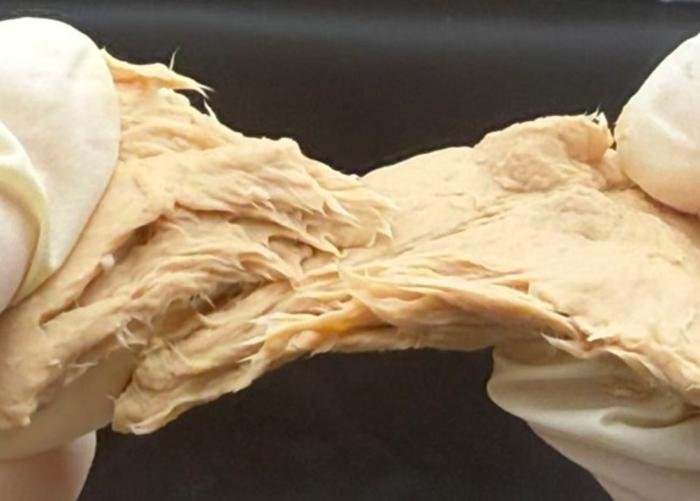
The research team has formulated a Solid-State Cultivation (SSC) containing P. sanguineus to control Ganoderma infection. The formulation resulted in a higher decay rate of the healthy trunk, and more significantly in the trunk infected with Ganoderma.
Field trials reported that the efficacy of 500 g of SSC containing P. sanguineus in decaying diseased trunks was about 55% and 40% for the healthy trunk, after 10 months of application. SSC containing P. sanguineus is the potential alternative for a biotechnological approach to manage Ganoderma disease in the oil palm plantations in an eco-friendly manner.
Functioning as biological control agents, the SSC can accelerate the decaying process of stumps and trunks of oil palm especially those infected with Ganoderma spp. The technology is cost-effective and eco-friendly compared to other mitigation method to control Ganoderma infection, it helps to add nutrients to the soil, a practical Integrated Pests Management (IPM) strategy especially at replanting stage and most importantly, the technology offers a sustainable method to speed up waste recycling of root mass, stumps, and trunks of palm oil biomass.
The technology is worth RM 3.7 million at present, with an internal rate of return (IRR) at 36.25% and 5.5 years of investment recovery.
Identification of the bio-degrader.
The fungus Pycnoporus sanguineus is widely studied because of its ability to produce enzymes of industrial interest. The ability of this fungus to cause changes in wood composition and in the physical structure of pine trees was also proven in other research.
Categorised under the same group of white-rot fungi, P. sanguineus breaks down the wood using lignolytic enzymes that split chemical bonds of lignin- the stuff that makes wood tough- turning it into simple sugars and releasing carbon dioxide into the air.
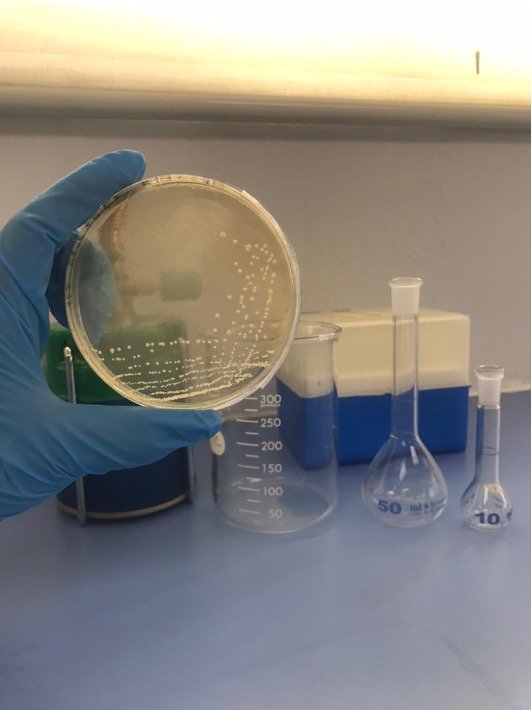
P. sanguineus occur naturally on oil palm trunks and has shown the ability to act antagonistically against G. boninense.
In a study published in Forest Pathology in 2015, Dr Naidu’s team shed light on this fungal behavior revealing that P. sanguineus overgrew G. boninense by inhibiting the radial mycelial growth in vitro, believed to be through the production of volatile metabolites or antibiotics.
With the ability to produce a cocktail of enzymes involved in the degradation of plant tissues, P. sanguineus accelerates wood decaying process, especially on the infected oil palm with BSR disease, documented in her study published in Industrial Crops and Products later in 2017.
The team conducted wood decay experiments on isolates of P. sanguineus, [ihc-hide-content ihc_mb_type=”show” ihc_mb_who=”2,3″ ihc_mb_template=”1″ ] growing them on oil palm trunk blocks. They found that the fungal mycelium penetrated and colonised within the parenchymal tissue and passed through the boreholes into adjacent tissues, loosening and forming cavities on the ray parenchyma cells by Day 75. Towards the end of the experiment period (Day 120), some of the cell wall components of the blocks have completely degraded and the absence of the fungal hyphae was observed.
In 2018, her work published in Crop Protection revealed that the oil palm seedlings aged three-monthold artificially inoculated with P. sanguineus remained healthy and no symptoms at either foliar or internal bole base were observed.
Besides that, the growth of these seedlings was physically similar to the controls, those that are not artificially inoculated with P. sanguineus.
Thus suggesting that P. sanguineus is not harmful to the oil palm seedlings and possesses the potential use as biological agents against G. boninense in the oil palm plantations.
Basal stem rot (BSR) disease
Basal stem rot (BSR) disease is a major threat to oil palm plantation in Malaysia. A study carried out in three commercial oil palm sites estimated economic loss up to 43% of the potential yields for total weight fresh fruit bunch in six
months, due to this disease.
The BSR disease is caused by a fungal pathogen, prevalently known as Ganoderma boninense, white-rot fungi that attack oil palm roots and infect young and mature oil palms. The young oil palms with symptoms of BSR disease usually die within 6-24 months whereas, the mature oil palms can take approximately two to three years to die.
Manifested by the gradual decay of roots that will disrupt water and nutrient uptake to the rest of the oil palm tree especially the upper parts, the infection will result in yellowing, wilting, desiccating of lower fronds and unopened spears.
In severe disease progression, the whole crown of the tree may fall off or the trunk may collapse. G. boninense tends to survive on oil palm biomass left behind after felling at replanting in plantations.
Under the zero-burning policy and considering the expensive cost of removing old stand in the plantation, the old and infected oil palm trees were felled, chipped and evenly distributed between the planting rows for natural degradation. Approximately, two years are required for complete degradation. Imagine what will happen when the new oil palms are planted adjacent to the felled biomass areas.
Naidu’s team demonstrated that we can control the BSR disease using the same group of microbes.
“This bio-degrader fungus was documented growing saprophytically on felled oil palm trunks infected with G. boninense”, said Naidu.
Way forward
Currently, the team members are focusing on the application of the biodegrader, P. sanguineus in a large plantation area under different climatic conditions.
More information on this formulation can be directed to Dr Yuvarani Naidu at yuvarani@mpob.gov.my
NOTE: The writer is a science communicator with MPOB[/ihc-hide-content]