The Asian Conference on Transcription (ACT) will be hosted in Penang from August 1-4. The ACT which is an on-going meeting of Asian scientists since 1990 and hosted in various Asian cities is being hosted in Malaysia for the second time around. It was hosted in Kuala Lumpur in 2002. Co-chairs of the upcoming Penang meet, Prof Kalai Mathee and Dr Nethia Mohana-Kumaran give a glimpse of what is to come in this Q & A with The Petri Dish Editor-in-Chief MAHALETCHUMY ARUJANAN

Give us a historical background of this conference. How did it get started and why?
Kalai: It has a long history. Please check this website for details: https://www.asianconferencetranscription.com/conference-history
How did you get involved as the Organising Chair for this year? And what would you like to do differently?
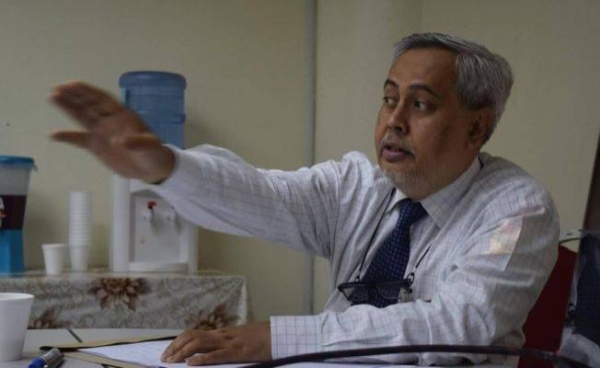
Kalai: I was very much encouraged to stay in touch with the Asian scientists and to represent Malaysia by one of the founders, Prof Akira Ishihama. On his encouragement, I attended the ACT 4 meeting in Japan. I was impressed beyond words. I always knew Ishihama and his famous contribution to science; his experiments are legendary in the field of transcription. During this time, Prof Koh Chong Lek was on sabbatical in Osaka. Koh joined us and was roped into becoming one of the International Organising Committee member. [ihc-hide-content ihc_mb_type=”show” ihc_mb_who=”2,3,5″ ihc_mb_template=”1″ ]
When I became a faculty member in 1999, once again Ishihama encouraged me to come to China for the ACT 6 in Beijing and proposed that Malaysia should host the ACT 7. With the support of Professor Koh who was in Miami on sabbatical as a Fulbright fellow in my lab, I went to Beijing and proposed to host the ACT 7. It was held in Kuala Lumpur, and it was a huge success.
An important part of the meeting, I may even call the “soul” is for immersion of cross-cultural experience in each country. Another is to showcase the Asian scientists. We hope to fulfill both these aspects and hope the future generation will continue the legacy. I am also hoping to integrate few sessions that will help the young people to succeed. We have two new sessions, “How to give an effective presentation” and “Women in science”.
Transcription is a wide area in molecular biology. What is the scope of the conference and what are the areas involved?
Kalai: The scientific areas are around the major topic transcription and gene regulation in archaea, prokaryotes, and eukaryotes. It is quite extensive and is listed at https://www.asianconferencetranscription.com/scientific-scope. The important thing is that we will go from the basic to application in health, diseases and cancer.
We understand that USM is hosting the conference. How important is this area of research to USM? How big is the pool of scientists working in related areas in USM?

Nethia: My work became relevant to the meeting ever since the international committee widened the scope of the meeting to include cancer biology, antimicrobial resistance, biotechnology etc. I am a cancer biologist and my laboratory focuses in utilising the CRISPR-Cas9 technology to determine the genes which cause selective induction of cell death in nasopharyngeal carcinoma cells.
There is a trend to get into applied research that offers a fast track to commercialisation. How would your conference bring the priority back to basic research which is crucial?
Kalai: I believe this is real short-sightedness. Without the basic research, we cannot solve many of the health issues. We need to know more about a pathogen – its molecular biology, the physiology and the requirements for it to cause disease before we can take control of them; similarly, if we don’t understand how cancer cells grow and multiply, how can we stop them. Basic science research gave us the antibiotics. We need the same basic science research to understand how the bugs become resistant to combat them. Nobel Prizes are given to people who contributed to basic science.
Who are your “star” speakers and what are their topics?
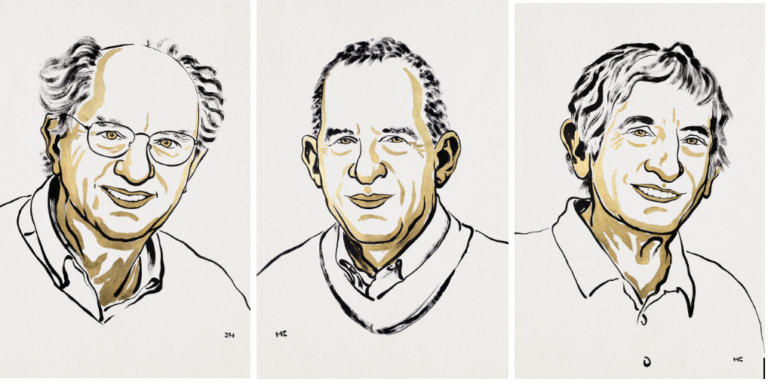
Kalai: Currently we have two, and we may add two more shortly. Their names and expertise are listed at https://www.asianconferencetranscription.com/. Among them them are Frans J de Bruijn: “Stress and environmental regulation of gene expression in bacteria”. Stephen Lory: “RNA biology and its importance in infection” and perhaps Thomas D. Gilmore: “A billion years of NF-κB”.
Which countries are expected to participate?
Kalai: Australia, China, India, Japan, Korea, Malaysia, New Zealand, Singapore, Taiwan and Thailand.
What would the conference offer as a takeaway for participants? You have been involved in this conference for long. Do you have any personal reflections to share from the impact created by this conference?
Kalai: It is a real privilege to be part of this conference. The conference is small enough that I have made life-long friends. Many of us simply spend our own money to participate. We empower, many young Asian scientists. Many of our keynote speakers have the best things to say about this conference – the caliber of science, the level of enthusiasm, and the cultural immersion to create the next generation of ambassadors.
As a young scientist, what is your expectation as an organiser and a delegate?
Nethia: This is my first time co-organising an international meeting therefore it is very dear to my heart.
The ACT conferences has been a great success every time it is organised and I expect that it would be a huge success again. The meeting is an ideal platform for young scientists, like me and students in Malaysia to bounce ideas and network with prominent scientists in the field on transcription.
As Prof Mathee mentioned earlier we are introducing two new sessions this year, a pre-conference workshop and “Women in Science”. I hope students and postdocs would take the opportunity to join the workshop and gather great tips to sharpen their presentation skills as presenting scientific findings in an effective way is as important as conducting experiments in the laboratory.
The “Women in Science” session would be held as a forum where we would have accomplished female scientists share their journey and experiences with young academics and students and I hope this session would serve as a good motivation platform for budding scientists to continue their journey in science.
Your final words?
Kalai: This conference showcases the high caliber of science in this region. It brings together amazing and fearless scientists. It provides an opportunity for young students and postdocs to interact. Unfortunately, Malaysia never had a serious presence in the conference. I wish to see more participation from students, postdocs and scientists from Malaysia.
Nethia: I attended my first ACT meeting in Singapore in 2015 and I was disappointed to see very few scientists from Malaysia attending such a good meeting.
The organising committees both local and international are reaching out to as many local scientists as possible and I hope we have more from the country participating this time.
Besides exchanging ideas and establishing collaborations I hope the participants will enjoy experiencing the rich culture and the beautiful landscape of the Pearl of the Orient.
NOTE:Professor (Dr) Kalai Mathee who hails from Ipoh joined Florida International University (FIU) Herbert Wertheim College of Medicine in 2007 as the first founding faculty and the founding chair of the Department of Molecular Microbiology and Infectious Diseases, playing a major role in the establishment of Herbert Wertheim College of Medicine. She was promoted to Professor of Molecular Microbiology and Infectious Diseases. She has established a multi-faceted research programme focused on the molecular pathogenesis of Pseudomonas aeruginosa, the bacterium is responsible for much of the acute and chronic infections in immunocompromised and immunosuppressed patients.
Dr Nethia Mohana Kumaran, a senior lecturer at USM. She is a cancer biologist and her research focuses on utilising the 3-dimensional spheroid model to study the growth, invasion and sensitivity of nasopharyngeal carcinoma (NPC) cells to drugs known as BH3 mimetics. Her research also focuses in employing the CRISPR/Cas9 technology to study the roles of anti-apoptotic genes Mcl-1 and Bfl-1 for NPC survival.
[/ihc-hide-content]