
WITH more than 1000 species identified, tardigrades commonly known as little water bears or moss piglet are micro animals which can only be seen under a microscope. They are at most only one millimetre long. Tardigrade was first described in 1773 by a German zoologist Johann August Ephraim Goeze. It was initially named by an Italian biologist as “Tardigrada” which means “slow steppers”.
What does a tardigrade look like?

THESE cute water bears are far, far smaller than you think they are. They are known to
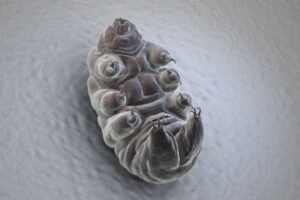
probably be just heads with legs in appearance. They have short and plump, compact bodies, four leg-bearing segments with a pair of clawed limbs each and a stubby head
tipped by toothy mouth ring.
Why is it known as an “immortal” organism?
IT IS ALMOST impossible to kill a [ihc-hide-content ihc_mb_type=”show” ihc_mb_who=”2,3″ ihc_mb_template=”1″ ] tardigrade as it has the ability to withstand extreme conditions. Tardigrades may outlive humanity, this planet and possibly even the sun. It can be frozen, boiled, crushed, zapped with radiation and even deprived of food and water for years – BUT it will still wiggle back alive.
Where can these water bears be found?

THEY can be found at almost everywhere, from mountain tops to the deep sea and muddy
volcanoes extending up to the tropical rain forests to the Antartic. However, they prefer to
live in sediment at the bottom of a lake, on moist pieces of moss or other wet environments.
How do tardigrades reproduce?
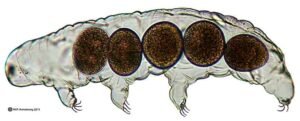
THEY reproduce by laying eggs either through sexual and asexual reproduction, depending on the species. Tardigrades lay one to 30 eggs at a time. The eggs of tardigrades are covered by wiggly spaghetti-like tendrils which help with the attachment of eggs to surfaces after being laid.
What do tardigrades feed on?
TARDIGRADES eat fluid diet to survive. They suck juices from lichens, moss and algae.
Some species of tardigrades are known to be carnivores and even cannibals that prey on other tardigrades.
Do tardigrades have predators?

PREDATORS such as nematodes, other tardigrades, mites, spiders, springtails, and insect larvae; parasitic protozoa and fungi often infect tardigrade populations. Freshwater crustaceans, earthworms, and arthropods also ablate tardigrade populations.
What is the life cycle of a tardigrade?
TARDIGRADES are said to not have a childhood. They hatch from eggs straight into adult form with their hatchlings tardigrades looking a little smaller than the adult form. Otherwise, there is no much difference between them two. Moulting does occur in tardigrades but they still maintain their same body plan throughout.
What makes it so unique?
TARDIGRADES are among the most resilient animals known with the ability to survive any
extreme conditions which could kill other bigger animals. They can withstand boiling heat and freezing cold temperatures, exposure to lethal radiation levels and even vacuum of outer space. They can even survive starvation for years!
How do tardigrades survive without water?
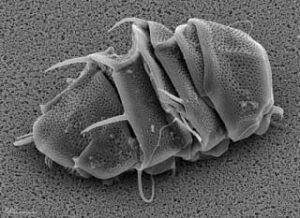
WHEN deprived of water, tardigrades curl their head and legs into almost a ball and starts
to synthesise a special molecule to replace loss of water by forming a kind of matrix. In
this state, they are called as “tuns’. As tuns, tardigrades can be revived after decades with no damage. The plates on the back also form a protective armor for non environmental
assaults – the spikes look imposing.
How does a tardigrade escape lethal radiation levels?
THESE tiny little water bears possess a protein called damage suppressor or Dsup which makes them X-ray resistant. Dsup binds to chromosome structures and protects DNA from harmful radiations. When added to human cells, Dsup protein shows similar protection against radiations.[/ihc-hide-content]