KUALA LUMPUR: The COVID-19 pandemic has severely affected the entire food supply chain not only in Malaysia but globally. Experts say the pandemic calls for the strengthening of food security in order to meet the world’s consumption demands especially during a crisis.
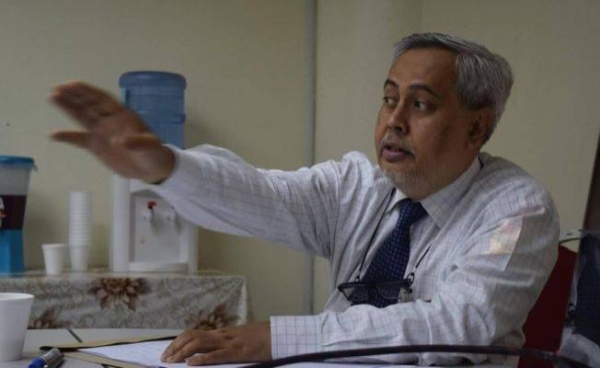
[ihc-hide-content ihc_mb_type=”show” ihc_mb_who=”2,3,5″ ihc_mb_template=”1″ ]The broken food supply chain, labour shortage, closure of restaurants, countries banning export and many other issues plaguing our food systems is calling for a rethinking about the way we manage our food systems, says food security expert Professor Dr Paul Teng.
According to the Adjunct Senior Fellow (Food Security) at the S. Rajaratnam School of International Studies, Nanyang Technological University (NTU) in Singapore, early in the pandemic, agriculture was not seen as an essential service.
As things dragged on, we started to realise that if you stop people from being involved in agriculture, you will experience a disruption in the food supply. This led countries like India and China to relook their agricultural sector.
“It is time to invest a lot more in agriculture research and development (R&D) that empowers your own farmers. By empowering your farmers to produce more, you are also empowering your consumer and all the way to the supply chain, upstream, downstream. So investment is really key indeed,” he said as a panelist at the recent webinar session organised by Science Media Centre (SMC) Malaysia.
The session was jointly organised by the International Service for the Acquisition of Agri-biotech Applications (ISAAA), The Petri Dish and Universiti Putra Malaysia (UPM) to discuss the impact of the Covid-19 pandemic on food systems.
Among the panelists were Universiti Putra Malaysia’s Associate Professor Dr Shaufique Fahmi Ahmad Sidique and Eats, Shoots & Roots’ design director Shao-Lyn Low who shared their views and ideas on how to ensure continuity and sustain food security.
Commenting further, Teng said in all the studies conducted, the R &D for agriculture normally takes a backseat receiving among the lowest investment in the public sector. That has to be changed. Otherwise, when the private sector intervenes, we all start to complain. It’s like a chicken and egg situation.
He asserted that the Covid-19 pandemic is a wake-up call for countries to prepare for future food crises. Governments must be prepared to ensure food and supply chain continuity despite any future hindrance.
“Covid-19 is not going to be the only food security disruptor that we are going to experience in our lifetime. There is going to be many others and countries need to be prepared to ensure their food and supply chain continuity,” he added.
The webinar session was moderated by Dr Mahaletchumy Arujanan, Global Coordinator at International Service for the Acquisition of Agri-biotech Applications (ISAAA) – a pioneer in creating farmer access to technology, public awareness on innovation in modern agribiotechnology and capacity building programmes that leads to food security and co-founder of SMC Malaysia.
According to Mahaletchumy, Asia has 80 percent of the world’s smallholder farmers amounting to 100 million in the Asean region, thus scientists, policymakers and governments must educate the public about food production and its importance.
Meanwhile, on the community and awareness level, Low said there has been an increase of public interest in urban farming during the Movement Control Order (MCO).
“We observe many people starting to look into edible farming and notice there has been a surge in our online sales during the MCO period. It is encouraging when people start to realise the importance of basic food cultivation,” says Low.
Low suggested that farming should be included as part of education in schools to educate children from young so that every child has basic knowledge of how food grows as it serves as a good survival skill.
Shaufique opined that food security should be addressed from a multi-dimensional aspect.
He said that it is not just about your ability to produce as a country but also to make sure the affordability accessibility, sustainability, availability and nutritional values of the food produced are looked into carefully.
It is noted that the Malaysian government has set up an interministerial committee on food security that involves the International Trade and Industry, Domestic Trade and Consumer Affairs, and the Agriculture and Food Industry Ministries. Meanwhile, Singapore has set up a similar committee way back in 2012. The committee looks into focus areas such as industry development, food wastage reduction, and R&D.
[/ihc-hide-content]