THE rubber industry, unlike many other commodity-related industries in Malaysia is booming with soaring demand for latex surgical gloves with the Covid-19 pandemic.
However, if you think rubber trees are only valued for their latex or rubber elastomer here’s a surprise to marvel at.
[ihc-hide-content ihc_mb_type=”show” ihc_mb_who=”2,3,5″ ihc_mb_template=”1″ ]Scientists from the Malaysian Rubber Board (MRB) are now developing an anti dengue drug from an inherent fine chemical present in the latex serum fraction of conventional rubber trees.
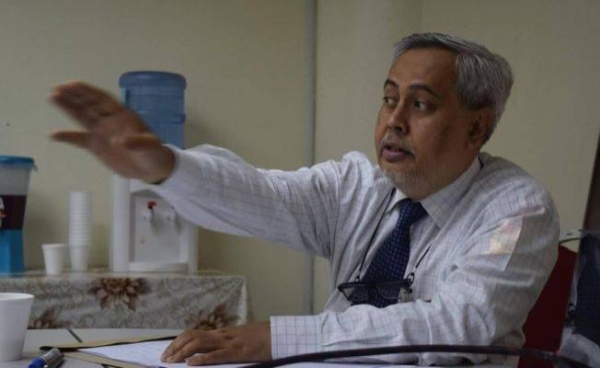
In a virtual interview with The Petri Dish recently, Dr Sunderasan Elumalai, a leading scientist at MRB says it is when I was working on another project that the idea of developing an anti dengue drug sparked.
Sunderasan who previously worked on the anti-cancer proteins from conventional rubber trees explains: “The results from the testing of this inherent fine chemical of the conventional rubber trees against dengue virus is very encouraging.
This compound can kill the cell-free dengue virus particles (the virus which had not gained entry into host cells yet). It also prevents the virus from attaching itself to the host cells.
“Another test proved that the compound stops the dengue virus from invading the host cells and injecting its genetic materials into them.”
“We are at the final test of the preclinical stage of drug development,” Sunderasan said confidently.
The next step in this research is the animal testing to examine if these activities could be repeated in living organisms before moving on to clinical trials on human beings and commercialisation of the compound.
According to Sunderasan, to date, MRB has successfully self-developed transgenic rubber trees that harbour three genes which produce proteins of different therapeutic values.
“The first pharmaceutical gene produced in the latex was a recombinant antibody (an antibody made using synthetic genes) gene. The gene synthesises a protein that acts against Streptococcus gordonii, the bacteria which causes tooth decay.
“Next, MRB proceeded with two other challenging genes – the human atrial natriuretic factor gene, a gene which plays a role in lowering cardiac blood pressure. Another gene is called the human protamine 1 gene which produces a therapeutic protein with blood clotting property,” he explains.
“It was after these successes that they moved from contained settings – laboratory, growth chamber and netted house to a confined field planting for in-depth research and development of the therapeutic compounds.”
MRB received a 20-year lease (2012 – 2032) from the National Biosafety Board for the confined planting of its self-developed transgenic rubber trees. The trees are grown in a 12 hectare confined plot in its research station, solely for research and development purposes abiding by the biosafety regulations.
Aware of the public’s perception towards genetically modified drugs for commercialisation, Sunderasan says: “It all falls back on the ongoing process of educating the public and also the need to present research results as it is. MRB, in fact, has always been prepared from the beginning of the confined field planting with a strong communication strategy to tackle this situation. Hopefully, the public’s acceptance can change over time.”
“There should not be any problem with the anti-dengue drug as it is derived from an inherent fine chemical in conventional rubber tree.” pd [/ihc-hide-content]