MINDING children even without a pandemic lockdown is a huge challenge for many young parents – what more now when they are forced to be cooped up at home with their children during the current movement control order (MCO) in place?
As there is so much time and space for the children now, and so much unspent energy waiting to be tamed, trimmed and tutored – can parents alone handle this new overload of vim and vigor gushing out from their charges? [ihc-hide-content ihc_mb_type=”show” ihc_mb_who=”2,3,5″ ihc_mb_template=”1″ ]
But how good it would be, if both children and parents too could come together to participate, engaging and bonding with some well formulated fun activities?
Thanks to modern technology and the ingenious idea of a local NGO, a slew of activities are currently available for children and parents to engage in with one major aim – to chase away boredom and the symptoms of the “nothing-to-do-fatigue” while marooned at home.
Speaking to The Petri Dish recently, the founder of Vetri Association, Dr Mohammad Rahim Kamaluddin, says children must not treat the current lockdown phase as an extended holiday from school or a special “reprieve period” to just laze around and do nothing.
As they say, an idle mind is the devil’s workshop – the association is offering educational pursuits in science, technology, engineering and mathematics (Stem), a 3L programme involving linguistics, language and leadership courses as well as physiological wellness activities.
 “Children need to keep their minds constantly active so that it will not be hard to catch up with studies when school reopens,” says the trained criminologist and a senior lecturer with Universiti Kebangsaan Malaysia.
According to him, his association has come with three programmes for Tamil school pupils so that they will not be too lazily ensconced in their unscheduled school holidays. The programmes introduced to the Tamil schools currently are a pilot project to study their efficacy and viability and for further improvement of content and format.
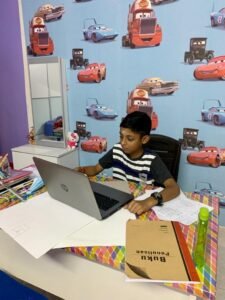
The association kick-started a national level “Science Kids E-Challenge” competition on April 1. This activity was for a duration of 10 days.
A “challenge activity” was posted on each day at 10am on the official Facebook page of Vetri and students were required to submit their answers by 7 pm on the same day for evaluation.
“The primary aim for the short period of time given to complete each challenge is to inculcate a sense of responsibility and punctuality among students,” says Rahim.
Activities consisted of fun, interactive riddles, crossword puzzles and quizzes. However, the challenges were made tougher on the final three days of the competition to spark excitement and also stir the minds of the participants creatively.
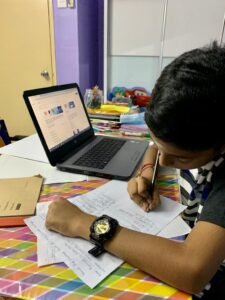 All challenges demand a whole lot of literature search just like what professional scientists do. As the exercises involved information gathering, problem solving and communication, participants were groomed for a rapidly changing and highly technological world. Participants turned to the internet as it brings the world at their fingertips, giving access to terabytes of data and information.
Technology will play an ubiquitous role in as-yet unimagined ways and these challenges expose the students to what will be in store for them in the future.
Three students were selected as overall winners for the ten-day challenge while one winner was chosen for each of the three exclusive challenges and were given a special award respectively: Junior Author award, Junior Science Communicator Award and Junior Innovator Award.
All winners received a certificate of acknowledgement for their participation and a one-year free subscription of The Petri Dish.
The programme received many positive feedbacks as testified by parents via the impact assessment survey.
“Parents were very happy that the students exhibited a sense of responsibility, discipline and determination throughout the ten days of activities. Some students even called up their school teachers to get help,” Rahim said.
He says, the Science Kids E-Challenge served as a medium of interaction among family members and has helped to enhance parents-children bonding during the activities.
Dr Mahaletchumy Arujanan, who is the Editor-in-chief of The Petri Dish said: “It was a pleasant surprise to me that both parents and students were deeply interested to learn science outside the academic curriculum.
“This is a good sign of moving away from just wanting to score in exams. The STEM Challenge by Vetri Association shows the need for more STEM activities and projects for students outside school. We at The Petri Dish are keen to play a role if there is funding,” says Mahaletchumy who is advisor of the “STEM education” programme as well as executive director of the Malaysian Biotechnology Information Centre.
Linthini Gannethion the project director of the Science Kids E-Challenge competition is pleased that being just a four-month old association, the pilot project received an overwhelming response from the participants.
She said: “The competition attracted a total of 270 participants from all over Malaysia. To acknowledge their effort, each student received a certificate of participation,”
“It is fine if one’s ladder to success is broken, use your knowledge to build a new one and get going. After all, success is about continuous problem solving,” Linthini adds.
The Vetri Association has five other flagship programmes for 2020. According to Rahim, the association is aiming to integrate the participation of national school students in their upcoming programmes to provide opportunities and exposures to all school students to interact and learn from one another.pd
[/ihc-hide-content]