How good bacteria prevent hair loss?

HAIR LOSS is one of the most common, non-threatening medical conditions around the world. Hair loss among young women is a growing phenomenon. Thick, shiny, lustrous hair is what every woman aims for; however, one in four women will experience some form of hair loss, including thinning. For men, androgenetic alopecia, or male pattern baldness, is responsible for more than 95% of hair loss. Two thirds of men will go through some level of hair loss by the time they turn 35. Hair loss, while somewhat based on genetics, is largely influenced by your diet, lifestyle, and environment.
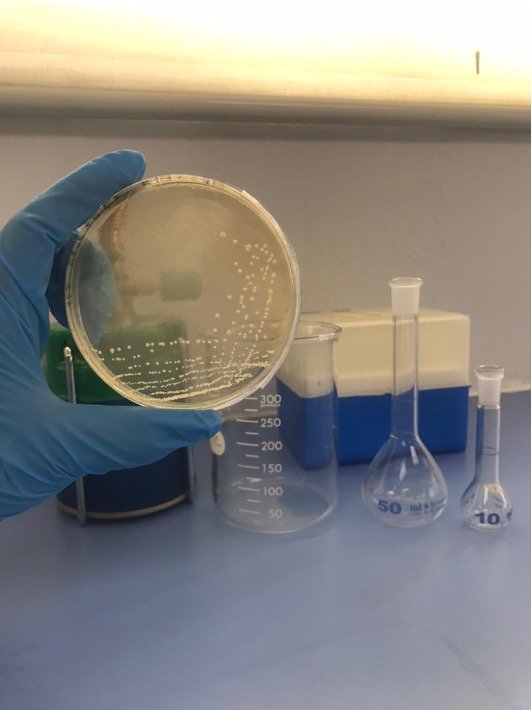
Although a permanent cure has [ihc-hide-content ihc_mb_type=”show” ihc_mb_who=”2,3,5″ ihc_mb_template=”1″ ] yet to be found, modern research is revealing how nature can reduce and stop hair loss. Probiotics, the gutfriendly bacteria/good bacteria found in fermented foods such as yogurt, may be just what you need in order to stop hair loss in its tracks. The most commonly used probiotic in modern studies is lactobacillus which are supplemented into the diet. It features the unique ability to trigger a positive immune and metabolic reaction, enhancing the performance of both. As a result, your body is better equipped to fight off environmental pathogens, reduce and eliminate inflammation, and promote nutrient uptake.
All three of these features will dramatically improve your hair health. Research shows that our gut microbiome not only supports the production of some of the nutrients needed for growing hair, it also supports the hormones and can even maintain conditions in our body that favour healthy hair growth. And, when it’s in balance, our microbiome can help to crowd out inhospitable bacteria that can lead to hair loss and thinning. Gratitude practices, meditation, and spending time with people who make you happy can all lower your stress levels, creating conditions that allow beneficial bacteria to thrive and eventually help in hair growth.
When will Betelgeuse explode?
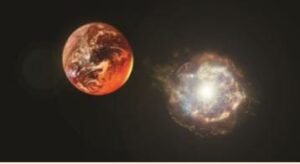
BETELGEUSE is one of the brightest stars in our sky. On any clear night, we can see this star in the Orion constellation, marking the hunter’s shoulder which represents Orion. Betelgeuse play an important part in astronomy as it’s the second brightest star in Orion and the eight brightest stars in the sky. The Orion constellation is often used to locate the other stars in the sky as its bright stars made it easier to be identified. Betelgeuse was born as a super massive star million years ago and is now can now be seen as bright reddish star. This is because it’s in its red supergiant stage which is one of the final stages of a star’s life before dying. For a massive star like Betelgeuse nearing the end of its life, it will explode in a process known as supernova and send its dust scattering across the galaxy. During this time, it will emit the brightest light in the sky for at least for a week. Recently, the astronomical world is buzzing with the news that Betelgeuse has become dimmer than usual. It is said to be the dimmest it has been in the 21st century. However, having a distance of about 600 light years from Earth means that what we’re seeing of the star now is from 600 years ago. However, data calculated and analyzed by scientists estimate a period of 100 000 years before the star explodes. So has the star exploded or will it explode in the near future? Unfortunately for us, we may never find out in our life time. But if it has exploded, there’s a chance for future generations to watch this special event.
What is the age of Periodic Table?

IN CHEMISTRY, the Periodic Table of Elements is the map that outlines an ordered system of all the identified elements that make up everything in our universe. The chemical elements that make up the periodic table are the building blocks for water, plants, minerals and everything in nature. These elements also create the products and technologies that have shaped modern societies in countless ways such as clean drinking water, effective medicines and technologies ranging from solar panels to electric components. The credit for the creation of the Periodic Table goes to Dimitri Mendeleev, a Russian chemist who in 1869 wrote out the known elements (of which there were 63 at the time) on cards and then arranged them in columns and rows according to their chemical and physical properties. The United Nations has declared 2019 the “International Year of the Periodic Table of the Chemical Elements,” to celebrate the 150th anniversary of the first periodic table and to recognise the important role chemistry plays today in promoting sustainable development and providing solutions to global challenges.
How different is one Human Genome from another?

IT’S OFTEN said that humans are 99.9% identical and what makes us unique is a measly 0.1% of our genome. Our bodies have 3 billion genetic building blocks or base pairs that make us who we are. And of those 3 billion base pairs, only a tiny amount of 0.1% are unique to us sets us apart from others. The complete human genome sequence announced in June 2000 is a “representative” genome sequence based on the DNA of just a few individuals. Every human genome is different because of mutations or “mistakes” that occur occasionally in a DNA sequence. When a mutation occurs in a sex cell, a sperm or an egg, it can be passed along to the next generation of people. Your genome contains about 100 “new” mutations or changes that occurred as your parents’ bodies made the egg and sperm cells that became you. These genome variations are uniquely yours. Other variations in your genome arose many generations ago and have been passed down from parent to child over the years until they ended up in you. You probably share each one of these older variations with many other people all over the world, but still, no one else has the exact same combination of variations that you have. [/ihc-hide-content]