The Conference – a convergence of nutrition and biosecurity
The conference saw a convergence of scientists, feed millers and formulators, animal nutritionists, veterinarians, quality control personnel and livestock producers. Avian Influenza (AI) and African Swine Flu (ASF) took centre stage at this conference as the latter is threatening farmers in Asian countries. So far, reportedly about 1,170,000 pigs were culled in China, 4,500,000 in Vietnam, 7,000 in the Philippines, and 25,000 either died or were culled in Laos.
Biosecurity measures to contain the spread of the diseases were presented by veterinarians. The trade impasse between US and China was a major topic and its implications to the soybean trade, particularly for the US, was discussed. Soybean meal consumption in China went plunging in 2018 and 2019 due to trade conflicts and African Swine Fever (ASF). However, the recent truce between these two mega economies is expected to result in more soybean import into China from the US.
The conference turned into a biochemistry class with in-depth protein, fat and carbohydrate metabolism tutorials. These biochemicals impact on feed processing and formulation. Energy conversion, feed processing and formulation, heat treatment and impact of heat on the nutrients and reactions between nutrients were also discussed, providing feed millers valuable insights into producing quality feed for poultry and livestock.[ihc-hide-content ihc_mb_type=”show” ihc_mb_who=”2,3″ ihc_mb_template=”1″ ] Quality assurance was another major topic where global benchmarks were presented to ensure food and feed safety.
Analyzing hazards, identifying critical control points, establishing critical limits, establishing monitoring procedures, corrective actions, verification procedures and documentation were amply discoursed throughout the farm-to-fork supply chain.
HACCP, GMP and other country-specific certification were presented alongside. Overall, the conference proved that the livestock and poultry industry was much more than what meets the eyes that in SE Asia, it is a growing and heavily science based and regulated business.
Soybean – the kingmaker in animal nutrition
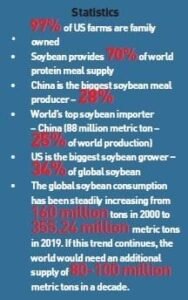
Affluence and meat consumption are well correlated, and this has increased the demand for soybean meal. The global soybean consumption has been steadily increasing from 160 million tons in 2000 to 355.24 million metric tons in 2019. If this trend continues, the world would need an additional supply of 80-100 million metric tons in a decade. The rise in world urban population is a driving force that increases the demand for soybean. The other force is the increase in world aquaculture which is up by 79 per cent from 2005 to 2019 (87 million metric tons), where soybean meal is used as feed. Meat production continues to rise with poultry up by 44 per cent, pork 21 per cent and beef 12 per cent.
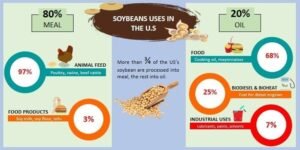
This will have significant environmental consequences but through sustainable farming practices, US farmers emerge as most sustainable in the world. Ninety-seven per cent of US soybean meal is used to feed poultry, swine and other livestock. Modern biotechnology supports the development of premium soybean seeds with higher yield, resistance to lodging, insects and nematode, and tolerance to herbicide, which also leads to sustainable production of food and feed.
The global annual oil seed production is approximately 593.9 million metric tons and soybean accounts for 355.24 million metric tons. Top producers are the US, Brazil and Argentina. Unparalleled innovation not only places US as the leading producer but also provides competitive advantage to its soybean which is anchored by exceptional composition, consistent supply and sustainable farming practices. With 97 per cent of US farms being family owned, these farmers are committed to taking care of the environment and producing the crops as efficiently and sustain-ably as possible.
The US Soybean Sustainable Assurance Protocol was established by the US Soy Industry to show their commitment to sustainability. US soybean is known for its consistent quality making it a preference among feed millers because it is easy to store, crush and process.
The future of ‘The Protein Decade’
While vegan and vegetarianism are becoming a growing trend, the future is certain to be “The Protein Decade”. Data shows that as GDP increases more calorie is consumed, and protein intake increases. Calorie disappearance which accounts for both consumed and wasted foods were on the rise for developed nations like the US, Germany and Australia. Today China, Brazil and Egypt are fast catching up as food wasters.
In the new protein decade, attention is shifting to farmed fish. Farmed fish is a growing industry and thousands of years of experience in producing meat from terrestrial animals is leading to more sustainable and efficient ways to produce protein from fish. Although soybean meal is mostly used in poultry and swine, it is now a major protein source used in aquaculture worldwide. According to the US Soybean Export Council, soy went from a possible fish meal substitute to a preferred ingredient in most aqua feeds. With its high protein density and desirable amino acid profile, US Soy is well-suited for the aquaculture sector.
Farmed fish and crustaceans are among the most environmentally sustainable protein sources as they require less energy, thus, reduced need for carbohydrates. Soy-based aquaculture feeds also have demonstrated very good feed conversion ratios for the major commercial fish varieties. Feed conversion ratio (FCR) is efficiency of the animals to convert feed to desired outcome (meat, eggs and milk).
FCR for beef cattle is 6.0–10.0; pigs, 2.7– 5.0; chickens, 1.7–2.0, and farmed fish and shrimp: 1.0–2.4. Aquatic animals are more efficient in converting their feed to meat than terrestrial animals because they use less energy to move around due to buoyancy, they do not have to stay upright, and regulate their body temperatures because most are ectothermic.
Animal nutrition – the most studied nutrition
Animal nutrition encompasses the full gamut of animal nutritional science, including, but not limited to, fundamental aspects of animal nutrition such as nutritional requirements, metabolic studies, body composition, energetics, immunology, neuroscience, microbiology,
genetics and molecular and cell biology related to nutrition and applied aspects of animal nutrition, such as raw material evaluation, feed additives, nutritive value of novel ingredients, and feed safety.
Animal nutrition, poultry and swine, in fact, is the most well studied nutrition, and far ahead of even human nutrition. Animal feed is optimised for fast growth and bioavailability, combining the science of microbiology, biochemistry, physiology and food science. Soybean meal is the main component of feed and offers the best quality in terms of its high levels of
digestible protein; the correct ratio of amino acid content, metabolisable energy, and most importantly for its consistency.
According to presentations made by the technical experts at the conference, US soybean meal is clearly shown to have a marked advantage in the earlier points mentioned in comparison with other major sources.
The quality of soybean depends on the origin, handling and post-harvest facilities and storage, processing techniques, moisture content, chemicals used, sampling methods, human factors, and types of equipment. These set of circumstances is where the US Soybean Industry excels in. In addition, ensuring a sustainably responsible and sustainable
soy supply chain for its customers is a top priority for the US.
A strong takeaway message at the conference was that – “not all soybean are created equal”. Innovation and procedures play a big role in determining and maintaining the superior quality of US Soy.