KUALA LUMPUR: A locally developed aptamer-based biosensor is set to change the way we monitor human body, pathogens, food and environmental contaminants.
The innovation also has the potential to be developed into portable diagnostic kits that is robust and convenient for field use.
The technology was recently introduced by Biogenes Technology Sdn Bhd (Biogenes) in a seminar themed “Aptamer + Biosensor”.
“Aptamer, a synthetic alternative to [ihc-hide-content ihc_mb_type=”show” ihc_mb_who=”2,3″ ihc_mb_template=”1″ ]antibodies can act as molecular probes to detect and measure desired target molecules in a sample,” said Tang Kok Moon, Biogenes Chief Operating Officer.
He said aptamer is highly flexible and can be moulded into use within a range of conditions determined by end users.” added Tang.

According to him, while antibodies are harvested from animals and is very expensive to produce, aptamers on the other hand are simply synthesised in a laboratory, where no animals are used or harmed in the process.
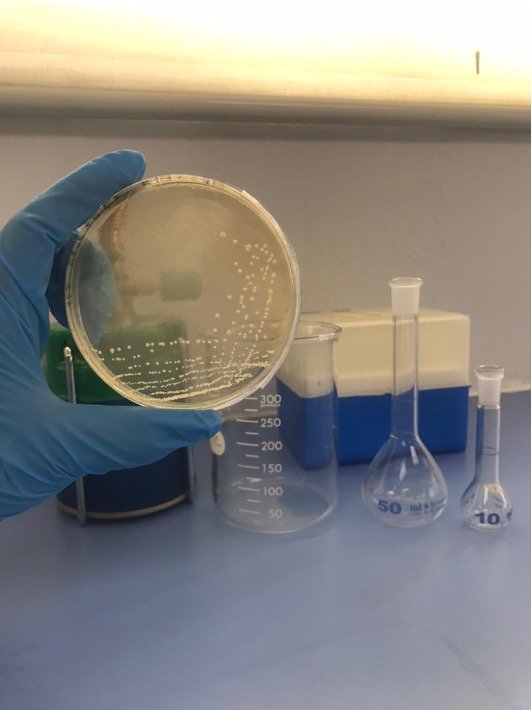
Using the new method – in silico computational approach – aptamers can be synthesised in a virtual environment that is more accurate, faster and cheaper, said Dr Samson Soon, Director of Research Management Centre in Infrastructure University Kuala Lumpur (IUKL).
He said the conventional way to derive aptamers is via the use of Systematic Evolution of Ligands by Exponential Enrichment (SELEX) which involves complex multiple rounds of selection which are extremely laborious, costly, and time consuming.
In 2017, Biogenes and IUKL signed a collaborative MoU on the development of aptamer applications in biosensors for molecular diagnostics.
With in silico computational method, comes the incorporation of aptamers onto printed biosensors, which is then used to detect the presence and measure the concentration of targeted molecules.
“These biosensors are electrochemical based, and work in the same principle as diabetes monitoring gluco-meters,” said Mohd Rawa, Biogenes lead biosensor researcher.
Mohd Rawa said his work has shown good correlation between the electrical signal output from the biosensors and the concentration of target molecules in the samples.
Mohd Rawa and team are currently working to incorporate more aptamers onto biosensor platforms for many important target molecules for applications in diagnostics.
According to Tang, Biogenes will further refine and integrate their methods into a computational software that allows users to design aptamers for their desired target molecules cheaply and rapidly.
“Biogenes’ vision is to bring to both local and global market an array of aptamer-based biosensor diagnostic kits in healthcare, agriculture, aquaculture, animal breeding, and environmental monitoring.
“It is of prior importance to build an eco-system with biosensor researchers from local universities and research institutions to co-develop specific biosensors to targeted molecules in different sectors.
“It is through building linkages and networks with foreign universities and international bodies, that we are able to elevate our homegrown technology to the global level,” added Tang.
[/ihc-hide-content]