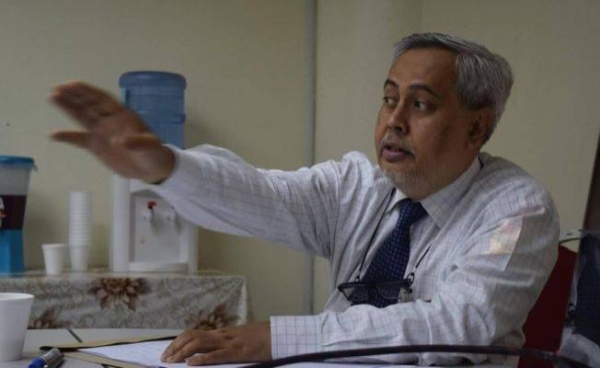
DR REENA RAJASURIAR,
HIV Scientist, Centre for Excellence for Research in AIDS, University of Malaya
“Rogue scientist at work“
THE technology for gene editing is still not 100 per cent safe and there could be “off target” effects which could be detrimental. So, to apply this technique to humans is wrong and these babies have been unnecessarily put at risk.
All experiments on humans[ihc-hide-content ihc_mb_type=”show” ihc_mb_who=”2,3″ ihc_mb_template=”1″ ] must go through an ethical review board before it can be executed but in this case the legitimacy of the board that reviewed the study has been brought to question as they were not registered with the health authorities in China.
The Chinese researcher performed the experiments on HIV serodiscordant couples, meaning, one partner is HIV infected and the other not.
His reasoning is that by editing the genes in the foetus they will not be able to be infected by the virus. That reasoning is “completely flawed” because there are techniques nowadays called sperm washing where serodiscordant couples can safely have children without the threat of HIV to the foetus.
All in all, it appears like he is a “rogue scientist” who did experiments without regard of the potential harm to his subjects and he had absolutely no medically justifiable reason to do it.
This case highlights a larger problem in the scientific community. We do not have enough regulation and transparency to avoid such things from happening.

DR ZARINA ABDUL LATIFF
Professor of Paediatrics and
Clinical Genetics, Universiti
Kebangsaan Malaysia
“ A case of benefits vs risks”
GENETICS has revolutionised the world we live in today. What started off with scientific advances in molecular diagnosis of inherited diseases such as thalassaemia, has then quickly moved on to the era of “designer babies” in the 1990’s by means of genetic engineering.
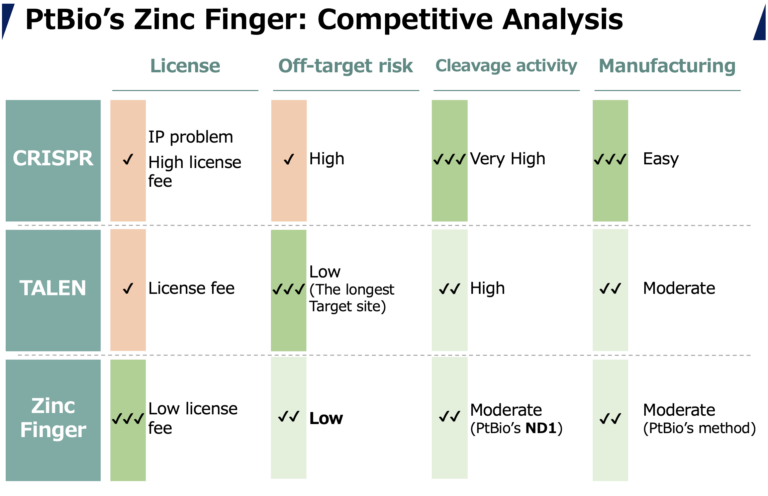
CRISPR/Cas9 technology which was discovered just over 10 years ago, now enables precise gene modification, an option to treat diseases in a new way by rewriting the genetic code in body cells (somatic cells). What is of major concern though is when CRISPR is used in reproduction, meaning, in sperm/ova or early embryos where the “changed DNA” are then present in all cells which may then be passed down from generation to generation.
Such revolutionary techniques are not without safety, costs and more importantly ethical issues; all these add on to on-going controversial debate. The benefits should certainly outweigh the risks; the risk of unpredicted, off target deleterious mutations are greater than the possible benefits of therapy itself when it comes to genome editing in human embryos.
Furthermore, if these damages are “introduced”, who is then liable for the future generations? The question of “Who should benefit” inevitably arises too; the focus should be on healthy babies and not designer babies.
The amount of published research on gene editing over the last five years is tremendous. Even for blood diseases such as thalassaemia, clinical trials are still being conducted. Thus, is it ethical to venture into the realm of human development then when the former has not yet been ‘perfected’?
The recent report on He Jiankui, the Chinese scientist who created a pair of “gene edited twins” triggered a massive uproar as the disease that was being edited (HIV) is presently a highly treatable disease.
All these are reminiscent of mankind having an upper hand or as some would say it “playing God”.
There needs to be a clear regulatory framework to ensure responsible usage of such technology.
As such, in 2017 the National Academy of Sciences set forth a stringent set of criteria on gene editing before clinical applications could even be considered.
Public engagement strategies are of utmost importance too in developing such recommendations and policies. Ethical, social and legal issues should always be carefully
considered in order to adhere to the principle of non-maleficence in clinical practice.
“The benefits should certainly outweigh the risks; the risk of unpredicted, off-target deleterious mutations are greater than the possible benefits of therapy itself when it comes to genome editing…”
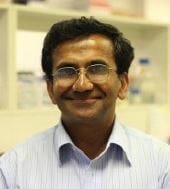
SADEQUR RAHMAN
Professor of Plant Genetics, Director of Tropical Medicine
& Biology Multidisciplinary Platform, School of Science,
Monash University Malaysia
“Variation – the essence of evolutionary success”
BREAKTHROUGHS in technology often introduce moral issues. The discovery and subsequent application of nuclear fusion in the last century led to intense soul searching.
The capabilities of CRISPR have been demonstrated in the laboratory and we are now debating the impact of “designer babies”.
I think the impact of designer babies will be far less than feared. Most applications will be in the removal of harmful genes and this is welcomed. Improvement of characteristics may be much harder and will probably come at great cost such as reduced lifespan. If it becomes possible to produce uniformly “perfect babies” in the distant future then there is great danger for mankind. Variation is the essence of evolutionary success.

SHAWN KENG
Genetic Screening Provider
“On to a bigger question”
AS human beings, we hold closely to the ideals of “not inflicting harm on others”. So, one may believe that CRISPR is similar to plastic surgery – performing an irreversible change on a human gene pool. People may achieve desirable change or undesirable consequences. Every action we take has risk, nothing is guaranteed, and we make informed choices whether the risk outweighs the benefits, and whether we have exhausted all alternative resources. He Jiankui’s research showcases an example of “ends justify the means”. Whether he successfully done it or otherwise, should not be the center of discussion.
This leads to a bigger question, what do we do when gene-editing on babies does become viable? Would you do the same? From my experience, the general public in Malaysia is not ready for genetic screening, let alone gene editing. We should not haste decision to push CRISPR application on human babies at this time. As rightly said, it is premature and too risky.
However, just because it is not right for humans now, we should not ban the research and knowledge pursuit of gene-editing entirely. GMOs in many ways have benefited
us with nutrient enhanced, climate resilient crops in the face of climate change. Should one day, gene-editing becomes a necessity mean for survival in the future, we must be ready with sufficient level of knowledge about this technique.[/ihc-hide-content]