CCM Duopharma Biotech Berhad (Duopharma), one of Malaysia’s leading pharmaceutical company, was established in 1979. Since then, it has grown to become one of Malaysia’s pioneers in the biosimilar industry – besides already being a leading manufacturer of generic medicines and branded consumer healthcare products in the country and in Asean.

A biosimilar product is also known as a “follow-on biologic” or “subsequent entry biologic” which is almost an identical copy of an original product which has been manufactured by a different company.
Following a demerger from CCM Berhad in December 2017, Duopharma attained a significant milestone in just 2018 alone, with its quest for new drugs and treatments.[ihc-hide-content ihc_mb_type=”show” ihc_mb_who=”2,3″ ihc_mb_template=”1″ ] The company acquired shares in Korea’s PanGen Biotech which has enabled it to gain rights to market biosimilar products developed by PanGen in Malaysia, Brunei, Singapore and the Philippines, and benefit from the transfer of technology and know-how by PanGen, relating to the development of biosimilars.
The first such biosimilar is Erythropoietin (EPO) co-developed with PanGen which went through, the now completed, Phase III clinical trials in both Malaysia and Korea. The company is now awaiting registration approval of this product.
Duopharma also made its foray into stem cell therapeutics through a 5.8% stake in Korea’s SCM Lifescience which has laid the foundation for the company to penetrate the Southeast Asian market and expand its product portfolio to delve into high value therapeutics.
Leonard Ariff Abdul Shatar, Group Managing Director of Duopharma, said the developments augur well with the company’s aspiration to be a leading pharmaceutical company in Asean by 2022.
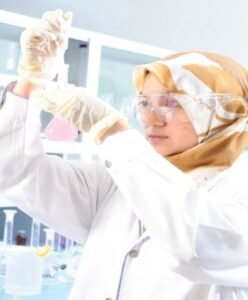
The company is on a mission to provide greater access to affordable and quality medicines, as well as to offer trusted and award-winning consumer healthcare brands to the masses.
The company is currently developing, manufacturing and marketing over 300 generic drugs including the award-winning drugs, Omesec and Vascor whilst its over-the-counter (OTC) brands such as CHAMPS, Flavettes, Proviton and Uphamol are well recognised and accepted locally
and regionally.
“Every day, Duopharma strives to explore new frontiers in science and technology, not only to offer affordable and cutting edge products and treatments to those in need, but also as part of our strategy under an initiative called “Project Challenger” where Duopharma is moving away from its dependence on generics to “create value and niche” either through the introduction of innovative products via our own R&D capabilities or with experienced partners,” says Leonard.
With a strong emphasis on upholding the highest standards of quality, safety, efficacy and hygiene, Duopharma has a proven track record of developing comprehensive technological advances with Good Manufacturing Practice (GMP) certified in the country including establishing the first small volume injectable (SVI) plant, dental cartridges & effervescent facilities, state of-the-art IBC Pharma System; creating the first soft gel for pharmaceutical products, high active pharmaceutical ingredient (HAPI) plant in the groundbreaking foray into the oncology market and becoming the first local company to set up a Pharmacovigilance system and unit internally. Duopharma also became the first pharmaceutical company in Malaysia to jointly develop biosimilars and launch a biosimilar insulin with our wellknown partner Biocon.
“Biosimilars, along with biotherapeutics are the new key and exciting technology area that would differentiate Duopharma from the other local players, as they have been identified as the major range of therapeutic products that will dominate the development of new biotherapeutics. The biosimilar range of products which we are targeting and working on supports the specialty areas identified such as EPO for renal, insulin for diabetes and many others,” says Leonard.
Leonard, however, realised that Duopharma had a steep learning curve to overcome in order to stay ahead of its competitors in the biosimilar industry, including the importance of identifying the right partners.
“Biocon, with its well established fermentation based biotechnology processes insulin and analogues, and PanGen Biotech, with its Chinese Hamster Ovary (CHO) technologies and various cell lines for products including EPO, which have been developed through strong and proven science and clinical expertise, require significant understanding to ensure that the investment into these biosimilars or technology would be viable, sustainable, and most importantly able to deliver products that meet key criteria of safety, efficacy and quality for the patients and consumers.
“We are keen to find and work with more partners that share the same vision, culture and values as us i.e. common sustainable objectives; long-term partnership – passion and working as a team; so that we can leverage on each other’s expertise; and ultimately creating value for all our stakeholders and shareholders.
“Moving forward, we will continue to develop knowledge and understanding of the products and technologies, train and equip our resources, continue to work and leverage on existing partners especially in developing quality and knowledgeable human capital, and strengthen our collaboration in developing good regulatory framework and processes with
the key regulators in the different markets. Our aim is always to develop quality products through good clinical development work that emphasises safety and biosimilarity.
Leonard further added that Duopharma values the close engagement with key agencies within the Ministry of Health (MOH), in particular the National Pharmaceutical Regulatory Agency (NPRA). He believes that the regulatory framework in Malaysia is generally strong, but the emphasis should be on close and meaningful engagement with the industry to achieve the common objective of registering products that are safe, effective and of quality.
“Whilst biosimilars is one of the key product categories, we are also looking at other innovative technologies that will help us to continue to become not only a strong Malaysian player, but a regional and eventually a global pharma and biotech player. In order to achieve this, we also need a strong ecosystem to support biosimilars industry in Malaysia.
R&D programmes, CROs, KOLs, and collaborative platform that is supported by the Government through specific incentives to encourage and
support innovation in this field.