There are few more evocative words than bread in almost any language. From the Lord’s prayer in the Bible to Marie Antoinette’s unfortunate “Let them eat bread” comment (which she apparently did not make) to Indira Gandhi’s “Roti Kapad aur Makan” slogan and that of many other politicians, the word “bread” has the ability to drive humans to contemplation or a frenzy. The reason for this power is the deep association of bread with our prosperity and our existence.
Bread of course is almost always made from wheat. This complex and intelligent plant domesticated us, the restless hairless ape, in the Fertile Crescent area about ten thousand years ago. It forced us to settle down, plough fields and build cities in return for the promise of plentiful bread. The first wheats were the products of the union of two different types of grasses that produced plentiful and large seeds. The wheats that [ihc-hide-content ihc_mb_type=”show” ihc_mb_who=”2,3″ ihc_mb_template=”1″ ]we commonly eat now emerged somewhat later after the union of a third type of grass. The first type of wheat, which is now known as durum wheat, is still prized for pasta but it is the later, more genetically complex type of wheat, that we usually use for bread making.
Why do we have to make bread out of wheat? Why not out of other starchy plants? There is in fact evidence for “bread-like” foods from about 25,000 years in an area near Jordan. This recent discovery has reignited the question of first human settlements and agriculture.
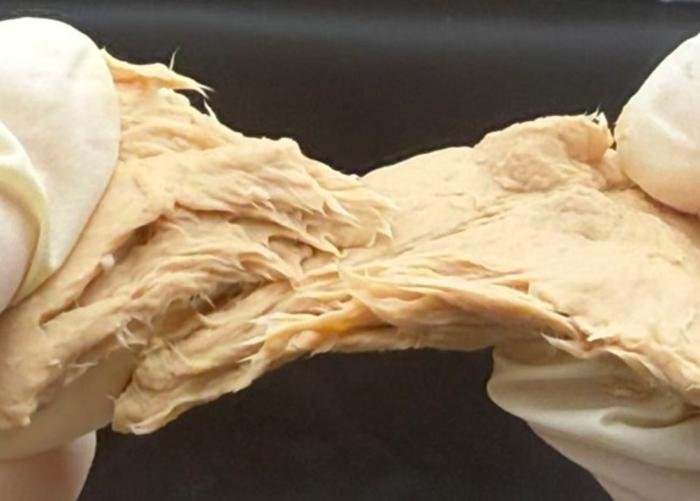
However, to the question of “why wheat for bread” the answer is in the proteins that are found in bread. A class of proteins in wheat is unique in that they can form an elastic cage in which the rest of the grain can be suspended. Thus, when the bread is baked, the ground up seed is contained in these interlocking cages so that it remains a whole and we can pull it to break off pieces to eat. The Prophet is reported to have suggested that bread be eaten by pulling and tearing, not cutting.
Gluten, the collective name for the proteins in wheat that make up the cage, however, are also a source of misery to the millions that cannot tolerate wheat products. For about 5-10% of the population, gluten produces an allergic reaction in the small intestine, leading to inflammation and general discomfort. Prolonged consumption over many years can lead to celiac disease, with damaged intestines and difficulties in digestion. It has been reported that modern high yielding wheats and techniques used for mass production of bread are making worse the response to gluten.
The complete sequence of the hexaploid wheat genome was reported in August in the journal Science. The paper that reports the sequence had over 400 authors from seventy-three institutes. Sequencing has advanced so rapidly in the last decade that the announcement of a sequence is now a ho-hum event. However, this one is rather special because of the complexity of the wheat genome. The genome is huge because, as mentioned earlier, bread wheat is the child of three different grass-like plants, each of which had large genomes themselves. The total amount of DNA in a wheat leaf cell is three times that of in a human cell and twenty-five times of that in a rice leaf cell. It remains to be seen what mysteries are unveiled as a result of the full sequence and when the information gained is translated into everyday applications. Any application that results in a better wheat and a better bread that is tolerated by all will be lauded all around the globe.
SADEQUR RAHMAN is Director of the Tropical Medicine and Biology Research Platform and Professor of Plant genetics at the School of Science, Monash University Malaysia. Prior to joining Monash in 2011, he worked or studied at leading research institutes and universities in Australia, Japan, Bangladesh, Canada and UK. His particular interests are in the application of molecular genetics and genomics for food security and for biodiversity studies. He also has long standing interests in making science accessible to the layman and in the encouragement of evidence-based thinking.
[/ihc-hide-content]