RAWANG: It is not always easy to introduce school students to the concepts of DNA in class as it could be hard for them to visualise how the minute and complex structure appears. The Lab-Ind Resources (LIR) Sdn Bhd has on the 20th and 27th June 2018 conducted a workshop for trainers and educators to show them how DNA science could be brought into real life for students.
Held from 9 am to 3 pm, the workshop was attended by educators from various institutions across Malaysia such as HELP International School, Austin High International School, Kinabalu International School, The Abundant Resource Centre and many more.
They were shown how such programmes may be implemented in schools, as they were given a hands-on experience of the various experimental procedures. The experiment which was conducted was on GMO testing with three types of food samples.
The educators explored the molecular methods which were used in the experiment such as DNA extraction, Polymerase Chain Reaction (PCR) and gel electrophoresis. Also included in each session were some basic explanations of the general principles and concepts which prepared them for the demonstrations and practical sessions.
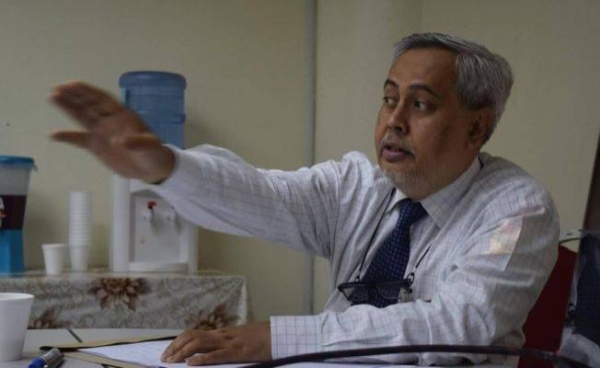
“Science should be taught in an interesting manner.” Robin Liew from LIR believes. “The emphasis on equipping educators is crucial. They are the front liners of school education that plays an important role in spurring students’ S.T.E.M interest and learning among students.”
The workshop was highly interactive, fun-filled and engaging. With this introductory session for the educators, it was hoped that such science applications would be brought to the classrooms.
Besides GMO testing, the learning modules designed by LIR comprised other exciting hands-on experimentations for students such as marine organism disease
screening, crime scene investigation, food tasting test and rated at different difficulty levels.
Robin, who is also involved in the national STEM movement mentioned that these learning modules could engage students in scenario-based real-life DNA science applications. “Through this, they will be able to see the relevance and connections of the scientific knowledge to the society.”
Felicia Paulraj who is teaching Biology in HELP International School believes that these programmes would be beneficial to her students. “Instead of just using videos, pictures or textbooks, the students can now have the opportunity to learn through hands-on experience at a young age.”
“With the introduction of this new learning experience, students would be able to see the evidence of DNA sciences, which would be very motivating to them. I am very sure they would love to go into molecular biology and genetic sciences.
“The scope would be there in the future where we will be getting more researchers and it would be very good for the mankind.” As observed by Vibha Saraph, who was the Head of Science in Austin Heights International School.
By engaging the students in the exploration, experimenting, and the self- experiencing processes, boring science classes would soon be a thing of the past. For further information on this programme, write to Lab Ind-Resources at info@mylabind.com or reach them at 03-6021 6880.
[/ihc-hide-content]