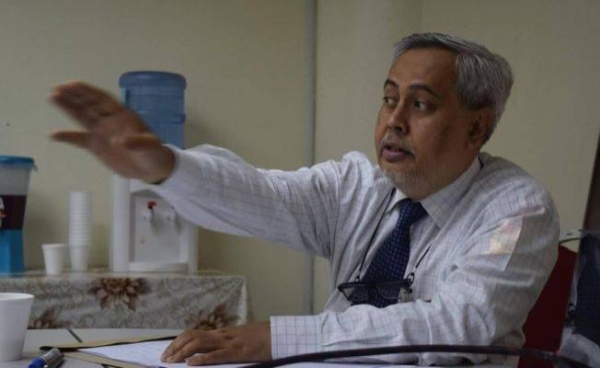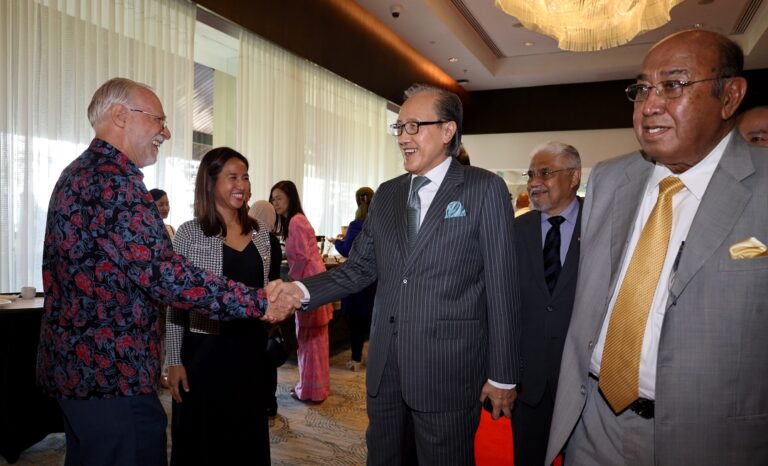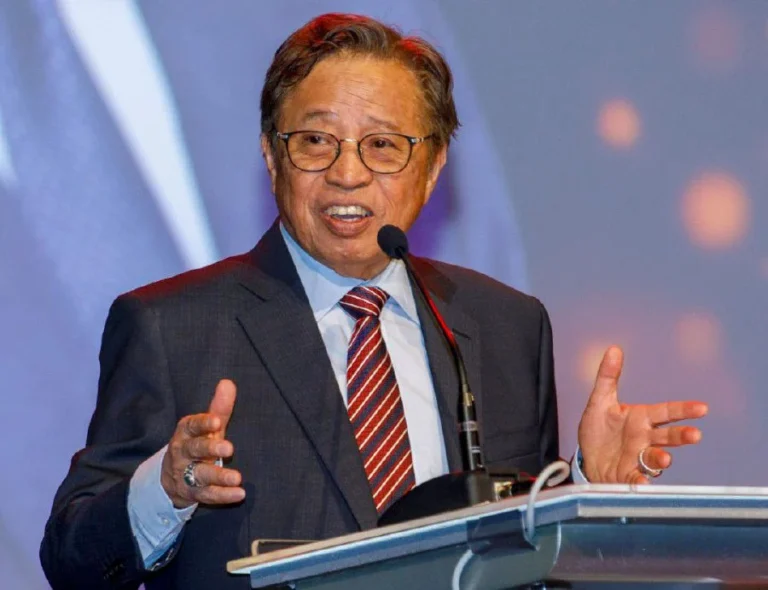
THE Honourable Minister for Science, Technology, and Innovation (MOSTI), Datuk Seri Panglima Wilfred Madius Tangau articulates his aspirations, views and struggle in championing science, technology, and innovation (STI) to shape Malaysia as an innovation hub and a highly competitive nation.
In this book, “Communicating Science, Trust, Integrity for Societal Wellbeing” and its Malay version, “Komunikasikan Sains, Tulus, Intergriti Demi Kesejahteraan Masyarakat”, the minister speaks about technovation (technology + innovation), integrity, and socioeconomic benefits brought by STI.
The book also highlights the need for science literacy among the general public, the beneficiaries brought on by the rapid advancement of STI. [ihc-hide-content ihc_mb_type=”show” ihc_mb_who=”2,3,5″ ihc_mb_template=”1″ ]
Every thought is carefully supported by various aspects that are aligned to the National Transformation 2050 agenda. Another highlight is the compilation of the articles the minister penned in the last one year, from February 2016 till June 2017.
Since he took office in July 2015, the minister has been a catalyst to spur STEM initiatives and policies in the country. One of his first battlegrounds was school laboratories. He understood immediately that to arrest the alarming decline in the interest to pursue STEM subjects among students, the curiosity of the students has to be enhanced and they need to get their hands “dirty” at the lab bench.
He lobbied tirelessly for an increased budget to refurbish school laboratories and his efforts were answered in Budget 2017. Budget was allocated for a total of 1,800 science laboratories to be upgraded.
“I am excited to see that 1,800 science laboratories in our schools will be upgraded to provide students a hands-on learning experience to nurture their interest in science,” said Madius in a press statement recently.
He is also a champion for Technical and Vocational Education Training (TVET) and wants the country to make up for the lost time during the first two industrial revolutions. Madius played a crucial role in establishing the Malaysian Board of Technologists which gives “professional recognition” to technologists.
In another occasion, the minister dreamt of having a centre similar to the UK National STEM Centre that he visited in York, UK in May 2016. Without wasting any time, Madius embarked on his next mission and in Feb 2017, the Academy of Sciences (ASM) conducted a workshop with the UK STEM Centre, British Council and local experts to explore how the UK Centre can be emulated in Malaysia.
The workshop supported by the Ministry of Education (MOE), Ministry of Higher Education (MOHE), and the National Science Centre will address the lack of interest on STEM education in the country, which is strongly associated with how science and mathematics is taught in schools.
The ambitious minister does not stop at 2020 in his planning, his agenda is set till 2050 and beyond. He got ASM to embark along this path encompassing the Envisioning Malaysia 2050 Foresight Initiative, Mega Science, and Emerging Science, Engineering and Technology studies.
The Foresight is a great masterplan that did not leave any stones unturned. All aspects of the impact of STI were tediously studied to guide Malaysia’s journey towards a harmonious, prosperous and sustainable Malaysian in 2050.
This is based on nine key drivers – Green and sustainable practices; People and values; Leadership and governance; STI capacity and competency; Economic growth and equitable wealth distribution; Urbanisation and rise of megacities; Talent; Population and Demographics; and Education and Training.
In one of his articles written for NST, Madius shares the three aspirations learnt from the South Koreans:
• To create high-risk, high reward technopreneurs,
• To develop a society that is patriotic to homegrown innovation; and,
• To have a long-term sustainable and effective planning for STEM talent.
His mantra is “Innovation as a National Priority”. However, he never lost sight of the developmental needs of Sabah, his home state. Sabah Economic Development and Investment Authority (SEDIA) at the Sabah Agro-Industrial Precinct (SAIP) in Kimanis has the full support of MOSTI for its development of a biotech satellite initiative, the commercialisation of tea tree and an Herbal Medicine Knowledge Base.
As part of the Sabah Development Corridor, SAIP drives the biotech research and development, and biotech businesses in Sabah.
NOTE: The book, a joint publication of MOSTI and Institut Terjemahan & Buku Malaysia (ITBM) is available in both Bahasa Malaysia and English language. The book is priced at RM40.00 (RM45.00 East Malaysia) and is available at Kedai Buku ITBM, Seksyen 10, Wangsa Maju; or can be purchased online at www.itbm.com.my; Whatsapp your order to 019-221 9015.
[/ihc-hide-content]