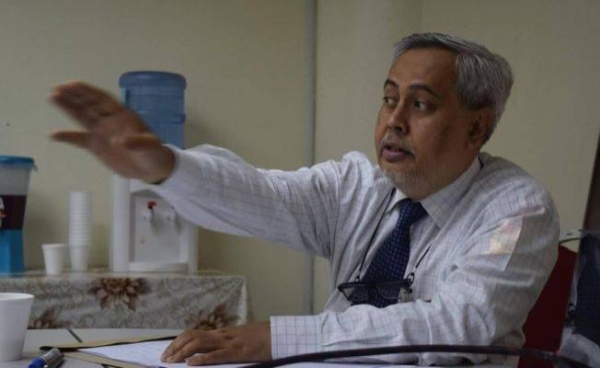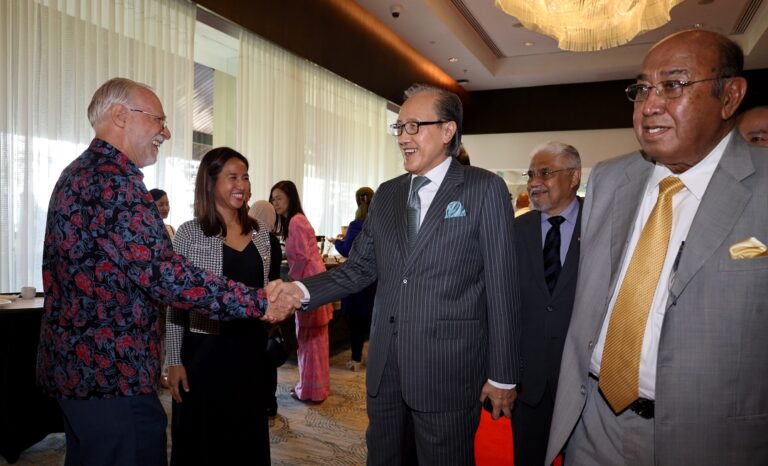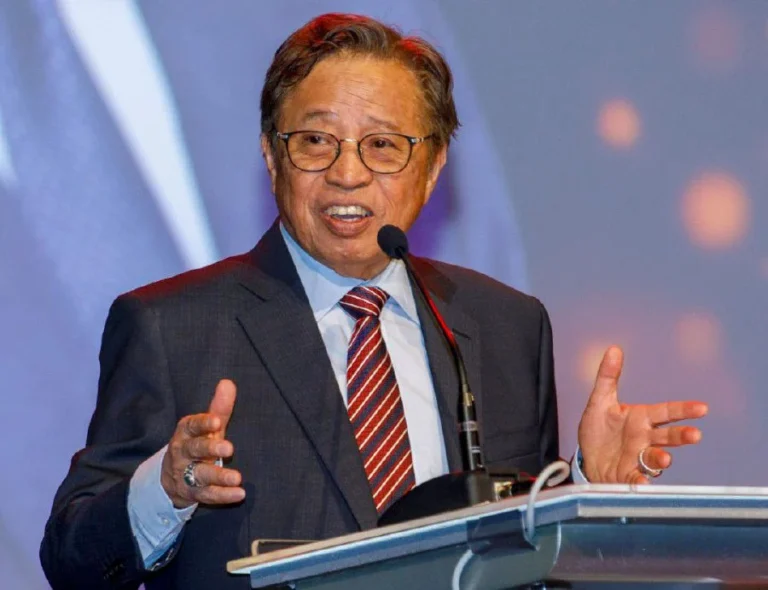
The Petri Dish Editor-in-Chief MAHALETCHUMY ARUJANAN speaks to HE Ibete Fernandez Hernandez, the Cuban Ambassador to Malaysia and gets a glimpse of the country’s achievements in science despite decades of US blockade on the strong-willed nation.
Cuban biotechnology research and industry were born in 1980 when the former President, Fidel Castro saw that need to produce interferon to cure cancer. Can you take us through this journey to where the country is today?
The training of human resources has always been important to Cuba. As early as 1960, former president Fidel Castro predicted that “the future of Cuba will have to be necessarily a future of science men”.
Achieving universal education was inspired by the ideals of Cuban national hero, Jose Marti who stated that being educated is the only way of being free. In 1961, illiteracy was eliminated and the transformation of the education system with the aim of training people to be teachers, doctors and scientists.
With regards to the sciences, some milestones marked its evolution. In 1962 the reactivation of the Sciences Academy of Cuba, the creation of the Institute of Public Health, followed by the Foundation of the National Center for Scientific Researches, the production of Interferon, the institutionalisation of the Biologic Front, [ihc-hide-content ihc_mb_type=”show” ihc_mb_who=”2,3,5″ ihc_mb_template=”1″ ]the inauguration of the Center for Genetic Engineering and Biotechnology and later the West Scientific Pole was created with 52 institutions and more than 1500 researchers.
The development of biotechnology in Cuba from the 80’s, inspired by former president Fidel Castro, was associated to the important role of this discipline in the healthcare industry.
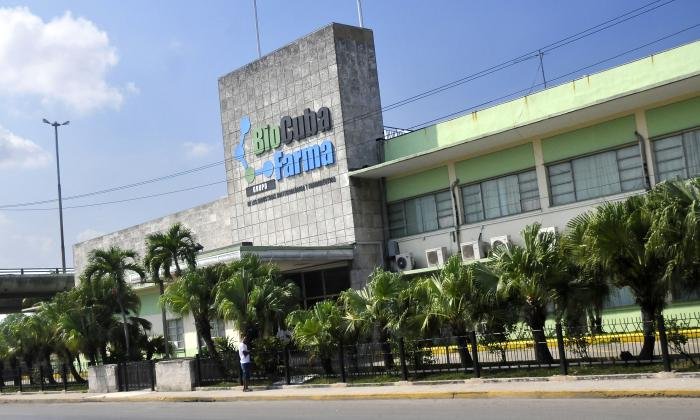
From the updating of our economic model, we hosted BIOCUBAFARMA which brought together 31 companies and 62 production facilities that work today with more than 450 products corresponding to R & D programmes. It has 900 sanitary registers in more than 50 countries and has granted more than 1,800 patents abroad.
What are the strengths of Cuba that has led the country to its current status in biotechnology R&D and commercialisation?
The development of biotechnology has been driven by political will and for the need for having our own resources to face all the constraints that the US blockade imposed in all the sectors in Cuba. It is important to mention that not only education but healthcare has been in the core of priorities of the Cuban government.
Cuba invested strongly to train specialists and scientists who are the testament to the health indicators that Cuba exhibits today.
Biotechnology was conceived on the concept of high-tech enterprises and research centers integrated to a closed cycle of studies, production and commercialisation.
The latter ensures the coordination of the institutions involved in each of the complex stages for obtaining and licensing a biotechnological product. An example of this integration is the Quimi Hib vaccine against Haemophilus Influenza type B, the first in the world produced from synthetic antigens. It was obtained from the collaboration of four institutions of the Pole and the University of Havana.
At present BIOCUBAFARMA has 22,000 workers devoted to the research, development and production of the biotechnological products, all of them trained by the Revolution.
Cuba is an excellent model as a biotechnology hub. How did Cuba rise up in the face of adversity, especially the effect of USA trade embargo?
Developing Cuba and all it sectors including science has been a challenge due to the presence of the blockade. The biotechnology industry in Cuba is based on knowledge. The Cuban government has invested a lot of resources, training its scientists and acquiring last generation and sophisticated equipments to develop this sector. Cuba has today, a detachment of researchers and technicians with solid professional training.
Biotechnology represents one of the first sectors of the Cuban economy, despite the US blockade, and its products are recognised outside borders, especially in human health, such as Heberprot-P for ulcers in the diabetic foot and CIMAVAX for lung cancer which has benefited nearly a quarter of a million patients worldwide.
Also new research protocols and results were developed for the cure of diseases such as HIV virus, cancer, severe acute hepatitis B, chronic hepatitis B and others for veterinary medicine, agriculture and the environment.
Tell us about the collaboration and bilateral ties between Malaysia and Cuba in the past in the areas of trade and in particular biotechnology.
Malaysia and Cuba enjoyed 42 years of bilateral relations that have been very good at the political level but lacking ties in the trade and investment areas. Given the potentialities of Malaysia’s development and Cuban expertise, I’m sure that multiple things can be done.
Between 2000 and 2016, different projects among Universiti Kebangsaan Malaysia (UKM), Universiti Sains Malaysia (USM), Innobiologics and DNA Biosciences with Cuban companies were carried out for research and importation of Cuban products, especially the Hepatitis B vaccine for children.
Unfortunately, the contract for the commercialisation of this product expired last year and the others didn’t continue, except the one with USM which is being renegotiated with Finlay Institute in Havana.
At present, there is collaboration among the company Bioven and the Center for Molecular Inmunology through an agreement for the clinical development of lung cancer vaccine CIMAVAX in Europe and Asia.
The possibilities of having more bilateral projects are big nowadays given Cuba’s interest in sharing its technology as well as commercialise its products and also because of Malaysian interest in developing biotechnology industry, aspects that I have verified during my recent visits to Terengganu, Perak and e-Invest Selangor.
On the other hand, Malaysia and Cuba have common diseases with high influence in the mortality rate like diabetes, cancer and non- communicable diseases for which Cuba has developed different and effective drugs that can be used for the Malaysian population.
What do you think were the reasons for the lack of bilateral ties in the present?
Mainly there is a lack of knowledge about the possibilities that Cuba offers and the scientific development reached by the country. There is also an absence of interaction between Malaysian and Cuban specialists.
It is my goal to increase the awareness on Cuba and all its potentialities, especially because I feel that biotechnology will be a sector where there are a lot of possibilities.
Both Cuba and Malaysia share some mutual interest and national agenda in biotechnology. How can we work on common grounds for mutual benefits?
One of the means can be precisely sharing information through platforms like your publication, exchanging mission of specialists and potential joint researches among others.
What are the areas both countries could collaborate in?
The biotechnology industry has positioned itself as a priority sector within the Portfolio of Opportunities for Foreign Investment (IE) in Cuba.
There are now nine projects in biotechnology industry with opportunities for foreign investment in Cuba, eight of which are located in Cuba.
These projects include the construction of plants for the production of monoclonal antibodies for therapeutic use against cancer, blood products and biomaterials. Also Cuban products can be introduced in Malaysia for mutual benefits.
How do you plan to revisit and expedite the collaboration?
Promoting around Malaysia the opportunities and potentialities of the biotechnology industry in Cuba. It is my dream to have Cuba situated among the Malaysian partners in Selangor Bio Bay that was inaugurated recently and is set to be an important biotechnology pole in the country.
Tell us something about Havana Biotechnology 2017 that is slated to take place in December this year.
Havana Biotechnology 2017 will take place in Varadero, Cuba from Dec 3 to 6. This meeting will focus on biotechnology applications to crops for the development of agriculture.
It will bring together experts from more than 30 countries from Latin America, the United States, Canada, Europe and Asia to present their papers and exchange experiences on aquatic biotechnology, modern biotechnology for animal health, plant pathogens interaction, enzyme technology, biotechnology applications for plant improvements and its use as bioreactors, bioproducts for agriculture, regulatory affairs and agro-business.
Among several renowned speakers for the event, there will be the Nobel Prize recipient in Medicine Richard Robert, who will give the inaugural conference lecture. The theme of the Congress is linked to one of the main challenges facing humanity: the search for new forms of food production and how biotechnology can contribute to the sector.
I take this opportunity to invite Malaysian specialists to attend the event and through it set the starting point for a fruitful future collaboration.
For further information visit the website of the event: http://bh2017.cigb.edu.cu.
[/ihc-hide-content]