I had the opportunity to attend the 2018 Southeast Asia US Agricultural Cooperators Conference organised by US Grains Council, US Department of Agriculture, and US Soybean Export Council in Kota Kinabalu recently.
Themed “The new normal for global agribusiness”, the conference, aimed at bringing together US agriculture leaders, farmers, USDA officials, subject matter experts and industry thought leaders to share their knowledge and viewpoints on near term market concerns and discuss the far term future prospect and challenges in global food and agriculture.
The conference presented a multitude of topics covering the entire value chain of agriculture. Farmer leaders gave a comprehensive picture of what US farming sector looks like; while researchers spoke about intensifying agricultural production while keeping it sustainable for the future.
While I have[ihc-hide-content ihc_mb_type=”show” ihc_mb_who=”2,3″ ihc_mb_template=”1″ ] visited a number of farms in the US, the farmers’ presentation fascinated me. The employment of precision technology that offers sustainable farming practices even in large-scale farms put many subsistence farming advocates to shame.
We are in the age of disruption and the agriculture sector is no exemption. Technologies, millennials and nutritional needs will change the type of foods and the way they are produced. Fitbits, smartphones and meal kits took a fair share of time at the conference.
Huge F&B companies have special research teams devoting their time to study how people’s eating habits and lifestyles will change the market.
The US-China trade war and the shift in China’s new policies and strategies are other major disrupters in the global agriculture market and the organisers did not fail to capture these important topics. How China’s policies will affect global feed grain markets was discussed in great length.
The global protein demand, climate change and the emerging Asean markets were also part of the discussion. Grains move from one continent to another and there are many factors that come into play when deciding the transportation such as regulations, safety and quality among others. A presentation by Maersk Group on cross-border supply chain solutions gave an insight into this.
The various free trade agreements namely US South Korea Free Trade Agreement (KORUS), North America Free Trade Agreement (NAFTA), US-China bilateral relations and World Trade Organisation are some of the influencers in global grain trade.
The conference offered many insights into the new norms in the global agriculture scene and it kept me excited till the last presentation.
Not to mention the excellent array of food the delegates feasted and the visit to the Mari Mari Cultural Village. What I enjoyed the most was sitting among new stakeholders and network group and connecting the dots of the various stakeholders and topics and see how all these fit into the agribiotechnology ecosystem. Grain traders, farmers, policymakers, regulators, scientists, transport providers, marketeers, climatologists and agribusiness consultants were present to interact and present their views.
It was indeed a conference rich in substance. Here, I uncovered some of the major highlights of the conference.
The Next Wave of Global Agriculture
Precision farming
Large-scale farming is often demonised by environmental activists as the culprit for loss in biodiversity and as generators of carbon footprint. But a deep dive on the intricacies of farming, farmers’ passion and lifestyle will give the actual state of affairs and circumstances connected to large-scale farming that feeds and fuels the world.
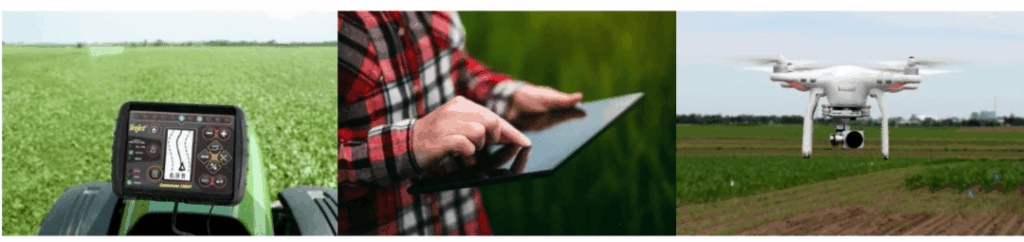
Most US farmers practice precision farming where Global Positioning System (GPS) and Geographical Information Systems (GIS) are used. US soybean farmers are early adopters of technology.
While the GPS used in aviation provides reliable signals with an accuracy of 2-3 metres, the GPS used by US farmers provide real-time data collection at an accuracy of 2-3 inch. This allows the farmers to better utilise their fertilisers, pesticides and herbicides and control pests and diseases efficiently. Farmers are not only able to reduce their expenses and produce higher yields, but also create a more environmentally friendly farm.
The notion that large-scale farmers and farms leave tremendous environmental footprints were quashed by the farmer leaders who presented real-life experience in their farm, most of them fifth generation farmers with their children inheriting their farms.
Most US farmers adopt the framework for sustainable farming that helps manages crop production input in an environmentally sustainable way. This site-specific knowledge optimises the use of fertiliser and chemicals only where and when they are needed at the right amount and minimise nutrient imbalances in this soil.
Cover crops planted between periods of regular crop production prevent erosion, increase soil organic matter and nitrogen content.
The combination of these practices results in appropriate land use; preservation of air, water and soil quality; reduction in overapplication of production inputs such as chemicals and fertilisers; reduced use of energy and fuel; reduced pesticide resistance; and reduced production of greenhouse gases.
The agriculture sector is also a beneficiary of Industrial Revolution 4.0 with digital farming technology taking a centre stage in the farmers’ life. Cloud-based software tools and smart technologies interface with other wireless devices and farmers are quickly adopting these technologies to stay ahead of the curve in the marketplace.
Modern biotechnology
Modern biotechnology and GM seeds were mentioned by every farmer, citing these as a boon to increase yield and reduce cost of production, at the same time provide a sustainable solution to farmers.
While farmers are always in the lookout for new crop varieties, regulation often becomes a bottleneck in getting technologies to the farmers and other end users. It takes at least three years for a new biotech crop to be approved for food, feed and processing in importing countries.
Asynchronous approvals where a new GM seed variety is approved in one country but not in other countries is a nightmare of every grain trader. This gives rise to Low Level Presence (LLP), an issue where huge consignments maybe rejected by importing countries because of small presence of grains that are yet to be approved in the importing countries, although they have been approved in the country of origin.
Another issue is the Adventitious Presence (AP) where non-approved grains in both exporting and importing countries get into the food and feed supply chain. Both LLP and AP could cause consignments to be sent back to the country of origin causing huge loss to traders and livestock and poultry farmers.
The China Factor
China’s corn demand is 150 million metric tonne per year, but local production is not at a satisfactory level. Nearly 70 percent of corn production growth in the past 20 years is due to expansion of sown area, not yield growth. Yields are 60-75 percent US yields with much of this due to plant population, which are roughly 75 percent US levels. But even at this low plant population, corn has a “tip back,” indicating that plant populations exceed soil nutrient supply.
The Chinese government plans to reduce corn sown area by 10 million mu/year (666,666 hectares) for the next five years to allow land to recover from intensive farming.
China established “95 percent self-sufficiency” guidelines for corn in 1996 but the 2013 “Grain Security Policy” removed corn from the “95 self-sufficiency” standard for the last 20 years. The 2013 policy is embodied in the 13th 5-year plan, emphasises quality over quantity and environmental outcomes.
China has increasing demand for grains but it looks like an uphill task with biotechnology suffering negative perception at high level policy dialogues and the current trade tensions between the US. is forcing them to reduce imports from the US and develop feed grain sources in countries around their One Belt One Road route.
Rapeseed is being considered as possible substitute to corn. China is also ramping up its corn processing industry in the next three years. Soybean crushers and ethanol plants are in the pipeline in this emerging mega economy of the east. Domestic production and improving the country’s transport system are all in the works, with One Road One Belt taking the lion share.
The impact of re-strategising is yet to be seen.
The Wellness Economy
David Donnan, Senior Partner at AT Kearney says while geographical culture has always defined our food, today our diet and eating habits are defined by mobile technology and AI, rising cost of healthcare, community and peer influences, a focus on wellbeing, and new generational influences.
Our community is now made of vegan, keto (high-fat, adequate-protein, low-carbohydrate), vegetarian, paleo (Paleolithic diet that dates aproximately 2.5 million to 10,000 years ago, made of lean meats, fish, fruits, vegetables, nuts and seeds), pescatarian (diet that includes fish or other seafood, but not the flesh of other animals) and gluten-free.

Fitness tracking wearables and technologies that provide instant feedback on our health status and diet will have a significant influence on our food choices. There is greater awareness on the need to cut down on our sugar and fat intake, and eating more natural and fresh foods.
It is interesting to note that 30% of Americans are concerned with their friends judging what their kids eat; and 64% of patients monitor their health with mobile devices.
All these disrupters are demanding food manufacturers to re-strategise the way they market their food products. Food can no longer be marketed as commodity but as source of better life; from unknown sources to foods with a source and story; and from mega factories to producing closer to consumers.
Global wellness economy was estimated to be USD3.7 trillion in 2015 and food companies are intensifying their datafeed to serve consumers better in the future.
Global Population and the Protein Decade
The growing global population is a popular notion but what will be another disrupter is not just the number of people on the planet but the growing middle class.
In 2015 the global middle-class population was 3.2 billion. In the next five years, there will be an unprecedented expansion of middle-class population with an addition of 160 million people every year. Eight per cent of the next billion entrants will be in Asia with 350 million in China, 380 million in India, 270 million in rest of Asia, and 130 million in the rest of the world. By 2030, Asia could represent two third of the global middle-class population.
Malaysia, Indonesia and Vietnam have 70% of mobile phone penetration and this will profoundly affect the way food producers interact with their customers.
The shift in meat demand requires specialty protein ingredients. It is estimated that more than 700 million tonnes of crops are needed to meet the future protein demand and out of this, 600 million tonnes will be corn and soybean. The market demand is also expected to drive farmers to grow these crops with a drop in rice consumption as this staple food replaces meat.
Another future trend in the protein decade is growing demand for fish which is expected to take over the beef industry. Fish farming will be a fast growing industry.
The disrupters in the food and feed industries in the next 10 years are e-commerce, climate change, GMOs, water availability, ageing population, tools and innovation, and investment. Malaysia imports 50 and 172 million tonnes of corn and soybean annually respectively.
The way forward
To meet the projected demand of food, feed, fuel and fibre and to align with the disrupters, production has to be increased by 50-100 percent every year in the next four decades; freeze agriculture’s footprint; yield must be doubled in the next 40 years; water and energy scarcity must be addressed.
Key performance indicators must be outcome based, technology neutral, science-driven and transparent.
[/ihc-hide-content]