BY NAZIFA TABASSUM
In conjunction with International Women’s Day on March 8, five high profile women share their success.
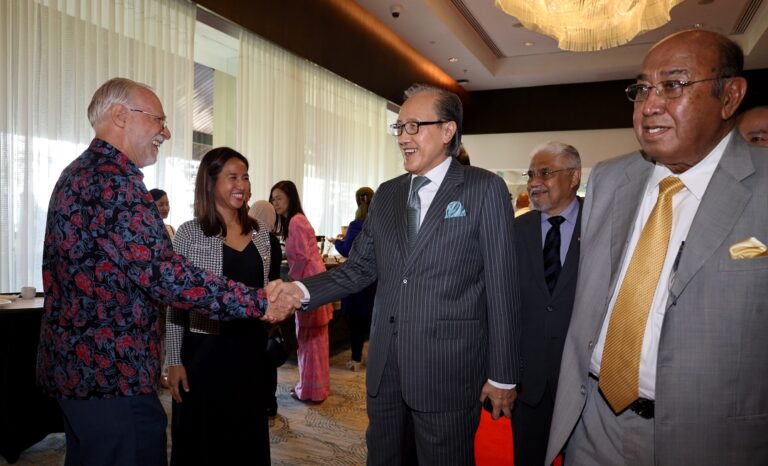
KUALA LUMPUR: THE US Embassy in Kuala Lumpur in collaboration with the University
of Malaya, held an International Women’s Day Forum – dedicated solely to women in STEM (Science, Technology, Engineering & Mathematics).
Kamala Shirin Lakhdhir, the US Ambassador to Malaysia, in her opening speech highlighted
the importance of the theme of this year’s International Women’s Day: “To fight for progress regardless of gender, as success is for everyone”.
The panelists kicked off the forum by sharing their aspirations and what drove them
towards their respective careers, and the challenges they faced along the way.
Strategy management consultant and scientist, Sangeeta Matu was the moderator.
[ihc-hide-content ihc_mb_type=”show” ihc_mb_who=”2,3″ ihc_mb_template=”1″ ]Dr Siti Aisyah Alia, a marine polar researcher and lecturer spoke on a childhood obsession
with the TV show Big Blue Marble.
She said the show stirred a passion for scientific discovery, which she still carries with her
in her journey as a scientist.
She also highlighted the dearth of scientists in the marine mycology field.
Siti Aisyah said it is importantfor high school students to be exposed to STEM and get to
know the many different kind of sciences and the varied areas of study and career choices that are available.
She said, she has interacted with these students and seen tremendous interest among the
students in such specialised fields as marine mycology.
Deviga Doreraja, a data driven communicator and director of The Tenth Floor Malaysia,
believes that “the future belongs to those who see a potential story in everything”.
It is this which has inspired her to shift from arts to STEM, leading her to “connect the dots
and use data points” to tell stories instead.
She said: “ The digital system hasn’t changed who we are, what it has changed is how we communicate, how we relate and how we connect with people.”
Chee Yen Low, a corporate development planning and strategy professional, said the love for solving mathematical equations and puzzles encouraged her to take on any challenge that a company requires, to help them grow and develop.
“For me, it is like playing a small part in terms of helping to support the economic growth
of the country.
“It’s about enabling infrastructure, deploying capital correctly and making sure that human capital is developed.
Dr Mahaletchumy Arujanan, executive director of the Malaysian Biotechnology Centre (Mabic), saw a change in her career course from wanting to be a lawyer to becoming a scientist – and now a very determined science communicator.
Asked to describe her career as a science communicator, she said: “People working in the labs do a great job, but it remains in the ivory towers, it remains in the high impact journals.
“So, people like me translate and frame research into stories that are relevant and appealing to the public.
“This is to bring out into the public sphere the achievements in the laboratory, so that policy makers, politicians, and others to whom these matter can see it.
“We translate that and repackage it for them to make a decision. So that’s what I do.
“I travel around the world, I speak to ministers in Uganda, Pakistan, Kenya about biotechnology so that they make the right decisions for their country.”
The panelists also discussed the staggering statistics which illustrate how fewer students
are going into STEM, which play an immense factor in the 2020 Malaysia goal. To obtain Malaysia’s 2020 goal, 270,000 students are required to enroll in STEM majors yearly, whereas the current number only barely reaches 90,000.
The panelists mentioned how education in schools has a monumental role to play in changing this number, as students need to be made more aware of the possibilities in STEM, and study for a passion for exploration, and not just grades.
The silver lining in these statistics however, is that currently, women far exceed men in STEM majors at Bachelor’s, with 73% of Science majors being women, with the rest of the numbers being, 61% for Technology majors, 75% for Mathematics majors and 45% for Engineering majors.
[/ihc-hide-content]