Chitose Group sets sights on 10 million hectares of global microalgae farms by 2050, with Sarawak as key hub
KUCHING – Japan’s Chitose Group, which operates the world’s largest flat-panel microalgae production facility in Kuching, Sarawak, is charting an ambitious plan to develop 10 million hectares of large-scale microalgae cultivation farms across Malaysia, Indonesia, India, the Middle East and other regions by 2050.
The project, which targets a potential market size of US$4.2 trillion (RM17.7 trillion), aims to accelerate the global transition from petroleum-based industries to sustainable, algae-based bioindustries.
Building a trillion-dollar algae economy
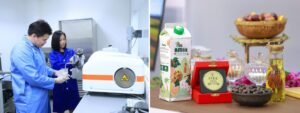
Ryosuke Koike, executive officer of Chitose Bio Evolution Pte Ltd – the group’s holding company – said microalgae biomass produced by its facilities would be channelled into a wide range of commercial products, including fuels, chemicals, cosmetics, animal feeds and food.
“Our goal is to build a new algae-based industry through the Matsuri initiative, working with global partners to create a sustainable supply chain,” he told Bernama.
The Matsuri initiative, led by Chitose Group, brings together over 100 partners worldwide, including multinational corporations, universities, research institutions and government agencies.

Sarawak at the forefront of microalgae innovation
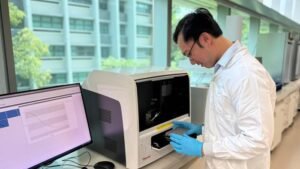
Chitose’s five-hectare microalgae facility in Sarawak, set up in 2023 with support from the Sarawak Biodiversity Centre, the Institute of Microalgal Technology (IMAT) and Japan’s New Energy and Industrial Technology Development Organisation (NEDO), serves as the group’s flagship site.
By 2030, the Kuching facility will expand its production footprint and roll out new microalgae-derived products, supported by US$400 million in research funding from the Japanese government.
Koike said Malaysia’s equatorial climate and high levels of solar radiation make it ideal for large-scale algae cultivation. “By growing microalgae, we can absorb carbon dioxide and create a wide array of products – fuels, plastics, fibres, paints and food – that help the world decarbonise and move away from fossil fuels,” he added.
Long-term commitment to sustainability
Koike said each future microalgae production site would operate as a self-funded business unit, raising capital through its own cash flows, with Chitose Group serving as the overall asset manager rather than asset owner.
“We are building a society where humanity can thrive for the next thousand years. Because of our long-term focus, we are not deterred by policy shifts, even in major economies,” he said.
Expanding Malaysia’s bioeconomy
Beyond microalgae, Chitose Group is also advancing sustainable agriculture in Malaysia. Its bioeconomy programme in Cameron Highlands works with more than 20 local farmers, combining traditional Japanese soil cultivation methods with modern science.
Chitose-branded fruits and vegetables are currently sold in over 70 retail outlets and served in more than 100 restaurants and patisseries in Malaysia, Singapore and Thailand.
“We aim to expand our reach to 250 retail outlets and 300 restaurants across the region within the next three years,” Koike said, adding that the group is seeking new distribution partners in Kuala Lumpur and other Malaysian cities.
Showcasing algae-based manufacturing at Expo 2025 Osaka
Chitose Group will showcase its algae-driven circular manufacturing model at the Japan Pavilion of Expo 2025 Osaka Kansai under the theme “Algal by Matsuri”.
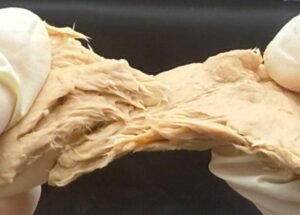
The exhibition will feature a diverse range of algae-derived products, from clothing, cosmetics and food to paint, PET resin and even aviation and marine fuels – a testament to how microalgae could underpin the next era of sustainable manufacturing.