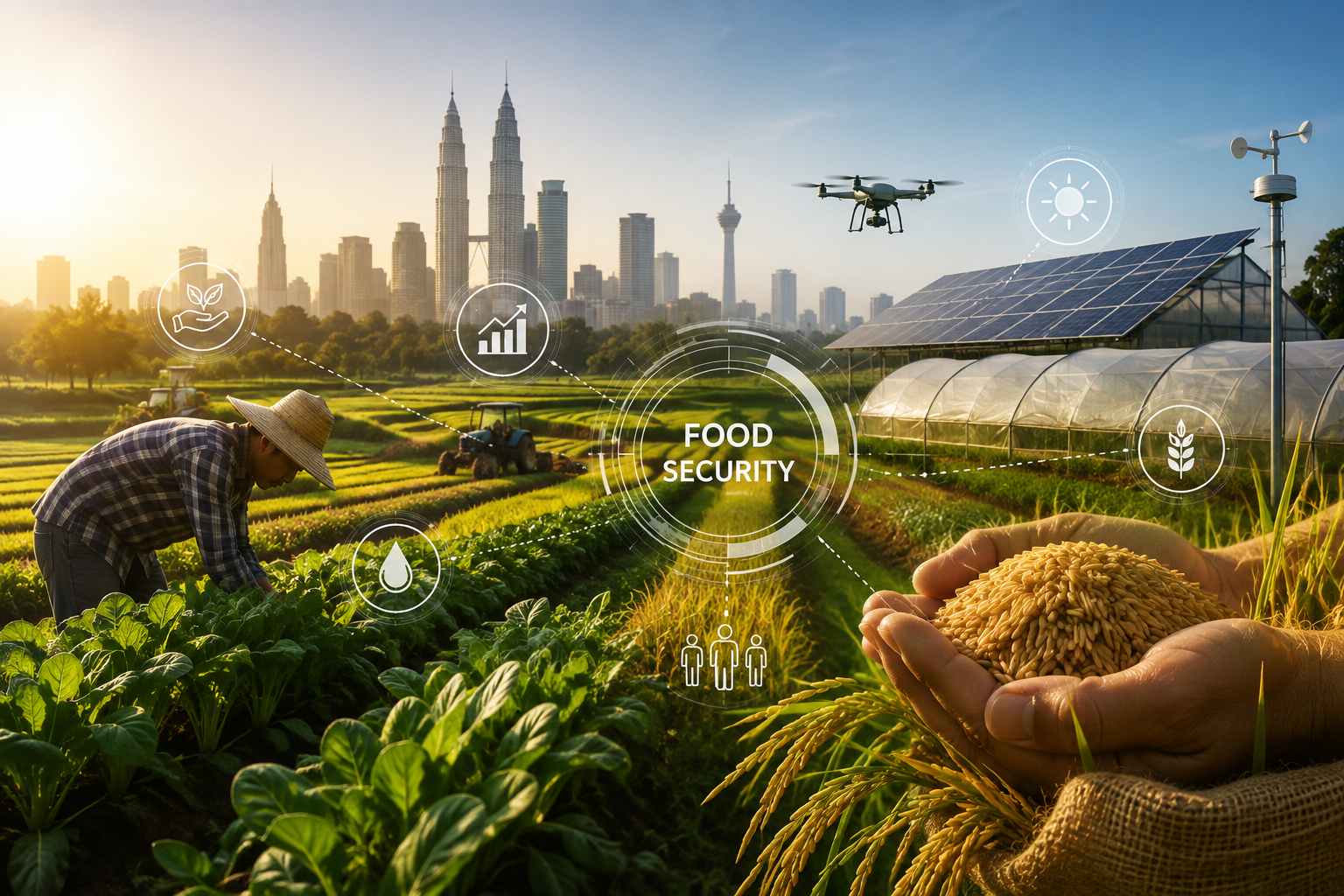
Agriculture still vital to Malaysia’s economy, but urgent reforms needed to secure food future
Agriculture and its related activities remain a critical pillar of Malaysia’s economy, even as its contribution to gross domestic product (GDP) has fallen to single digits. Beyond being a food supplier, the sector continues to absorb a significant portion of the nation’s labour force and acts as a buffer during economic crises.
A social and economic safety net
In many Asian economies, agriculture plays a vital role when other industries falter. This is equally true in Malaysia, where marginalised urban workers often return to their villages during downturns to tap rubber, plant paddy, or cultivate short-term crops. There have even been periods when urban workers rushed home on weekends to tap rubber when prices were high.

Although industrialisation has diversified Malaysia’s economy and created jobs for the young, agriculture’s role as a stabilising force cannot be ignored. It continues to provide livelihoods for rural communities and sustains the food supply chain.
Subsidies and support remain central
Like other nations, Malaysia has long extended budgetary support to agriculture. Developed economies such as the United States defend subsidies to shield their farmers from international competition, and Malaysia has done the same, particularly for paddy production.
Government initiatives have included price supports, fertiliser subsidies, research and development investments, and the establishment of marketing agencies. These measures have been essential for maintaining rural incomes and food availability, given the political and economic importance of rural populations.
Challenges cloud the sector’s future
Despite these interventions, the agriculture sector faces mounting challenges. Food imports continue to rise, significant tracts of farmland remain idle, and the farming workforce is ageing. Labour shortages in the wider economy have led to heavy reliance on foreign workers, both legal and undocumented, who now make up a large share of agricultural labour.
Food security concerns have resurfaced, particularly in the wake of the COVID-19 pandemic and global supply chain disruptions. Export restrictions by major rice-producing countries have further highlighted Malaysia’s vulnerability. Climate change adds yet another layer of uncertainty, threatening yields and complicating planning.
Time for a broader approach to food security
Malaysia’s past agricultural strategies have focused heavily on rice self-sufficiency. While important, this narrow approach is no longer adequate. Food security must be seen in a broader context encompassing production, supply chains, pricing and incentives, land use and implementation issues.
There is also a need to address cultural factors. Malaysians’ preference for rice as a staple has overshadowed alternative carbohydrate sources such as tapioca, sweet potatoes, maize and potatoes. Greater efforts are needed to diversify diets and ensure these alternatives are available at affordable prices.
Foreign workers’ consumption patterns must also be factored into rice planning, as their numbers have grown significantly since earlier self-sufficiency targets were set.
Rethinking subsidies and market distortions
Malaysia’s long-standing reliance on price supports to boost rice production needs a reassessment. While rice remains a politically sensitive and strategic commodity, heavy subsidies have at times created unintended consequences such as smuggling and unhealthy market behaviour.
Given that rice is an internationally traded commodity, its domestic price support mechanisms must be evaluated through a social cost-benefit lens. Border pricing criteria should form the basis of rate-of-return calculations to ensure resources are used efficiently.
A call for comprehensive reform
The 13th Malaysia Plan presents an opportunity to reframe agricultural development. The sector needs clear, integrated strategies to enhance productivity, secure the food supply, and adapt to evolving economic and climatic conditions.
Agriculture may account for a smaller share of GDP today, but its role as a food provider, rural employer and economic stabiliser remains indispensable. A serious re-examination of policies – from subsidies to land use – is required to ensure Malaysia’s agriculture sector is resilient and sustainable for the future.