The prestigious UK-based Journal of Medical Microbiology has a new face in its editorial bench.
For the first time in the journal’s history, the senior position of Co-Editor-in-Chief has been bestowed to a scientist outside of the UK – and quite fittingly to a formidable Malaysian researcher, Prof Kalai Mathee who hails from Ipoh.
The Journal of Medical Microbiology is one of the six key journals published by Microbiology Society. The journal publishes papers covering all types of microorganisms in medical microbiology.
The journal also provides comprehensive coverage of medical, dental and veterinary microbiology and infectious diseases, including bacteriology, virology, mycology and parasitology.
Kalai Mathee is the second daughter of the late Dr Kaliaperumal, a Tamil scholar and reformer. She is a former student of SRJK Tamil, Ipoh, and received her BSc Hons (Genetics) and MS (Microbial Genetics) degrees from the University of Malaya and went on to complete her PhD in Microbiology and Immunology at the University of Tennessee, Memphis under Prof Martha Howe.

Her fascination with Pseudomonas aeruginosa started in 1993 when she joined Prof Dennis Ohman. This led her to spend time in Copenhagen working on various aspects of the infections with Professors Soren Molin and Neils Hoiby.
In 1999, she joined the Department of Biological Sciences at FIU as an Assistant Professor where she rose up to the rank of Associate Professor in 2005.
She joined Florida International University (FIU) Herbert Wertheim College of Medicine in 2007 as the first founding faculty and the founding chair of the Department of Molecular Microbiology and Infectious Diseases, playing a major role in the establishment of Herbert Wertheim College of Medicine.
In 2010 she was promoted to Professor of Molecular Microbiology and Infectious Diseases.
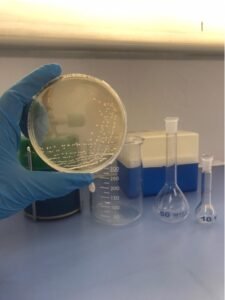
Kalai Mathee has established a multi-faceted research programme focused on the molecular pathogenesis of Pseudomonas aeruginosa.
The bacterium is responsible for much of the acute and chronic infections in immunocompromised and immunosuppressed patients.