AT a recent US Soybean Export Council (USSEC) conference in Singapore, international delegates were feasting on “food scraps” during one of the official dinners.
Eggshells, soy by-products from tofu processing, coconut chaff, and fruit peels were just some of the “food scraps”.
None complained, cringed, or were even skeptical. In fact, everyone was full of praise for the founder and chefs at the culinary academy.
Why would anyone complain when such cuisines were highly nutritious, healthy, and better than any other dining experience, and at the same time, the diners were actually doing their part in the circular economy? Education on sustainable food production was also part of the dinner topic, in line with USSEC’s conference theme.
The culinary academy behind this idea of repurposing food waste is At-Sunrice GlobalChef Academy, founded by Dr Kwan Lui whose recipes are a culmination of stunning and diverse foods around Asia. Who could better recreate recipes than Kwan who is a Myanmar-born Chinese, who has also lived in Thailand and Malaysia, and now in Singapore, all of which are food havens?
“As a child, I grew up seeing my father collecting used palm oil and recycling it as fuel in Myanmar. He then moved to Malaysia as the oil palm industry was flourishing and its biomass was more lucrative,” reminisces Kwan.
Repurposing discarded foods
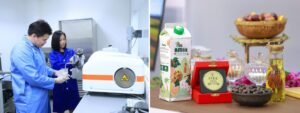
The kitchen counter is Kwan’s laboratory where upcycling research takes place. Pounding, fermenting, analysing, drying and many other processes finally turned into a “Eureka moment” for Kwan and her team when they explore food scraps.
There are many such moments. Turning okara or soy by-products (soy meal in tofu and soy milk production) into noodles, hummus and soup are one of them. Even eggshells that go into our kitchen bin can be repurposed.
Here is a little-known fact. One gram of an eggshell contains 367 times more calcium than one gram of fresh milk. They just don’t deserve to be in the bin. Kwan’s team upcycles this into alternative salt that is healthier with low sodium content. Another alternative salt is moromi, a by-product of soy sauce production. Beyond adding taste to food, moromi is an excellent seasoning that gives the umami taste.
Kwan’s effort is extremely laudable since food scraps form large biomass that ends up in landfills. One-third of the food produced for consumption goes to waste annually and that is 1.3 billion tonnes globally. This does not include food ingredients discarded during cooking and processing such as eggshells, ground coffee, coconut chaff, fruit peels, and fibre among many other food by-products.
Coffee drinks alone produce an estimated quarter of a million tonnes of wet waste coffee grounds every year. What is more alarming is all these discarded food ingredients are extremely rich in nutrients.
“One tofu factory produces up to 300 tonnes of okara waste a month in Singapore and it’s polluting our waters,” says Kwan.
About 2.21 billion eggs were consumed in Singapore in 2020, so one can imagine the number of eggshells tossed away globally.
WellSpent
Kwan took food scraps to the next level by branding them as WellSpent, upcycling, and trademarking the term.
A tour around her culinary academy educates us on nutrients in all these spent food ingredients. Posters show the amount of calcium in eggshells, antioxidant in spent tea and coffee ground, minerals in crustacean shells, and the list go on.
“I was once out with my grandchild when I bought fresh orange juice from a vending machine. The orange peel and fibre caught my eye and I immediately approached the company to explore how this biomass could be turned into food”, says the savvy entrepreneur who is always on the go.
Next thing, marmalade became one of their products under the WellSpent brand. The traditional way of drying the fruit peel makes it bitter. Kwan and her team of R&D chefs found another way through months of trial and error to make orange peel marmalade.
One could see Indian murukku made from spent barley, and various cookies from the spent coffee ground, coconut chaff.
The USSEC delegation was served British-styled six-course dinner starting with scotch egg made from crustacean and eggshells. The egg is coated with the spent coffee grounds instead of bread crumbs. Fish and chips with eggshell and barley spent batter were seasoned with moromi. Dessert was summer berries posset with lemon peel and meringue crumbs made with eggshells.
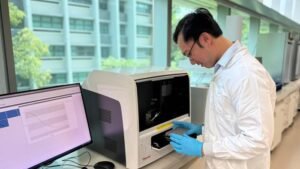
Her cuisines are tested by the Asian Microbiome Library (AMILI) to see how they support gut health and also to understand the nutritional value of spent food ingredients.
The Academy
Kwan’s life goal is not all about business. She is an epitome of knowledge and wants that knowledge to be imparted to younger people. Her academy trains young chefs from over 34 countries. Her graduates work in reputable hotels and restaurants on every continent.
Being the creative person she is, Kwan offers the excitement of cooking to everyone. The academy is open to students, families, companies, and tourists to ignite the art and science of cooking.
So, next time you visit Singapore, have your evening WellSpent (pun intended) with the At-Sunrice GlobalChef Academy to stun your taste buds with mouth-watering food, while doing your bit for the environment.