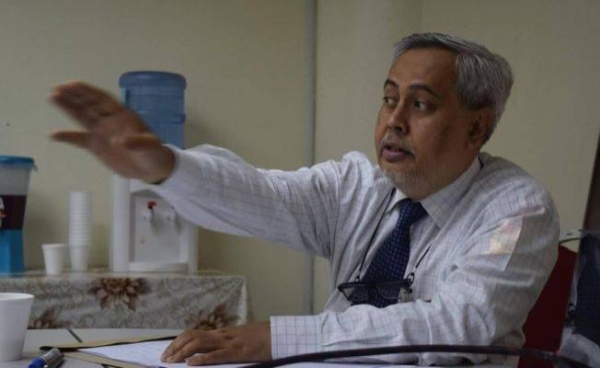
For answers to these questions, The Petri Dish editor-in-chief DR MAHALETCHUMY ARUJANAN spoke to Dr Noorashikin Md Noor – a research fellow at Earth Observation Centre, Institute of Climate Change, Universiti Kebangsaan Malaysia.
Flash floods have become a common phenomenon, there is no distinct rain season and temperatures are higher than what it was 40 years ago in Malaysia. Is Malaysia grappling with climate change? What is causing it in Malaysia? What is being done?
It is predicted that by 2030, climate change will affect 70,000 Malaysian with an associated loss of RM1.7 billion, says Dr Noorashikin Md Noor. Noorashikin also drops many other bombshells. “It is expected that in the 2050s, we may have to suffer more than 240 days per year in temperatures above 350C. There is an increase of 0.40C every decade on an average.”
Between 1990 and 2010, carbon dioxide (CO2) emissions increased at a faster rate, resulting in a temperature increase of 0.7 to 2.60C. These may look like small numbers, but they have extreme effects. This change in temperature will result in more rain in some areas while others endure drought or drier conditions.
[ihc-hide-content ihc_mb_type=”block” ihc_mb_who=”unreg” ihc_mb_template=”3″ ]
“That explains the significant rise in rainfall over the years, resulting in more floods, landslides, hurricanes, and other weather-related catastrophes, like what many Malaysians faced last year,” says Noorashikin. The annual population affected by floods in Malaysia is predicted to be 125,000, with annual losses expected to total $6.1 billion in 2021.
While the flood created huge socioeconomic and mental health issues, the climate expert says flood is only a short-term effect of climate change. “There are more to come due to this phenomenon,” explains Noorashikin.
Climate Change: Is it my problem?
There are many implications for the public, farmers, fishermen, other living things, and the planet brought by climate change. A prolonged drought devastated around 9,000 paddy farmers, resulting in crop losses of RM25 million in 2019. This has severe repercussions on food security.
Droughts in areas such as the Kelantan River Basin are severe during El Nino occurrences, which have become more frequent. This has a negative impact on agricultural and aquaculture production, as well as on freshwater supplies and industries, again affecting food supply and livelihoods.
An increase in the frequency of droughts and temperature rises may increase the occurrence of wildfires.
“If you think last year’s flood was bad, imagine 10-30% more rainwater by 2090s. We can expect more flash floods and landslides,” warns Noorashikin.
Greenhouse gases from industries
Agriculture, energy, and transportation are the main sources of Greenhouse Gases (GHG) that cause climate change. Agriculture releases a large amount of CO2, methane, and other GHG they release. Most of this comes from landfills that are used to dispose of agricultural waste.
Methane is released from solid waste disposal sites and sewage treatment from palm oil mills. Methane is also released through enteric fermentation, rice farming, as well as manure management.
“Methane is the main culprit as it is 21 times stronger than CO2 in contributing to climate change. The negative impact of methane emission is also 25-fold on the environment a decade later compared to CO2,” explains Noorashikin. Livestock production, manure management, and enteric fermentation contribute to 45% of the methane in agriculture. Rice cultivation is the second-largest generator of agricultural methane emissions
Another GHG from agriculture is nitrous oxides, released from the soil, mainly from the application of fertilisers.
Transportation where vehicles running on petrol account for about 15% of man-made CO2. On average, Malaysians have 0.8 cars per person in 2020. This is 30 million vehicles on the road compared to 20 million in 2010, and 26 million in 2015. All of these have made Malaysia a net carbon emitter instead of a net carbon sink since 1995.
Effluents from the oil and gas industry, and manufacturing, and processing of fuel are other sources of GHG. The other industry is cement manufacturing, the use of limestone and dolomite, and the iron and steel sector.
Mitigation efforts
Noorashikin says there are many regulations, policies, and Acts in place to reduce GHG emissions. Efficient Management of Electrical Energy Regulations (2008) assures that electrical energy is adequately managed by consumers and generators. The use of renewable energy is supported under National Green Technology Policy, and the enactment of the Renewable Energy Act encourages renewable energy production through a particular tariff system.
Under the National Biofuel Industry Act the government is committed to promoting the use of biofuels in the form of domestic palm biodiesel B5 (5% biodiesel mix) and B7 biodiesel mix (7% biodiesel) which has reduced GHG emissions. B10 is now being planned for the plantation sector. The National Land Public Transportation Master Plan (2012–2030) and Eleventh Malaysian Plan have plans to improve public transportation. The use of compressed natural gas for taxis and buses and the promotion of energy-efficient automobiles can further reduce the impact on the transport sector which accounts for 85% of emissions of GHG.
Energy-efficient buildings, industry, and households are also a focus now through the implementation of Energy Performance Contracting, public awareness of energy labelling, and the promotion of relevant construction standards such as ISO50001.
In the oil palm industry, the government-mandated the installation of methane reduction devices and the upgrading of existing mills. Malaysia also aims to retain at least 50% of its forest and sustainable palm oil production through Malaysian Sustainable Palm Oil (MSPO) and the Roundtable on Sustainable Palm Oil (RSPO).
Waste separation at the household level was mandated in September 2015 under the Solid Waste and Public Cleansing Management Act 2007. The wastepaper recycling industry achieved a significant milestone by lowering emissions of CO2. However, awareness remains low on waste segregation.
In 2019, the government announced the development of the Climate Change Act. “These are reasons for optimism as the government is committed to arresting this problem,” says Noorashikin.
What if bacteria stop talking to each other to address impact of climate change?
Understanding the repercussion of climate change, Noorashikin works on reducing bacterial infection caused by climate warming in aquaculture farms. “Vibrio bacterial attacks appear to have increased in Malaysia with the rise of temperature. I am studying the interaction between the bacteria, its host, and global warming,” says this passionate researcher.
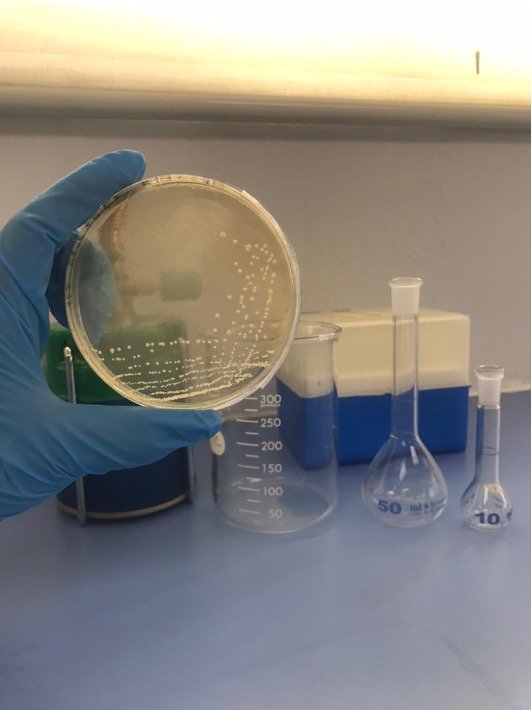
“I am working on quorum sensing, cell-to-cell communication between bacteria. Yes, bacterial cells talk to each other and they use molecules such as acyl-homoserine lactones that help them to regulate the ability to infect a wide variety of disease-causing bacteria. We use natural resources to disrupt this communication that involves enzymatic or chemical inactivation, disabling the bacteria,” says Noorashikin.
Massive fish mortalities significantly impact the industry. Antibiotics are a common means of managing bacterial infection because they significantly increase larval survival. This approach, however, frequently results in the discovery of antibiotic-resistant bacteria. As an alternative to chemical therapies, biological control using a quorum sensing degrader can be used. Noorashikin isolated quorum sensing degrader from zooplankton, Artemia.
The isolate could be delivered to the aquaculture sector to control diseases caused by climate induced bacterial Vibrio. [/ihc-hide-content]