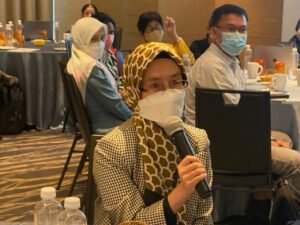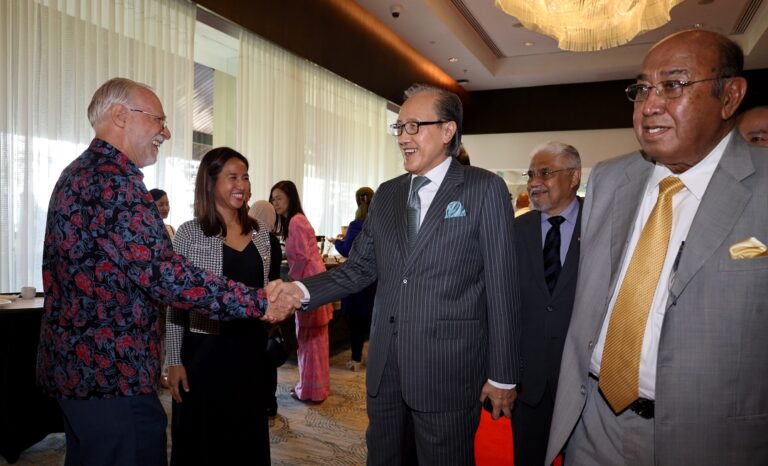
KUALA LUMPUR: Life science experts from all over Asia gathered here recently to exchange notes on policies and regulations on gene-editing – notably the question if gene-edited products should be categorised as genetically modified organisms or otherwise.
The workshop themed “Policy Considerations for Gene Editing: The Asian and Australian Perspective” was hosted by International Service for The Acquisition of Agri-Biotech Applications (ISAAA) in collaboration with BioTrust Global, Malaysian Biotechnology Information Centre, National Seed Association of Malaysia, and Murdoch University.
Delegates comprising scientists and stakeholders from the private sector brought under the scope policy and regulatory issues from their individual countries – apart from discussing opportunities and avenues to commercialise gene-edited products.
[ihc-hide-content ihc_mb_type=”block” ihc_mb_who=”unreg” ihc_mb_template=”3″ ]It was largely observed among workshop participants that gene-editing policies and regulations differed from country to country and this made it difficult to commercialise and market gene-edited products.
The general feeling among the delegates is that efforts should be made for certain extend of harmonisation and cooperation on the biological status and nature of gene-edited products regionally.
It was also noted that countries like Australia, Canada, the United States of America, and Brazil define gene-edited products that do not contain any novel genes as non- Genetically Modified Organism (GMO). The argument set forth was that these products are indistinguishable from those developed through conventional breeding, making enforcement almost impossible and also with hardly any known risks to humans, animals and the environment.
On the contrary, the European Union and New Zealand have classified gene-edited products as GMO. In Asia, apart from Japan, The Philippines, Indonesia and India, and other Southeast Asian countries are yet to officially categorise the nature of gene-edited products.
The workshop was focused on creating awareness that regulations should rely on the most updated scientific, technical analysis tools and judged against a specific endpoint – if there is enough evidence to conclude the product is safe to be commercialised.
“We will face similar challenges faced by GMO crops for gene-edited products if regulations differ in every country,” said Kay Khoo, regulatory manager of Biotechnology Asia Pacific (BASF) during his presentation.
Osman Mewett, CEO of the Australian Seed Federation, pointed out that regulations should be more outcome-focused compared to process-focused.
“If a genetic change is made using new breeding technologies (NBT) and the change has not altered product characteristics in comparison to the conventional food, it can be concluded that the risk is equivalent for both. Regulation based on the technology will delay the approval process,” said the speaker.
Another challenge in commercialising gene-edited products is cultural, ethical, and religious concerns. In countries like Malaysia and Indonesia religion remains a strong societal force.
Dr Satya Nugroho, a participant from Indonesia said that gene editing products in their country are still being debated by ulama.
Ensuring social acceptance must be also taken into account in the regulatory framework as in the case of Taiwan, the government is conservative about commercialising gene- editing and GMOs in Taiwan.
“There are false statements obscuring the reality that words such as DNA and GMOs are highly dangerous to the nation,” said I- Chun Pan a delegate from Taiwan.
An interactive session on science diplomacy and harmonisation called “Biotech Game” was led by Dr Muhammad Adeel and Professor Mike Jonas from Murdoch University to provide a hands-on experience for participants in international negotiations among different countries.
Delegates understood that policy negotiations should reflect clear risk-benefit analysis, consumer benefit, assist the industry to understand the value of NBT crop improvement, explore opportunities to develop a constructive dialogue with consumers and other stakeholders, and facilitate the market potential of deregulation of gene-edited products.
The key takeaway message from the workshop is harmonisation of policies among countries needs to take place because differences in policies across the globe would complicate international trade, regulations have to be science-based and fit the purpose.