BY DR NURUL HUDA AHMAD ISHAK
RISING temperatures pose a high risk to marine and coastal ecosystems. This is a well-recognised fact. More than half of the world’s marine species may be now standing on the brink of extinction by 2100.
The climate and ocean are closely linked. When oceans get hotter, they can hold more carbon dioxide and this will cause seawater to become more acidic.
Mangrove and coral reef damage due to climate change is a well-documented fact. But another marine feature that is under critical threat and is on the verge of extinction is zooplankton.
Zooplankton is usually described as an “all-rounder” in aquatic ecosystems. It plays a diverse role from being a food source for larger animals to being a climate change indicator in itself. But now this climate change indicator is itself heading for extinction due to the impact of climate change.

Zooplankton is considered a powerful climate change indicator because of its unique ability to adjust its body temperature according to the surrounding temperature which is also known as poikilothermic.
Despite being an indicator, zooplankton is under threat now due to extreme temperature increases in the seawater. Few species of zooplankton are observed to show poleward shifts due to climate change, shifts in phenological timing (i.e., the seasonal timing of biological events such as reproduction, hatching, mating, and migrations), and shifts towards smaller body size.
Numerous monitoring programmes and surveys that are carried out across the globe show that the response of different species of zooplankton to climate change is varied. According to UNESCO in 2017, to assess the current status of the world’s ocean ecosystem, more zooplankton on-site monitoring programmes are needed, especially in understudied regions in the tropics.
What is zooplankton?
Zooplankton is often known as marine drifters as they get carried along by tides and currents. Contrary to popular belief, zooplankton does not have to be tiny microscopic animals the entire time. Even an ocean sunfish (Mola mola) that sometimes reaches up to 3000 kg can also be classified as zooplankton!
Since the word plankton comes from the Greek word ‘planktos’, animals with limited ability for locomotion and drifting passively through water currents are classified as zooplankton. Commonly, zooplankton is weak swimmers that inhabit near the surface of aquatic environments and swim up and down the water column which is described as diel vertical migration.
The most abundant marine zooplankton groups are copepods, also known as ‘insects of the sea’ due to their small size and large numbers (average body length of 1-2 mm). Apart from acting as a pivotal link for energy transfer through food webs structure, zooplankton plays a crucial role in the biogeochemical cycle. It is a process where energy flows through the marine ecosystem, and matter such as iron, ammonium, nitrogen, phosphorus, and oceanic dissolved organic carbon that composes organisms are recycled. The particulate materials released by zooplankton via excretion and egestion affect biogeochemical cycles such as nutrient recycling and carbon sequestration to the deep ocean.
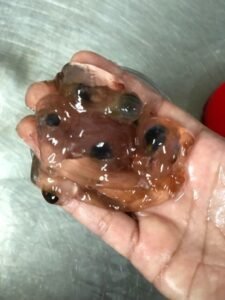
Zooplankton and food security
Zooplankton serves as an intermediary species in the food chain, where it eats phytoplankton and then becomes food for other larger species. Small fishes like sardines and anchovies eat a large number of zooplanktons. Sardines and anchovies are sources of protein that humans consume regularly.
Another species of zooplankton known as Antartic krill is the main prey of the largest animal in the ocean, the blue whale.
Fish and seafood are amongst the most traded food commodities and fish supply will reduce as climate change alters the food web. Once the fish supply reduces, the price will increase leading to only middle and high-income people being able to consume fish. Mitigation efforts need to be taken before more people become vulnerable to malnutrition.
Note : Dr Nurul Huda Ahmad Ishak is a Senior Lecturer at the Faculty of Science and Marine Environment, Universiti Malaysia Terengganu. She obtained her Ph.D. from the University of Tasmania, Australia, and completed her 2 years of postdoctoral training at The University of Tokyo, Japan. She has energetically participated in several scientific cruise expeditions at the national and international levels, including the Tasman Sea, Southern South China Sea, and the Northwestern Pacific. She is slated to take part in the Southern Ocean cruise scheduled in January 2023.