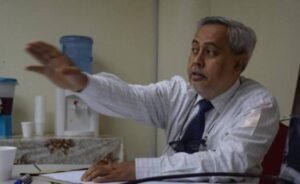
Quest International University Perak COO Nicholas Goh Kaw Chin is a graduate in computer science and holds a Masters in Business Administration. But why would he be interested in biotechnology and the life sciences? Interestingly he tells The Petri Dish Editor-In-Chief MAHALETCHUMY ARUJANAN and journalist SHAMIRA SHAMSUDDIN “I firmly believe that Biotechnology is the way forward to heal, fuel, clean and feed the world.”
TELL us about your background and work experience.
I graduated in the field of Computer Science, and hold an MBA from Southern Illinois University. After completing my studies, I stayed back in the USA for ten years where I worked with reputable companies serving in the senior management team. Upon my return to Malaysia in the late 1980s, I served on the Board of Directors for various companies including NGOs.
My role as the Chief Operating Officer of Quest International University Perak (QIUP) encompasses business process change, and in this capacity I lead a number of different efficiency projects, as well as major academic restructuring. I am also responsible for supporting the overall day-to-day running of the University and also for operational planning and strategic leadership of the professional services. I am also part of the Hospital Kuala Lumpur Board of Visitors, the biggest hospital in Malaysia.
We understand that you are very passionate about your biotechnology programme and research. Why does biotechnology appeal to a person like you who has no science background?

I firmly believe that biotechnology is the way forward to heal, fuel, clean and feed the world. From cosmeceuticals, value-added food crops to life-saving medicines, many of the products we consume every day are manufactured on an industrial scale. The production of chemicals, pharmaceuticals, food and energy that we rely upon can damage the environment – producing waste, draining non-renewable resources such as petroleum and creating greenhouse gas emissions.
Advances in biotechnology can now help us respond to these societal issues in an environmentally-friendly way. We can now use enzymes and micro-organisms to respond to the needs of society to produce bio-based products that are friendlier to the environment.
One of the examples I like to quote is the Golden Rice Project which can counter the problem of Vitamin A deficiency among the poverty hit children in developing countries. This is a serious problem that can lead to impaired vision, all the way to irreversible blindness if left unattended. Rice being a staple food among the children of these countries, modified to contain provitamin A could substantially reduce the problems described above. This can only be achieved through biotechnology because there is no provitamin A in the rice seeds.
In the same way, oil spills in the ocean are being treated with micro enzymes to clear the spills and be environmentally friendly. In short, biotechnology is the answer for a sustainable earth and this is why I am very interested in promoting the Biotechnology Programme in QIUP.
We are also aware that in many cultures, plants are used as traditional medicines. I would like to see us harness the medicinal properties of plants and produce standardised medicines which could be used to cure many ailments. Biotechnological tools are important for the selection, multiplication and conservation of these critical genotypes of medicinal plants.
I would like to see QIUP driving research into natural products and its sustainable exploitation for the benefit of all.
Why are you driving biotechnology research at QIUP aggressively? What would you like to achieve?
I would like to see QIUP be in the forefront of Biotechnology research in the future. I want our scientists to work on areas of research that will have a great impact on mankind.
Although we are a new set-up, we are already working on finding a possible cure for non-healing wounds. As you are aware, the only solution for a gangrenous wound now is amputation. I would like to help these patients to have hope in the future.
I would like to produce a new generation of students with strong research skills and capabilities that can contribute to society. I believe having lecturers who are involved in research and exploring new frontiers of biotechnology that will be able to inculcate new knowledge to students; otherwise they are just sharing history.
This is just the beginning and we will be working on more important research in the future.
What are your strategic plans to drive biotechnology research at QIUP, being fully aware of the challenges for a private university to excel in this costly venture?
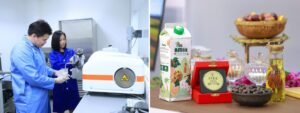
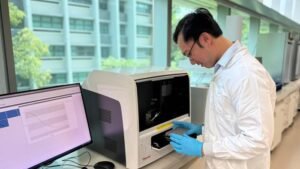
I strongly believe that people are our greatest assets. To this end, we have hired the best to lead our Biotechnology Programme and research. We have also set up QIUP with the latest available equipment and labs.
To deliver such wholesome human capital, QIUP has engaged highly qualified and experienced local and foreign faculty staff (all with PhDs) with a good research background. Excellent resources will continue to be made available.
Associate Professor Dr Vilasini Pillai, Director of Centre for Graduate Studies and Research and also the Head of Biotechnology, comes with more than 30 years of experience in Agriculture Biotechnology and Science & Technology related policies and regulations, having worked in the Malaysian Agricultural Research and Development Institute (MARDI) in the area of genetic engineering of crop plants.
Her last position was as the Coordinator, Asia-Pacific Consortium on Agricultural Biotechnology (APCoAB) under the Asia Pacific Association of Agricultural Research Institutions (APAARI) based in Bangkok, Thailand.
I also strongly believe in collaboration as putting great minds together and relying on each other’s strengths which will go a long way in achieving our research goals. Working closely with industry and other like-minded organisations locally and internationally, will result in research development outcomes that are impactful to industry and society on the whole. Multidisciplinary and trans-disciplinary research is the way forward. QIUP also encourages cross-organisational research teams as I would like to see a seamless way of providing total solutions to industry relevant research.
Twelve newly renovated laboratories are already in place to support the Biotechnology programme at QIUP. No doubt, employers of QIUP biotech graduates can be assured of well-trained employees who should be able to satisfactorily help them move their organisation forward.
To the question on costly venture, that is the reason we are embarking on finding a breakthrough in new medicine. We are determined that we can commercialise our findings to derive a steady income stream which will help us sustain our venture.
How is QIUP playing a role as a STEM talent provider? What are you doing differently?
Investment and focus in Science, Technology and Innovation is critical in the improvement in the developmental outcomes of any country, more so Malaysia, being a bio resource rich country.
Our lecturers work closely with industry so that our curriculum is developed along the needs of the various industries that our STEM talent will feed into. They integrate subject-matter knowledge innovatively and expose students to technology breakthroughs. We also study the country’s needs and work closely with industry so as to develop and tailor make our programmes to fit into the skill sets required by the industries.
We also encourage interdisciplinary student projects, instill and encourage soft skills, so that these STEM talents are equipped to face the ever demanding workforce. Students are exposed to problem solving skills and prepared for internships in various industries. We inculcate teamwork, emphasise good communication skills, and instill leadership, creativity and innovation in the students’ education.
We also encourage the integration of problem-solving projects in to the curricula to allow students to apply their learning to real-life workplace issues.
You are in the business of creating new talents and leaders for the next generation. What are the most important skills/characters you want QIUP to instill in your students?
We are trying our best to teach our students character, and not only skills. We want to help our students know who they are, not just what they know. We instill in them not only the hard skills, but also leadership qualities, spirit of teamwork, drive, collaboration, integrity and accountability. Character building will help them prepare to face the challenges of an ever increasing competitive world.
Teaching them soft skills and character building will have a greater impact on the outcome of the graduates of QIUP. That is how I would like to see our graduates equipped with the necessary skills and tools to be part of the progress of our nation and that of the global arena.