THE oppressive heat of a Friday in Tanjong Karang clashed with an ominous sky-threatening rainfall. Nestled nearly two hours away from Kuala Lumpur, in a coastal rural setting, the air reverberated with the steady hum of motors tirelessly aerating shrimp ponds.
Amidst this backdrop, Melissa Saw emerged from her uniquely repurposed container, now transformed into an office space.
A graduate of Imperial College University, UK, Melissa, along with her brothers Benjamin Saw and Aaron Saw, alumni of the University of Westminster and the University of East Anglia respectively, are pioneers in modern marine Black Tiger Shrimp and Pacific White Shrimp farming.
While many graduates seek comfort in air-conditioned city cubicles, the Saw siblings defy convention. They not only thrive but also contribute significantly to food security, bolstering Malaysia’s food export industry, and shunning the stereotypically challenging “3D” jobs – dirty, dangerous, and difficult.
Lacking formal training in farming or aquaculture, the siblings are revolutionising traditional aquaculture initiated by their father, Ir Saw Kong Beng, a former Vice President at Avago Technologies Malaysia.

Saw, the patriarch of these enterprising farmers, acquired farms in Balik Pulau, Penang, in 2012, and another in Sg Nipah, Tanjong Karang, in 2019.
Humble beginnings
Saw, unfamiliar with shrimp farming but armed with vast experience in high-volume manufacturing industries, coupled with engineering expertise, charted a path to success with two farms: Global Goodway (M) Sdn Bhd in Balik Pulau, Penang, and Global Aquaculture Sdn Bhd in Sg Nipah, Selangor. His foray into Penang’s farm in 2012 was followed seven years later by the acquisition of the Sg Nipah farm.
Apart from his background, early failures in shrimp farming proved invaluable in propelling his farms into profit-making ventures and breaking aquaculture industry barriers.
Today, Melissa, Benjamin, and Aaron not only optimise Standard Operating Procedures (SOPs) but also enhance workers’ living conditions while training foreign laborers in aquaculture best practices.
While his capable children oversee daily operations, Saw, as CEO, steers strategic directions and key decisions across both farms.
From biomedical to aquaculture
What motivated Melissa and Benjamin to transition into aquaculture after attaining degrees in biomedical engineering and biomedical sciences respectively? “We’ve always been intrigued by wildlife and marine aquatic life, relishing an outdoor lifestyle,” shares Melissa, serving as the R&D Lead.
Aaron, equipped with a degree in economics and finance and in charge of production planning and control, views farming as a lucrative venture. “Farming offers tangible results with hard work put in. The direct correlation between effort and reward, alongside attractive economic incentives, drew me in,” remarks Aaron.
The trio meticulously developed SOPs to increase yields, curtail disease outbreaks, optimise feeding practices, minimise feed wastage, ensure thorough pond harvesting, manage water quality, and monitor other critical parameters.
“Data collection and analysis are pivotal for improved production. Since 2014, we have compiled growth, feeding, and water quality patterns over multiple cycles, culminating in robust SOPs for consistent results,” adds Ben. Disease screening and surveillance are pivotal for productivity, he emphasises.
While Ben and Melissa manage earthen ponds and super-intensive ponds in Sungai Nipah, Selangor, Aaron oversees a farm in Penang and handles retail responsibilities.
Clad in a long long-sleeved T-shirt and a hat with a face cover, Melissa strides from pond to pond, elucidating aquaculture intricacies. Seawater is pumped in and monitored while workers diligently stock 35 post-larvae shrimps per square meter for Tiger Prawn Farming in earthen ponds, and 300 post-larvae per square meter for Pacific White Shrimp Farming in High Density Polyethylene-lined (HDPE) ponds. Pond stocking involves releasing hatchery-raised shrimps for growth until harvest.
According to Melissa, shrimp harvesting is a laborious process. involving manual netting by workers as the ponds are drained. “For full harvest, drained ponds retain shrimps ranging between 300-600kg, necessitating manual retrieval from the puddles,” she explains.
Shrimps are harvested at marketable sizes, starting at 50 pieces shrimp per kilogram and full harvest between 15-20 pieces per kilogram for Black Tiger Shrimps, typically taking 160 days from stocking. As for Pacific White Shrimps, marketable sizes start at 100 pieces per kilogram and full harvest is around 20 pieces per kilogram, typically taking 120 days of culture.
The production yields for Black Tiger Shrimps and Pacific White Shrimps are 10 and 50 metric tonnes per hectare, respectively. Global Goodway, through the combination of two farms, is presently generating 700 metric tonnes per annum of Black Tiger Shrimp. However, the production of Pacific White Shrimps remains in the research and development phase.
Certified with MyGAP, the majority of the shrimp outputs are exported to countries such as Korea, Taiwan, Australia, and China.
Regular shrimp monitoring ensures optimal feed consumption. “Ensuring the shrimps’ feeding is vital. Poor feeding habits might indicate disease or heightened competition,” Benjamin stresses.
Farming for the future
Driven by a desire to combat disease outbreaks and minimise environmental impact, Melissa spearheaded innovative farming practices. “Like many of my peers, sustainability and environmental preservation are my priorities,” remarks Melissa, underscoring her ethos: “Farming must be environmentally sound, socially responsible, and profitable for farmers, meeting current needs without compromising the future.”
Channelling this passion, Melissa founded LuFloc Sustainable Aquatech Sdn Bhd, currently in its R&D phase. She designed a highly intensive and sustainable shrimp farming system farmed in HDPE-lined ponds – LuFloc systems. Initiating this in 2020, she initially experimented with a garage-scale pond in Balik Pulau upon resigning from Ernst and Young.
Partnering with Foo Yuen Ping, a chemical engineering graduate from the University of Michigan and University College London. Ping and Melissa funded the proof of concept with their savings.
The success of the proof of concept encouraged both innovators to prototype between February 2021 and July 2023 in Sg Nipah, supported by investments from Global Goodway, now undergoing commercial-scale prototyping.
“For LuFloc super-intensive systems, we maintain a stocking density of 300 post-larvae shrimps per square meter. This approach enables us to attain three times the yield when compared to traditional farming methods, optimising land usage.
Through minimal water exchange and an effective probiotic system, we markedly reduce disease risks—an ongoing challenge for shrimp farmers. Additionally, the waste generated by LuFloc systems holds potential for repurposing into valuable resources like fertilisers, alternative feeds, biofuels, and other applications.” Melissa highlights.
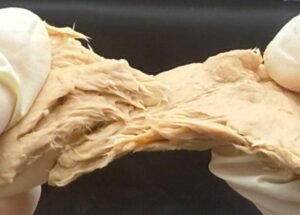
Melissa envisions repurposing LuFloc sludge, primarily bacterial biomass containing up to 30-40% protein, into fertiliser, alternative feed supplements, and biofuel. Additionally, she plans to utilise shrimp moults and shells to produce chitin and integrate solar panels, transitioning LuFloc into a circular farming system.
Smart Farming
“Both Global Goodway and LuFloc aim to integrate IoT and big data for improved farming practices and monitoring,” Ben elucidates on future trends in precision agriculture. He adds, “Currently, our focus is refining farming practices while addressing industry challenges before fully embracing IoT.”
“LuFloc systems employ in-house IoT for water parameter tracking, iterated and refined over years, gaining recognition from the Department of Fisheries,” Melissa notes.
“For IoT to be truly beneficial, our farming practices must first be profitable. Addressing upstream challenges in the industry is imperative before IoT can truly benefit farmers,” Melissa concludes.