Sarawak Bets Big on Smart Farming to Become Net Food Exporter: Sungai Sebiew Precision Farming Park Launched
Sarawak is ramping up its efforts to transform into a net food exporter by leveraging smart farming and Internet of Things (IoT) technologies, with the Sungai Sebiew Precision Farming Park set to lead the charge as the state’s model for sustainable, technology-driven agriculture.
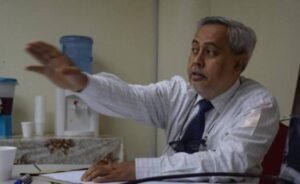
Minister of Food Industry, Commodity and Regional Development, Dato Sri Dr Stephen Rundi Utom, said the 13-hectare site in Bintulu would shift the focus from traditional farming practices to high-quality, precision agriculture designed to boost productivity and efficiency.
“It’s not about the size of the land, but the quality of the products,” he said at the groundbreaking ceremony. “With smart farming using IoT, we can increase yields, reduce costs, and ensure sustainability.”
From muscle to digital: Changing the face of farming
Dr Rundi, who also chairs the Sarawak Land Development Board (SLDB), acknowledged that agriculture is still perceived as “dangerous, difficult, and dirty”—a stigma that deters younger generations.
“We can no longer rely on muscle and sweat,” he said. “Most of our farmers are ageing, and young people are reluctant to work under the sun. But agriculture today is digital. With IoT, farms can be monitored remotely, even from home.”

The Sungai Sebiew park, conceptualized in 2022 and now entering its implementation phase, will feature 11 IoT-enabled greenhouses, nurseries, seedling propagation areas, post-harvest facilities, and a centralized IoT command center to manage operations in real-time.
Developed under a Public-Private Partnership (PPP) model, the 18-month project will be operated by a private investor and offer training, technology transfer, and contract farming opportunities to local agropreneurs.
Lifting Sarawak’s food security and export ambitions
Sarawak currently faces a significant food import-export deficit, valued at RM5.6 billion in 2022, which Dr Rundi said must be urgently addressed.
The state has already begun making inroads in export markets, recently shipping 800 live pigs worth RM1.38 million to Selangor, and receiving inquiries from Johor, Penang, and Singapore for poultry, fish, and shrimp.
“The potential is huge. We want Sarawak to be a hub for net food exports. But this can only happen if we are willing to adopt and adapt to new technologies,” Dr Rundi said, citing Taiwan as an inspiring benchmark.
A catalyst for statewide transformation
Lessons from earlier pilot projects in Rampangi will be applied at Sungai Sebiew, with the park envisioned as a catalyst for future precision agriculture developments across Sarawak.
The state’s long-term strategy aims to pivot away from subsistence and shifting cultivation toward commercialisation, agro-tourism, and value-added activities. Dr Rundi stressed the importance of farmer buy-in to sustain this evolution:
“Farmers must understand why we are adopting these technologies. We are not forcing them, but we want them to take the initiative, because only then will it last.”
Dr Rundi also called for greater collaboration between researchers, policymakers, and farmers to strengthen Sarawak’s agricultural resilience.
“If Taiwan, with its smaller land area and 75% mountainous terrain, can be a net food exporter, so can we. But we must be willing to learn, adapt, and innovate.”