By : HOE-HAN GOH
As we observe October as academia month and join the global celebration of International Open Access Week, from October 21 to 27, Malaysia stands at a unique crossroads in its scientific journey.
This year’s theme, “Community over Commercialisation”, resonates with Malaysia’s goals for sustainability and inclusive growth in an era marked by climate challenges and rapid technological shifts.
Promoting open science and equitable access to knowledge is vital for empowering communities, accelerating sustainable practices, and achieving long-lasting ecological preservation.
Open science is more than a buzzword; it’s a call to action for science democratisation, making data, research, and educational resources openly accessible to all. By breaking down barriers to knowledge, open science promotes inclusivity, allowing both researchers and citizens to engage in scientific inquiry and environmental stewardship.

We must ask ourselves: Who benefits from science—an exclusive circle of academics and corporations, or everyone, regardless of status or location?
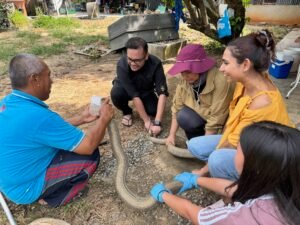
Initiatives are underway in Malaysia to align with these values. For instance, the Borneo Satellite Network exemplifies community-based participatory research, an integral part of open science. Through collaborations across Kalimantan, Sarawak, and Sabah, Malaysian scientists are working to conserve the rich biodiversity of the Borneo region.
Open data-sharing practices enable this cross-border conservation, promoting the free flow of flora and fauna information across borders and further supporting Malaysia’s commitment to biodiversity and environmental health.
Societal engagement is another pillar of open science. Malaysia has demonstrated exceptional community engagement in conservation through initiatives such as the Royal Belum State Park’s Menraq Patrol Unit. The Orang Asli community has played a pivotal role in safeguarding the Malayan tiger, a national icon under critical threat.
Recognised with the IUCN WCPA International Ranger Award 2023, the Menraq Patrol Unit exemplifies how local involvement strengthens environmental protection efforts and contributes to biodiversity.
But while Malaysia celebrates these achievements, it’s essential to question how we can make similar community-driven models sustainable on a larger scale. Should the government consider incentivising community participation in conservation and research? How can we integrate these models into broader open science practices and involve other citizen scientists across Malaysia?
While the benefits of open science are undeniable, implementing it comes with challenges. For instance, the establishment of national and public repositories requires extensive infrastructure, ongoing funding, and data stewardship policies.
Additionally, balancing data sharing with issues of confidentiality and data transfer costs is crucial. Currently, there are costly barriers associated with cross-country data exchanges that demand strategic planning, especially when transferring vast datasets for climate studies or species conservation.
A significant hurdle lies in awareness and acceptance. For open science principles to truly thrive, the public must understand and embrace them. This is where government agencies, academic institutions, and NGOs come into play, as they are responsible for fostering public awareness and societal buy-in.
For open science to flourish, Malaysia must invest in infrastructure readiness and develop governance roles, including appointing Chief Digital Officers and Research Integrity Officers across institutions. Furthermore, the designation of experts in the field as data custodians or guardians ensures responsible management of research data, aligning with open science principles.
The UNESCO Framework offers a robust structure for Malaysia’s Open Science Policy, aligning our national efforts with international best practices. Akademi Sains Malaysia plays a pivotal role in facilitating these advancements and building a collaborative ecosystem for sustainable science.
Citizen science, another core element of open science, promotes community engagement, enabling citizens to contribute to research and data collection on a national scale. A recent example of this is the community-based monitoring of air quality and water resources in Malaysia, enabling researchers to gather real-time data and empowering citizens to take part in environmental sustainability actively.
But are we doing enough to incentivise and empower citizens to participate in these initiatives? A path forward could involve government-supported volunteer programs, incentivising participation, and recognising contributors, creating a sense of shared responsibility for national environmental health.
Additionally, leveraging AI-powered tools like swarm learning and machine-operable languages can make research findings accessible and actionable, even for communities with limited scientific expertise. Data stewards and AI-driven modules can support data-driven decision-making, ultimately building an equitable science ecosystem that empowers Malaysia’s diverse population.
As Malaysia progresses toward a future powered by open science, our institutions must prioritise inclusivity and equitable access, ensuring that science benefits the entire population.
Malaysia’s journey in open science offers hope for a future where science is a collective endeavour, accessible to all, and orientated toward the public good.
As we celebrate Academia Month and International Open Access Week, let’s commit to building an inclusive, community-centered scientific framework, acknowledging that the knowledge we share today will shape the sustainable future we aspire to achieve.
Keywords: Democratising science, Societal engagement, Equitable science, Citizen science, Community-based participatory research.