CONFRONTED with the need of increasing global food production – farmers are constantly challenged with altering conditions and emergent soil-borne pathogens brought on by human-induced climate change.
Recent data estimate that 40 percent of food crops are lost to plant pests and diseases every year, largely impacting both global food security and the livelihood of smallholder farmers.
Although chemical pesticides and fertilisers have helped farmers to keep up with the growing food demand, their toxic residues are taxing the environment and our health.
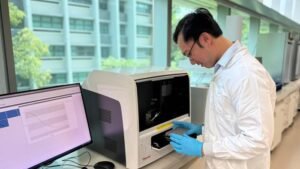
Dr Adeline Ting from the School of Science at Monash University Malaysia is now looking for eco-friendly solutions in her laboratory to deal with pesticide pollution.
“There is a pressing need for sustainable and environmentally-friendly solutions for crop disease management,” the microbiologist told The Petri Dish.

She said her lab is trying to harness them from beneficial microbes.
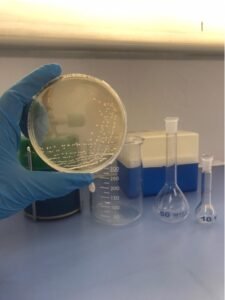
Her study is concerned with exploring bacteria and fungi known as biocontrol agents. These microbes could potentially replace chemical pesticides and fertilisers by yielding non-chemical mechanisms to suppress the growth of plant pathogens while improving plant growth.
Ting explains that this approach is derived from what we observe in nature itself:
“In nature, we witness a delicate interaction between plants and the soil-borne microorganisms they come in contact with. This influence that they have on each other along with soil conditions needs to be conducive for crops to grow well,” she said.
Although crop fields may naturally be home to some of these beneficial microbes, it is possible for things to get in the way of the plant’s tissues and these tiny organisms.
This could happen due to the presence of other competing microbes or due to poor soil quality. This led Ting to explore the method of seed biopriming to introduce these microbes and confer a layer of protection in crops even before they are sown out in the fields.
“Seed bio-priming gives a head start by putting these special microbes in close proximity with the plants by coating them on the seed itself,” explains Ting.
“When the seeds germinate, the roots and shoots get to have direct contact with the microbes, allowing them to colonise most of the plant tissue as the plants continue to grow.”
According to her, these microbes are typically coated onto the seeds using adjuvants known as biopolymers. The most popular biopolymers are polysaccharides which are essentially long chains of sugar molecules linked together.
Ting’s study explores a range of these biopolymers that have proven to be non-toxic and entirely biodegradable in nature.
Her study attempts to suppress susceptibility to pathogen infection and confer metal tolerance in chili and Pak Choy seeds by biopriming them with the bacteria P. fluorescens and the fungi, T. asperellum.
The procedure involved carefully pairing microbes and biopolymers that were compatible with the vegetable seeds and also balancing their amounts to ensure efficient coating without blocking seed germination.
Unlike chili, the Pak Choy seeds bio-primed with the bacteria showed good tolerance to plant pathogens even under metal stress.
“The microbes used in our studies were chosen for their ability to tolerate challenging soil conditions that we are in to face with global climate change. With rising sea levels, we are already witnessing its effect on soil pH, salt, and metal depositions.”
“Using these resilient microbes can therefore give our crops a fighting chance to adapt to the aftermath of climate change. This also benefits land usage so that crops can also be grown in places with traditionally unfavorable soil conditions.”
Ting and her PhD student, Dr Jia May Chin who completed this study were awarded a gold award at the 33rd International Invention, Innovation & Technology Exhibition 2022 (ITEX’22) in May this year.
“There is an important need in addressing food yields while climate change alters our ecosystems,” Ting added.