Researchers from the Department of Energy at Pacific Northwest National Laboratory (PNNL) have recently discovered that the ubiquitous heat-trapping methane gas can be converted into beneficial and environmental-friendly energy by simply creating a harmonious environment for two very different microbes.
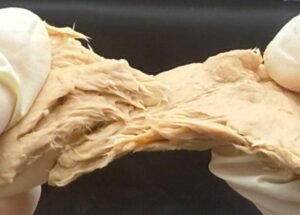
Per biotechnology news portal Bionity.com on April 13, the discovery published in the Bioresource Technology journal in Mar 2017 highlighted the conversion of methane into energy-rich jelly whose colour resemble dark green pandan leaves. This jelly can then be used as a raw material for biofuels, other bioproducts, specialty chemicals, even food for cows from which this gas was released.
“We take a waste product that is normally an expense and upgrade it to microbial biomass which can be used to make fuel, fertiliser, animal feed, chemicals and other products,” said Hans Bernstein, one of the four main scientists involved in the discovery.
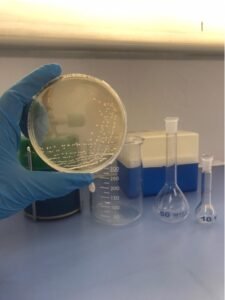
The Washington-based research facility housed the two very different microbes. The first type of microbe loves methane and breaks down said gas as its only energy source. It is usually found in the underground layer of rice paddies and landfills where methane is usually produced. Its counterpart is a cyanobacterium resembling algae found in a Siberian lake. It uses light and carbon dioxide to form oxygen.
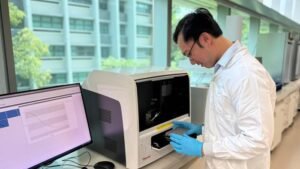
Rice paddies or landfills share nothing in common with a Siberian lake but the two microbes live together in harmony in a special machine called a bioreactor in PNNL. The bioreactor contains a system created by five scientists namely Project Engineer Leo Kucek, Director of Fermentation and Technology Development Grigoriy E. Pinchuk, Senior Research Scientist Sergey Stolyar as well as Eric Hill and Alex Beliaev, who are two authors of the current paper.

PNNL researcher Hans Bernstein accumulated methane from a Washington dairy farm and Colorado oil fields as food for the microbes in the bioreactor.
The methane-loving bacterium (Methylomicrobium alcaliphilum 20Z) munches on the gas and gives out carbon dioxide and an energy-rich form of carbon. However, before that happens, the bacterium needs a partner in crime, the cyanobacterium (Synechococcus species 7002) to keep it alive.
The cyanobacterium keeps its pal alive by providing it oxygen. The cyanobacterium does this by using light and available carbon dioxide to form a steady, continuous stream of oxygen, much like a life support unit. The oxygen is then used to carry out the methane-consuming reaction.
A cycle of oxygen from the cyanobacterium feeding its pal and carbon dioxide from the methane-loving bacterium feeding its pal is then perpetuated.
“The two organisms complement each other, support each other,” Bernstein told Bionity.com. “We have created an adaptable biotechnology platform with microbes that are genetically tractable for the synthesis of biofuels and biochemicals.”
With a simple flick of a light switch or exposure to sunlight coupled with a supply of methane ready for conversion, the cyanobacterium absorbs light, uses carbon dioxide as fuel and sets in motion a cascade of reactions to produce oxygen.
In the presence of oxygen, the methane-chomping bacterium gets to work converting methane to energy. When there is less methane supply, scientists dim the lights to reduce the supply of oxygen, which in turn reduces the vigorousness of the methane-consuming reaction.
The PNNL team has experimented with the system to run continuously for around two months.
“The beauty of this system is that it doesn’t matter where the methane comes from,” said Ron Thomas, deputy director of technology deployment and outreach at PNNL.
“It could be agricultural waste; it could be methane from oil wells. The system can take waste from multiple waste streams and create a useful product.”