BY PREVENAA PARAMASIVAN
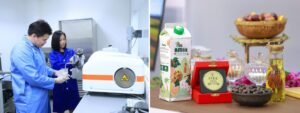
GUCCI has come up with a fragrant innovation by turning the obnoxious odour of industrial waste into a branded perfume spray.
The perfume, called “Where My Heart Beats”, was developed by Coty for Gucci’s The Alchemist’s Garden Collection.
This perfume is LanzaTech’s carbon-captured ethanol, 100% derived from carbon monoxide waste.
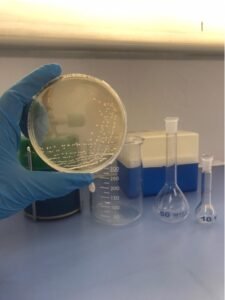
LanzaTech employed a particular microbe – Clostridium autoethanogenum – which thrives on carbon monoxide gas and converts it into ethanol.

Clostridium autoethanogenum takes in carbon monoxide, converts it to acetyl-CoA, and then metabolises it into ethanol through a series of reactions. This process allows the bacterium to produce ethanol from carbon monoxide.
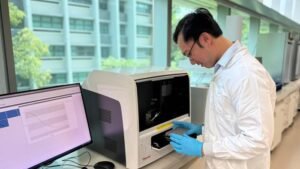
According to Dr Shahrul Nizam Ahmad, a chemist at Universiti Teknologi MARA (UiTM), the whole process of bacteria-based perfume production by Gucci perfectly aligns with two of the “12 Green Chemistry Principles: Prevention and Atom Economy”.
The 12 Green Chemistry Principles are a set of guidelines developed by Paul Anastas and John Warner in 1998, promoting environmentally friendly and socially responsible chemical processes and products.
“Gucci’s approach utilises carbon monoxide waste as a renewable resource, preventing its release into the atmosphere as harmful emissions,” said Shahrul.
This illuminates the Principle of Prevention which emphasises designing processes to avoid hazardous waste and emissions.
Shahrul added: “Gucci’s innovative method of converting carbon monoxide into ethanol through bacteria ensures high atom economy, as the carbon atoms from the waste material are efficiently transformed into valuable fragrance ingredients that show the Principle of Atom Economy which focuses on efficient resource utilisation.”
He said bacterial perfumes can be created to be more biodegradable and environmentally friendly. Unlike some synthetic scent compounds, which can linger in the environment for lengthy periods of time, bacteria-derived perfume ingredients can be designed to degrade more quickly, reducing their influence on ecosystems.
According to him, bacteria-based perfume manufacturing eliminates the need for animal fragrances. Traditional methods often involve animal testing and animal-derived fragrances, raising ethical concerns. Using bacteria allows the perfume industry to achieve ethical animal testing-free practices.
He said: “Bacteria-based perfume production allows for more individualisation and the ability to create unique scents. By manipulating the genetic makeup of bacteria or choosing specific strains, we can customise and design fragrances, opening a wide range of possibilities for fragrance formulation and innovation.
“Ethanol serves as a renewable alternative to fossil fuel-based fragrance ingredients. Using carbon monoxide-derived ethanol could reduce the perfume industry’s dependence on petroleum-based compounds, potentially having a positive effect on reducing greenhouse gas emissions and fossil fuel consumption.”
Shahrul is confident in the future, there may be more initiatives on using carbon monoxide from renewable sources and industrial waste, further reducing the environmental impact of the process. He said this could include capturing carbon monoxide emissions from industrial plants or using carbon monoxide from biomass or carbon capture technologies.
He also pointed out that although bacteria-based perfume manufacturing has some advantages, it is still a developing field with challenges to overcome. Further research and development are required to optimise the process, ensure product safety and achieve commercial feasibility.
“However, using bacteria as a sustainable and innovative approach to perfume production shows promising potential in the future,” he added