Sometimes, the most remarkable discoveries happen by chance.
That was the case for Wan Faridah Akmal Jusoh, an entomologist and senior lecturer at Monash University Malaysia, and her assistant, Tan Wei Jack. While going through firefly specimens collected from Bukit Kiara in Kuala Lumpur, they stumbled upon something extraordinary — the third known specimen of the elusive Gombak bent-winged firefly (Pteroptyx gombakia).
Tan, 24, had initially misidentified it as a Colophotia. But on January 9, 2025, while examining the specimen under a microscope, something didn’t add up. “A feature stood out — it didn’t match what I’d just learned about Colophotia,” he recalled.
He immediately alerted Wan Faridah. Her response confirmed it: this was a male Gombak bent-winged firefly — and the first live sighting in over a hundred years.
The discovery was not just rare; it was groundbreaking. Traditionally, fireflies from the Pteroptyx genus are associated with mangrove habitats. Yet this one was found in an urban forest — a surprising first.

The Gombak bent-winged firefly was originally collected in 1921 and officially named only in 2015 by Australian entomologist Lesley Ballantyne. Wan Faridah found a second specimen in 2019 at Universiti Malaya’s Museum of Zoology, which had been collected in 1935.
Keen to observe the insect in the wild, the research team returned to Bukit Kiara. “We suspected it might be crepuscular — active at twilight — so we went in just before sunset,” said Tan. Their hunch paid off.
Flickers of light began to appear in the canopy minutes after dusk.
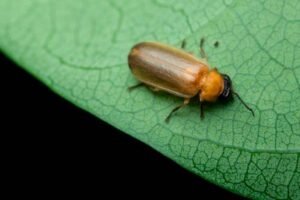
It became the ninth known firefly species recorded in Bukit Kiara. True to its name, its most distinct feature is its wings — bent and black-edged near the abdomen, resembling the curled ears of a button-eared dog.
Unlike other Pteroptyx species, it doesn’t swarm. Much about it remains a mystery, and time may be running out.
“We don’t know if we’ve found it just before it disappears forever,” said Wan Faridah. Urban development and artificial night light threaten its fragile existence. “Every rediscovery reminds us extinction isn’t certain — but saving a species takes effort.”
Perhaps, the next time you glimpse a flicker in the night sky, it could be something rare, something unnamed — a light calling not just for wonder, but for protection.