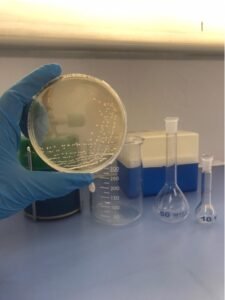
The story of the discovery of penicillin is enchanting. An overworked microbiologist goes on holiday, opens plates with bacteria growing on them, a spore (or seed) landing on the plates and then the observation on return from the holiday that the mould growing from the spore could kill bacteria.
The purification and trial of penicillin produced by the mould did not happen until many years later but the discovery of the first antibiotic marked a dramatic turning point in the treatment of bacterial infections.
Although the definition of antibiotic differs slightly, depending on who is supplying the definition, we can loosely take the word to mean a molecule, usually made by an organism that kills microorganisms.
Before the use of antibiotics, even simple grazes and cuts could turn out to be life-threatening due to infections by bacteria. So the casualty rate of people with severe wounds, which could result from accidents, was horrifying. Antibiotics made the world a safer place for us.
Today, close to a century later, our world is awash with antibiotics. Feeling unwell? Take some antibiotics. Want to make your chickens grow more quickly? Give them antibiotics in their feed. Fattening cattle? Provide them with antibiotics. The result of this overuse and abuse is that antibiotics are losing their effectiveness.

Increasingly bacteria are no longer being killed by them. Consequently, the treatment of bacterial infections is becoming more and more problematic. Clearly, we are in danger of returning to a state of affairs a hundred years ago, a time before the discovery of antibiotics.
Recently, a woman died in the States because the bacteria infecting her were resistant to all the antibiotics in use and one suspects there are more unreported incidents. Cases like this, with people dying from simple infections, will become increasingly common in the future.
Why are bacteria becoming resistant? Very simply story is this.There are small differences in even the most closely related bacteria.
When we use antibiotics to treat an infection, most of the bacteria will die but some will have small differences in properties that enable them to survive. Those that survive will then multiply quickly because they now have no competition for the resources they need to breed.
Thus, the new population will become composed of bacteria that are resistant unless there is renewed competition for resources. This renewed competition will take place only if we stop using antibiotics and the other types of bacteria without resistance can flourish again.
If we keep on using antibiotics, even of different types, ultimately we will end up with a bacterial population that is resistant to the antibiotics being used. Even worse, resistant bacteria are known to exchange information (through DNA exchange) that enables susceptible bacteria to become resistant. So what is to be done? Two approaches are being taken. One is to look for new types of antibiotics. Many people are taking this approach including researchers at Monash University Malaysia.
One could also try and make in the laboratory even more powerful antibiotics that the bacteria have not encountered before. Very recently there have been reports of scientists making a chemical similar to antibiotics but with a three-pronged attack against bacteria.
The bacteria are unlikely to have, initially at least, a difference in property that will protect against three types of attack. The consequences of the use and abuse of this type of multiple pronged antibiotics, in the long run, are anyone’s guess.
A second approach is to reduce the unnecessary use of antibiotics. ‘Unnecessary’ of course is a difficult word to define. It depends on who is speaking. However, it is well known that due to the large scale usage of antibiotics in Malaysia, bacterial samples from chicken and cattle farms, in the rivers and hospitals contain antibiotic resistant bacteria.
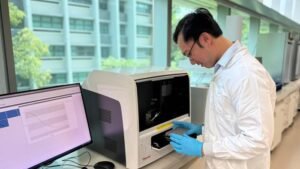
At Monash, we are also undertaking a study to identify the extent of the spread of antibiotic resistant bacteria in the ordinary citizenry in Malaysia. The results from this type of survey and the identification of the bacteria in the guts of the typical Malaysian may allow the development of new types of treatments for some bacterial infections and ultimately help reduce the use of antibiotics.
In summary, we are facing an uncertain future in the treatment of bacterial infections. It is possible that new ‘super’ antibiotics will buy us some time. However, unless we can reduce the abuse of antibiotics and develop a different philosophy around their use, we will be in an increasingly difficult struggle with bacteria to survive infections. In HG Wells’ science fiction novel ‘The War of the Worlds, mankind was rescued from the extra-terrestrials by microbes. In the real-world though, there is the real possibility that mankind will be threatened with extinction by ‘super-microbes’ that cannot be killed off once they infect us.
THE AUTHOR
Sadequr Rahman is Professor of Plant Genetics at the School of Science, Monash University Malaysia. Prior to joining Monash in 2011, he worked or studied at leading research institutes and universities in Australia, Japan, Bangladesh, Canada and the UK. His particular interests are in the application of molecular genetics and genomics for increased rice productivity and for biodiversity studies. He also has long standing interests in making science accessible to the layman and in the encouragement of evidence-based thinking. He regularly produces and presents broadcasts on science-related and more general topics for a community radio station in Australia.